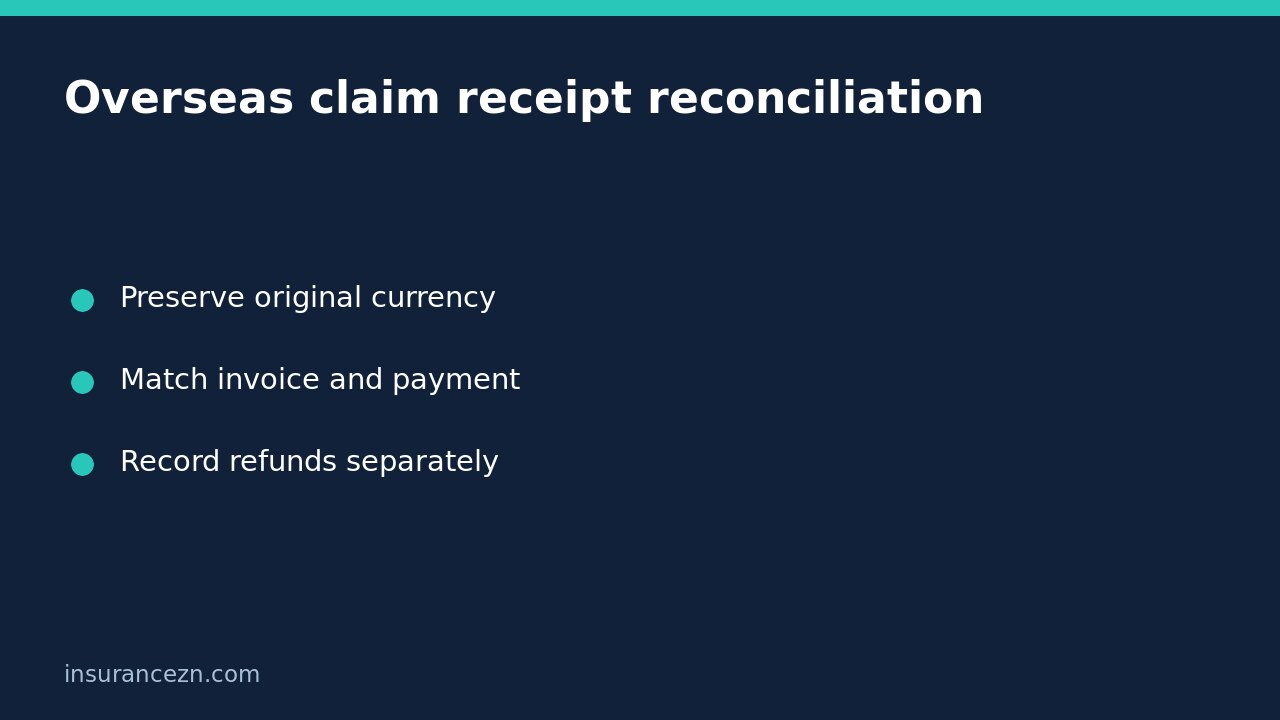

If an overseas receipt and your Australian card statement show different amounts, do not replace one with the other or guess which figure your travel insurer will reimburse. Preserve the original currency, link the invoice to its payment evidence, and ask which conversion method applies under your policy. An organised expense register helps explain the figures; it does not determine cover or the final settlement.
This is general information for Australian readers, not personal financial advice. Benefits depend on your policy and Product Disclosure Statement (PDS), including exclusions, excesses, limits and evidence requirements. Do not delay urgent medical care to prepare insurance paperwork.
Keep the invoice and payment evidence as separate records
An invoice explains what a supplier charged. A receipt or bank record helps establish what was paid. Neither alone necessarily proves that an expense is covered. Keep an unchanged copy of each original document, including the currency symbol or currency code, supplier details, service date and itemised charges.
Cover-More’s claims instructions, for example, request itemised accounts and receipts for relevant claim categories, and recommend retaining originals. Its documentation requirements vary by claim type. That supports keeping a structured evidence pack; it does not establish a universal exchange-rate rule for all insurers.
If the receipt uses an ambiguous dollar sign, seek clarification from the supplier rather than silently labelling it Australian dollars. If you provide a translation or explanatory note, keep it separate from the original and ask the insurer what translation evidence it needs.
Create one row for each expense, not each document
Use a register with these fields:
- Expense reference and short description of the service or purchase.
- Supplier, service date and invoice number.
- Original amount and clearly identified currency.
- Payment date, method and evidence filename.
- Australian-dollar debit, if one appears on the payment record.
- Any separately identified transaction fee.
- Refund requested, refund received and supporting records.
- Claim submission reference and any question still outstanding.
Attach several documents to the same expense reference where necessary. Uploading an invoice and its card receipt should not create two claimed purchases. Likewise, a pending card authorisation and a later completed debit may relate to one payment. Identify that relationship before adding totals.
Share sensitive financial records only through the insurer’s accepted secure channel. Ask what unrelated transactions can be redacted while preserving enough information to assess the relevant payment.
Explain currency differences without inventing entitlement
Suppose, as a hypothetical record-keeping example, an invoice is in euros while the completed card payment appears in Australian dollars. Record both amounts in separately labelled columns. Do not add those columns together, and do not substitute a current internet exchange rate as though it were the insurer’s required rate.
Ask the claims team which currency and amount to enter on its form, which date and conversion method apply, and what payment evidence it needs. Also ask whether separately charged conversion or transaction fees are assessable. The fact that a fee was debited does not establish a policy benefit for it.
If you paid in cash, keep the supplier’s payment receipt and explain the payment method. A foreign-currency withdrawal alone does not identify which service you bought. Ask what alternative evidence is acceptable if a receipt is unavailable; do not manufacture a replacement or estimate unsupported expenses.
Track refunds and adjustments against the same expense
A supplier’s promise to refund is different from a processed credit. Record both stages. Where a later credit appears, link it to the original expense and tell the insurer what changed. If the Australian-dollar credit differs from the original debit, preserve both records and request assessment of the difference rather than calling it automatically reimbursable.
Keep the submitted register version and send a clearly labelled amendment using the existing claim reference. Ask for confirmation that the new information was allocated to that claim. A successful upload establishes receipt, not review, acceptance or a revised payment calculation.
Cover-More says customers awaiting supporting documentation can submit a claim and forward documents when available. Follow the instructions and deadlines for your actual product; do not assume that a saved draft or an attachment upload is itself a lodged claim.
Before submitting the pack
Check that each expense appears once, each original currency is visible, and refunds are identified rather than hidden in a net total. Ask the insurer to confirm outstanding documents and how it will reconcile disputed amounts.
Smartraveller advises reading the PDS to understand inclusions, exclusions and the claims process. If the expenses involve an overseas admission, our hospital assistance handover checklist helps organise the separate medical and contact information. Assistance access, expense documentation and approval of payment remain different checks.