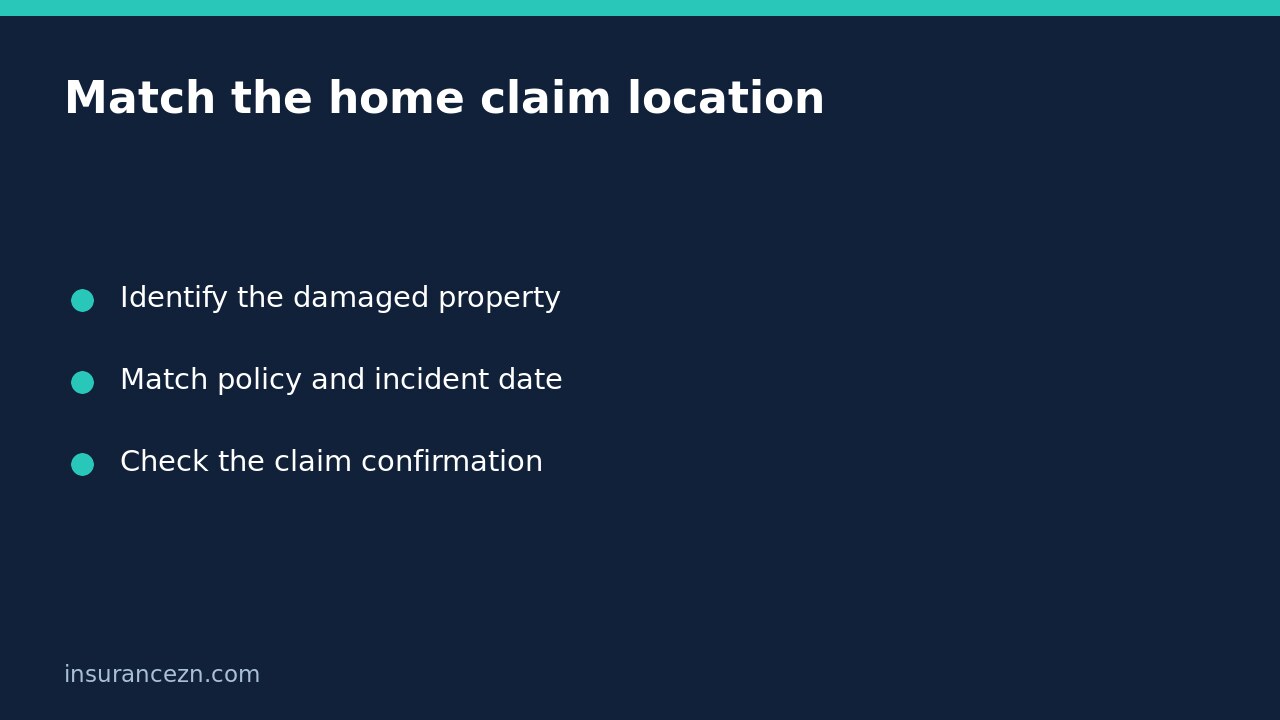

If you manage insurance for more than one home, identify the damaged property before choosing a policy in an online claim form. A postal address, the place where damage occurred and the address insured by a particular contract may be different. Match the incident to the relevant documents, and ask the insurer about uncertainty rather than selecting a familiar policy number and hoping it is correct.
This is general information for Australian readers, not personal financial advice. Your policy, PDS, insured location, exclusions, limits and circumstances determine cover. Matching an address or receiving a claim reference does not establish claim acceptance.
Start with safety, then identify the actual location
Do not postpone emergency assistance while sorting documents. Stay away from unsafe structures, floodwater and electrical hazards. Use emergency services when needed and contact your insurer through its verified assistance channels about urgent protection of the property.
Once safe, record the incident location precisely: street number, unit or lot identifier, street name, suburb and postcode where known. Record when the event occurred, or explain honestly if you only know when damage was discovered. Do not invent an exact time to complete a required field.
For a hypothetical owner with a residence and a rental unit, both policies might send correspondence to the residence. That does not make the correspondence address the insured location for both contracts. Read the location listed in each schedule rather than relying on the address shown in an email greeting.
Build a small policy-to-property register
Create a private working list with one row for each potentially relevant policy. Include the insurer, policy number, insured location, policyholder, building or contents section, and period of insurance. Use the documents applying to the incident, not simply the newest renewal offer.
- Compare the unit identifier as well as the street address.
- Distinguish an owned residence from a landlord policy or contents-only policy.
- Keep an old policy and its replacement clearly labelled with their respective dates.
- Record uncertainty about shared property, detached buildings or items belonging to another person.
This register is a preparation tool, not a coverage decision. An address match does not prove that the damaged item or event is insured. Ask the insurer which contract or section it needs to review; do not infer strata, landlord or tenant responsibilities from the street address alone.
Use the provider’s actual lodgement instructions
Suncorp’s home, contents and landlord claims instructions ask customers to have their policy number ready. They also identify incident details and damaged contents information as useful, and say customers can lodge before everything is ready and add details later. Those are Suncorp’s stated processes, not universal rules for every insurer.
Use that distinction carefully: incomplete evidence need not mean you should guess which property is involved. If the available policies look similar or the online selection does not fit the location, contact the insurer for guidance. Explain what happened, which address was affected and which policy numbers might be relevant.
Keep your questions narrow: “These two policies use the same mailing address. The damage occurred at this unit. Which policy should be identified for assessment?” Do not ask someone to change the incident location just to match a selected contract.
Check the confirmation against your original record
Suncorp says it provides a claim number and confirmation by email after lodgement. Save the confirmation and compare any displayed policy, location and incident details against your preparation record. If the confirmation does not show enough information, request confirmation rather than treating an absent field as an error.
A reference establishes a way to identify the submitted claim; it does not prove the insurer has accepted cover or authorised repairs. Keep that distinction when arranging contractors or discussing payment responsibility.
Organise evidence under the confirmed claim reference. Our checklist for an incomplete contents claim list explains how to track missing item information without filling gaps with guesses.
If the wrong policy was selected, request a traceable correction
Preserve the original submission and claim number. Tell the insurer exactly which entry appears wrong, provide the correct location and supporting policy documents, and ask how it will route or amend the existing claim. A promise to look into it is not confirmation that the record was corrected.
Do not silently create another claim merely to obtain a better-looking confirmation. Ask whether a replacement reference is necessary, how it relates to the original, and which reference to use for future evidence. Keep both records if the insurer issues a new number; do not assume the original was closed.
Final checks before leaving the task
Can you identify the affected location independently of your mailing address? Have you preserved the policy period and original incident evidence? Does the insurer have your correction request, and has it confirmed the processed location and reference to use? These checks reduce administrative confusion without promising any particular coverage or settlement outcome.