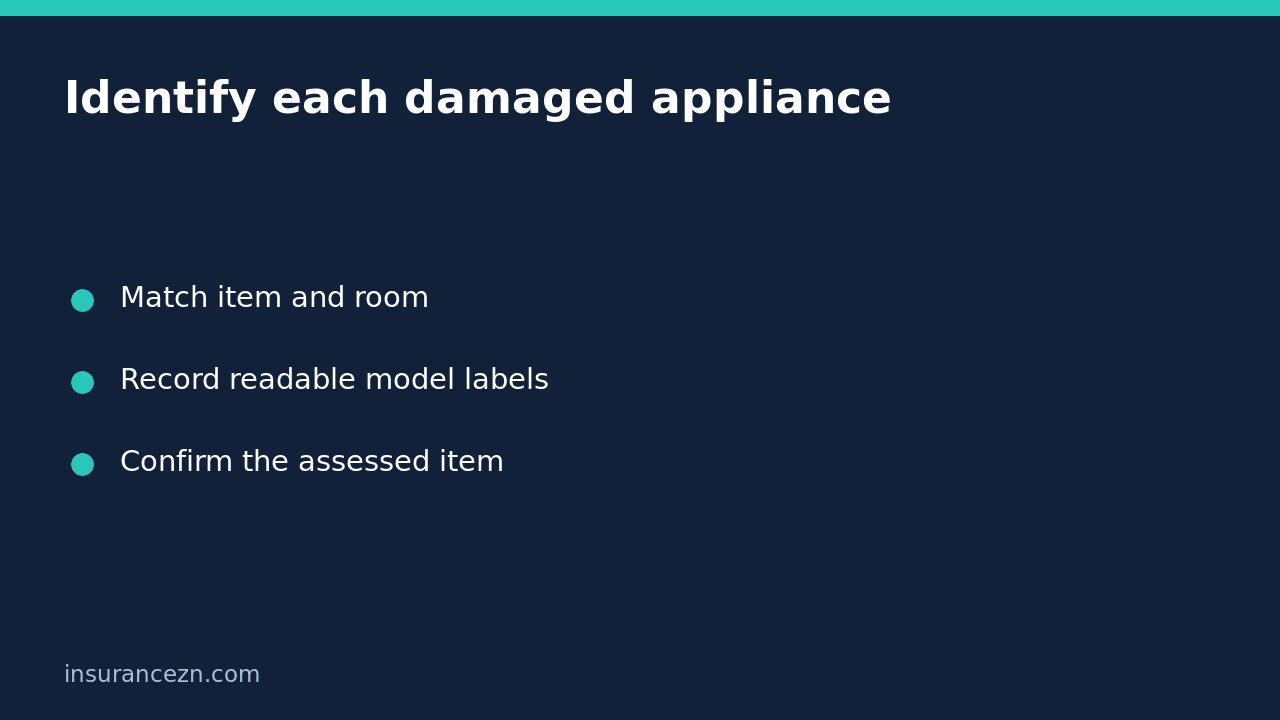

If two similar appliances appear in a home contents claim, make it clear which photographs, invoices and damage observations belong to each one. A matching brand or appearance does not establish that two records describe the same physical item. Build an item-identity sheet before asking the insurer to reconcile an unclear entry.
This is general information for Australian readers, not personal financial advice. Cover and evidence requirements depend on the applicable policy, PDS, schedule and claim assessment. The checklist is a practical organisation method, not an insurer-mandated form or a guarantee of acceptance or replacement.
Give each physical item its own reference
Start with a plain reference such as kitchen microwave or laundry freezer, adding a unique identifier if there is more than one in the room. Record where each item was located when the incident happened and where it is now. Keep your own item reference separate from the insurer’s claim number: one claim can involve several items.
For example, an older freezer in a garage and a newer freezer in a laundry might share a manufacturer. A receipt bearing that manufacturer’s name is not enough to show which freezer it relates to. Record what you can establish from the document and leave the unresolved connection explicit. Do not attach the same receipt to both entries as proof of two separate purchases.
Record labels only when safe and readable
Where safely accessible, photograph the whole appliance, its surroundings and its model or serial label. Link those images to the same item reference. Record model and serial numbers in separate fields because they serve different identification purposes. Preserve the photograph so a mistyped character can be checked later.
Do not plug in, open, dismantle or move damaged electrical equipment merely to find a label. Water, instability and electrical hazards need professional attention. If the label cannot be read safely, write that it has not been verified. A similar model found online is not evidence of the damaged item’s identity.
Suncorp’s home claim instructions ask customers to have incident and damaged-contents details available. Its emergency-repair guidance also calls for clear damage photographs and addresses retaining items before assessment, subject to health-risk exceptions. These are Suncorp’s published procedures, not universal requirements for every Australian insurer.
Connect ownership records without overstating them
Create an evidence row for each item with the document filename, date, supplier, description and what it actually shows. An invoice might identify a model but omit the serial number. A bank transaction may support a payment but not identify the goods. A family photograph can show an appliance in the home without establishing its purchase price.
- Keep original invoice files and original photographs unchanged.
- Label annotations or cropped copies as working copies.
- Note whether an identifier is directly visible or only reported from memory.
- Flag one document potentially relating to multiple entries for clarification.
- Ask the insurer what alternative evidence it will consider when records are missing.
A missing serial number does not let you assume either automatic rejection or automatic acceptance. If other details remain incomplete, use the separate incomplete contents claim list workflow to track outstanding information rather than inventing it.
Reconcile the insurer’s actual item record
Submit your item-identity sheet through the insurer’s verified claim channel, quoting the existing claim reference. Suncorp’s source describes uploading supporting documents through its account or app, or emailing them with the claim number. Follow your own insurer’s current instructions rather than assuming another company’s channel applies.
Explain the precise uncertainty: for example, whether the laundry freezer photograph was attached to the garage freezer entry. Ask which model, location and evidence the assessor has recorded for each appliance. Document receipt is not proof that the underlying item record was corrected. Request confirmation of the processed entry and any further evidence needed.
If an estimate or proposed replacement names the wrong model, identify the mismatch with supporting evidence. Keep identification separate from entitlement: correcting a model does not itself establish that the item is insured, that all damage arose from the claimed event, or that a preferred upgrade must be supplied.
Before assessment or settlement: quick checks
Should I lodge another claim to separate the appliances? Not merely because two item entries are confused. Ask the insurer to reconcile the existing record first. If the items relate to different events, explain the facts and ask how they should be handled rather than merging them by default.
Can I discard the item once I send photographs? An upload acknowledgement is not disposal approval. Check the insurer’s instructions, while prioritising immediate health and safety requirements and documenting unavoidable disposal when safe.
Before agreeing to an item schedule, check each reference against the room, model evidence, recorded damage and proposed outcome. Save the confirmation alongside your original documents. A clear identity trail helps resolve an administrative mismatch without turning uncertain memories into claimed facts.