
A large health aid allowance does not tell you what an extras policy will pay for a particular blood glucose monitor. Before buying or upgrading cover, obtain an estimate for the exact device and compare the likely benefit with the extra premium. Keep the insurance calculation separate from your clinician’s advice about appropriate monitoring.
This is general information for Australian readers, not personal financial advice. Benefits depend on the applicable policy, fund rules and product documents, including any relevant PDS. This is not medical advice; do not delay necessary care or change prescribed equipment to obtain an insurance benefit.
Identify the purchase before comparing policies
The Australian Government’s General Treatments definitions describes blood glucose monitors as devices that measure glucose concentration in the blood. It warns that their benefits may be deducted from an overall health aid limit and directs readers to their insurer for details. That is a checking framework, not a promise that every monitor or associated supply is eligible.
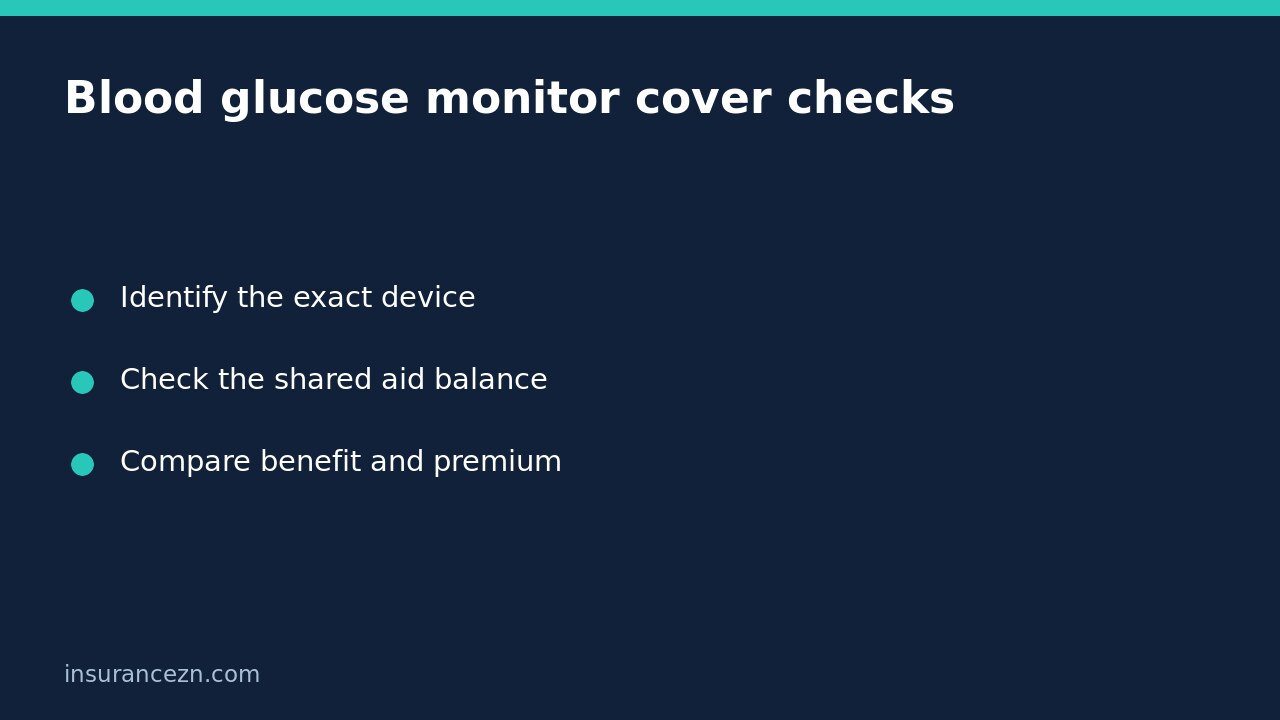
Ask the supplier for an itemised quote naming the manufacturer, model, device description, price and proposed purchase date. Separate a starter device from strips, lancets, sensors, subscriptions, delivery and other accessories. Do not assume a benefit for one component extends to the rest. In particular, do not treat a general reference to a blood glucose monitor as confirmation of benefits for a different monitoring technology.
Ask for a device-specific benefit estimate
Send the quote to each fund through an ordinary enquiry channel. Ask whether that exact item is eligible under the named product, whether the supplier is recognised and what evidence is required. If the fund requests a prescription or clinical document, confirm the required form rather than assuming any referral is sufficient.
- What amount would be payable for this model at this quoted price?
- Are waiting periods or replacement-frequency conditions relevant?
- Does the allowance apply per person, membership, device or another basis?
- Would purchasing before the new cover begins make the item ineligible?
- Are consumables assessed separately, excluded or subject to another category?
An estimate is not the final assessment. Keep its assumptions and reference number, and ask what could change the result. A policy application or enquiry acknowledgement does not establish that an upgrade has been accepted or that benefits have commenced.
Check what remains in the shared health aid pool
The headline allowance may be much larger than the amount available to you. Request the current remaining balance and the claims already counted against it. Then identify other expected purchases drawing from the same pool. The government overview explains that private health insurers commonly limit benefits per service and per year; the exact interaction must come from your product’s rules.
Use a simple worksheet with separate columns for item cost, estimated eligible benefit, relevant pool, remaining balance and personal cost. If two purchases share one balance, reduce that balance after the first estimated benefit before modelling the second. Do not give each purchase the full annual pool. Ask how the fund would allocate benefits if the order of purchases changes.
Compare the premium over the same period
Compare keeping your present arrangements with each proposed alternative over an identical period. Record the actual total premium payable, including any package changes or lost discounts, and the expected eligible benefits for purchases you genuinely anticipate. Do not compare a once-only device benefit with a monthly premium headline.
A policy providing a larger monitor benefit can still leave you worse off if its additional premium exceeds the treatment savings. Conversely, other benefits you expect to use may matter, but only include supported personal estimates, not every advertised maximum. If cover is bundled, the combined cost of hospital and extras arrangements is worth reviewing before switching.
Final purchase checklist and common questions
Does an unused aid allowance guarantee payment? No. Item eligibility, purchase timing, supplier requirements and any applicable sublimits still need checking.
Should I buy a replacement early to use the balance? Do not buy unnecessary equipment simply to exhaust an allowance. Ask your treating professional what is needed, and check replacement conditions with the fund.
Before proceeding, retain the itemised quote, written benefit estimate, current balance information and confirmed cover commencement details. After purchase, keep the invoice and processed claim assessment. Reconcile the actual benefit against the estimate and ask the fund to explain differences without assuming an error guarantees extra payment.
Sources: General Treatments and Overview of Health System, PrivateHealth.gov.au.