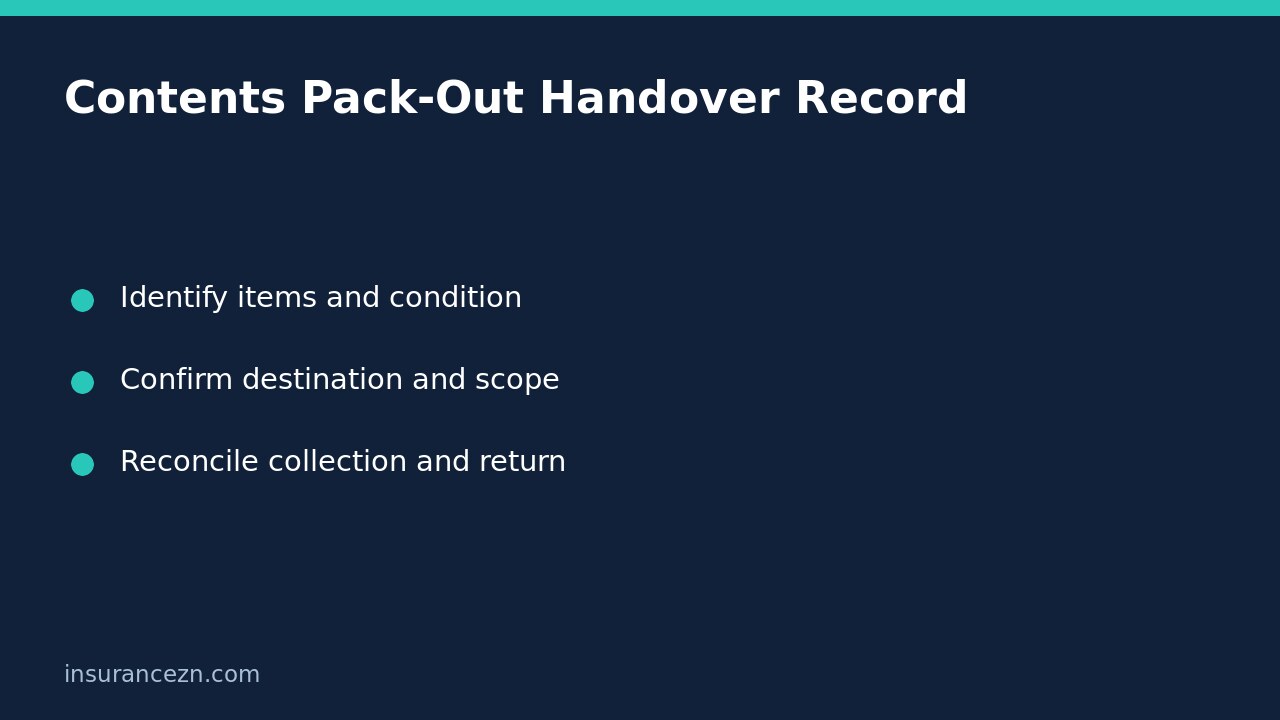

When belongings are collected from a damaged home for cleaning, assessment or storage, keep a handover record showing exactly what left, its condition and its destination. A truck arriving does not establish that every item or associated charge is covered. Confirm the collection scope and preserve a copy of the item list before signing a receipt.
This is general information for Australian readers, not personal financial advice. Cover, supplier arrangements, limits, exclusions and claim decisions depend on the applicable policy, PDS and circumstances. This checklist recommends recordkeeping; it does not promise removal, cleaning, storage or return-delivery benefits.
Confirm the collection purpose and authority
Contact the insurer through a verified claim channel and ask who arranged the collection, which supplier is attending and what work is authorised. Distinguish transport to an assessment facility from approval to clean, repair, replace or dispose of belongings. Ask whether there is anything you must agree to or pay separately.
Suncorp’s home claims instructions describe assessment after lodgement and explain that the insurer will confirm cover and applicable excesses. These are Suncorp’s procedures, not universal terms for every Australian insurer. The practical lesson is to obtain claim-specific confirmation rather than infer coverage from a supplier appointment.
If a removal or storage agreement is presented, ask who is contracting with the supplier and which charges it creates. Clarify storage periods, access arrangements and return transport before accepting an open-ended booking. Record unanswered questions rather than treating silence as approval.
Create an item-level handover list
Use a simple identifier for each item or clearly described group. Record the room it came from, description, brand or model where known, serial number if safely accessible, visible condition and photograph filenames. Where an item is already damaged, describe what you can actually see without guessing the cause or repairability.
- Photograph the item and any existing marks before packing, when safe.
- Record accessories, detachable parts and paired components travelling with it.
- Use box identifiers linked to a contents list, not merely a total carton count.
- Note who packed each box and any contents you could not inspect.
- Record the collection date, supplier and destination provided.
For example, a hypothetical television entry could identify the screen, stand and remote separately under one item reference. A receipt saying only three cartons collected would not show whether the remote travelled with that television. This record helps resolve later questions; it is not proof of an accepted benefit or supplier liability.
Keep assessment, cleaning and disposal decisions separate
An item being removed for inspection is not necessarily being declared irreparable. Ask how proposed cleaning or repair will be communicated, who can authorise it and how you will be told if disposal is proposed. Keep valuable or identity-sensitive belongings out of a collection unless the arrangement specifically requires them and their handling is clear.
Suncorp tells customers not to dispose of items before its builder or assessor attends unless they pose a health risk. Where disposal is necessary, it asks for multiple clear photographs first. That instruction is not blanket permission to discard everything collected, and safety must not be compromised to preserve evidence.
If something cannot safely remain in the home, tell the insurer promptly and seek directions. Never enter an unsafe building or handle hazardous material merely to finish an inventory. Our damage-photo checklist before cleanup covers the related evidence-preservation step; the pack-out record adds custody and destination information.
Check the receipt before the truck leaves
Compare the supplier’s collection sheet with your list. Identify missing descriptions, items not collected and any last-minute additions. If something is described inaccurately, request a correction or add a clearly dated note through the agreed process. Do not sign a statement that all items are undamaged or all work is completed if you cannot confirm it.
Keep the signed copy and ask for the destination contact, storage reference and a way to request updates. Photograph legible labels without exposing private paperwork publicly. A collection acknowledgement establishes a recorded handover; it does not confirm the insurer has accepted each item, cost or loss.
Reconcile the return against the original record
On return, check item identifiers, accessories, quantities and visible condition against the outgoing list. Mark items still held elsewhere separately from items returned. If something is missing or differently damaged, report the discrepancy promptly through the claim channel with the original photographs and both receipts. Avoid alleging a cause you cannot establish.
Request confirmation that your discrepancy report was attached to the correct claim and ask who will investigate. An upload receipt is not confirmation that the difference was assessed or compensation approved. Preserve the original list and add a dated reconciliation rather than silently rewriting the outgoing record.
What if the supplier only gives a box count?
Ask whether an itemised list can be supplied and supplement it with your own safe, dated record. Identify sealed boxes whose contents you could not verify. Confirm any disputed entries in writing. The goal is an honest account of what is known, not a perfect-looking inventory built from guesses.