
If you change Australian hospital cover to a lower excess, ask the fund which amount would apply to an admission during the transition. A processed premium increase or a new membership card does not, by itself, establish that the reduced excess is available immediately. Before budgeting for treatment, obtain a written answer about the benefit change and refresh the hospital’s estimate.
This is general information for Australian readers, not personal financial advice. Cover depends on your policy, applicable PDS or fund rules, exclusions, waiting periods and treatment eligibility. This checklist does not establish entitlement or guarantee a claim outcome.
Separate the policy change from access to the improved benefit
The government’s managing your policy guidance explains that an excess is an agreed contribution towards hospital treatment. It also distinguishes continuity for existing benefits from waiting periods for new or higher benefits when moving insurers. Its waiting-period guidance explains that increasing your level of cover can involve waiting before accessing the higher benefits.
These general explanations are not a product-specific ruling on your proposed excess reduction. Ask the fund whether your change is treated as an increase in benefits, whether a waiting period applies to the difference, and what excess remains payable meanwhile. Do not assume either that every reduction has the same waiting period or that staying with the same insurer removes the question.
Give the fund a precise before-and-after record
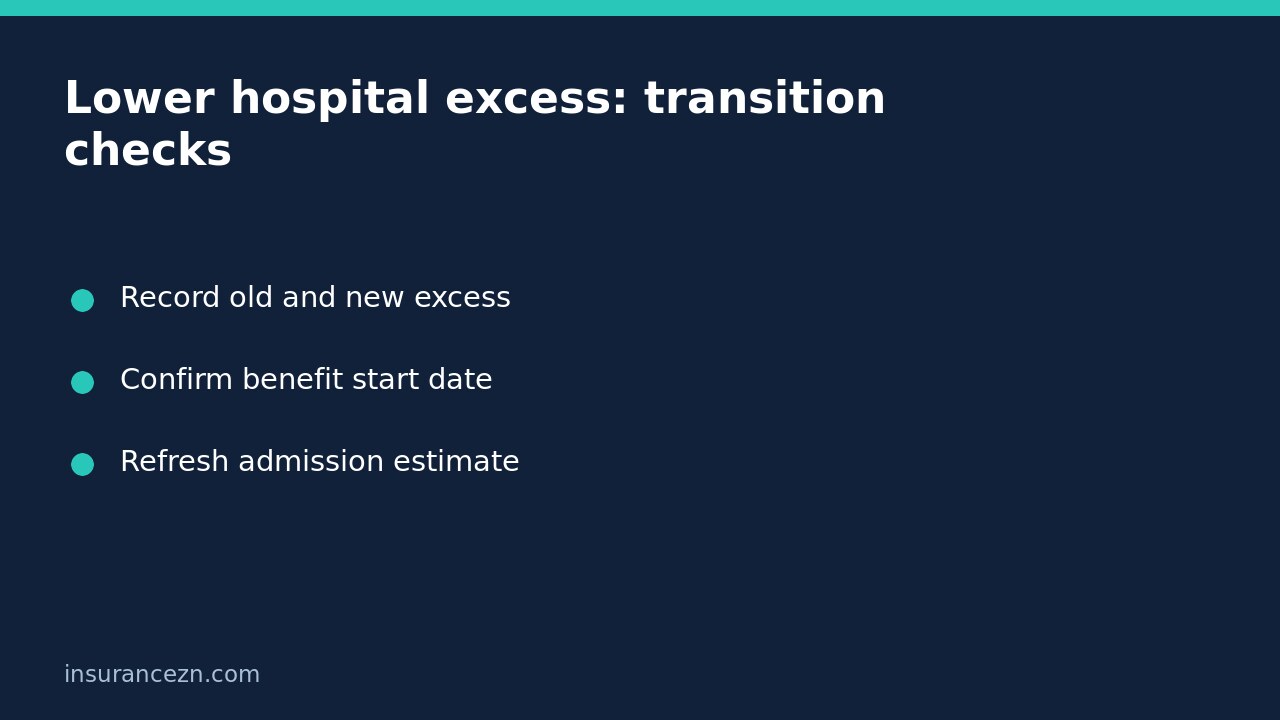
Record the current product name, membership number, excess and the people covered. Then identify the proposed product, proposed excess and requested change date. If you are switching funds, include your existing cover history and ask what transfer evidence the new fund requires. A vague request for a cheaper excess may not identify which quote or membership component you mean.
- Ask whether the change affects only the excess or also treatment categories, restrictions, co-payments or hospital arrangements.
- Request the actual payable premium and the date the new premium begins.
- Ask when the reduced excess becomes available, including any conditions affecting that date.
- Ask how an admission before that date would be assessed under the old and new arrangements.
Keep the answer alongside the quote. An explanation of available options is different from confirmation that your requested option has been processed.
Use the actual planned admission as a checking example
If treatment is already being arranged, supply the expected admission date, hospital, treating provider and available item details. Ask the fund to assess those details rather than answering only a general question about the product. Mention any unresolved clinical or booking information so it is not silently treated as confirmed.
For example, a member may request a lower excess while a hospital booking is being prepared. The fund might confirm the product change date but still need to explain the transition rule for the improved benefit. The useful next step is to ask which excess the hospital should quote for that specific admission, not to substitute the smallest number from the new brochure. This is a checking scenario, not a statement about any particular fund’s rules.
Do not postpone necessary care simply to complete insurance administration. Discuss clinical timing with your treating team and contact the hospital about billing questions separately.
Refresh the hospital estimate after the fund responds
Send the relevant confirmation to the hospital’s admissions or billing team and request an updated written estimate. Check that it identifies the patient, expected admission and applicable excess. If it still shows the old amount, ask whether that reflects a transition rule, outdated membership information or another unresolved issue. Preserve both versions rather than overwriting the original.
A lower excess does not remove co-payments, medical gaps or other uninsured charges. For the wider budgeting task, see how hospital excess choices interact with premiums and admission cash. Keep the transition decision separate from the question of whether the higher ongoing premium suits your budget.
Final questions before relying on the lower amount
Does paying the new premium prove immediate access? No. Reconcile the payment, processed product change and applicable benefit date separately.
Does the new card settle the hospital bill? No. Obtain a treatment-specific estimate and confirm unresolved eligibility conditions.
What should I retain? Keep the old schedule, new schedule, written transition explanation, effective dates and revised hospital estimate. If the documents disagree, ask the fund for a processed correction or a clear explanation before treating the smaller excess as your final liability.