
Before booking a medical examination requested for a job application, ask the requesting organisation and clinic who will pay for the assessment. Do not assume that having a Medicare card, hospital insurance or extras cover makes an employment-related examination reimbursable.
This is general information for Australian readers, not personal financial advice. Benefits depend on the exact service, eligibility and applicable policy documents or PDS, including exclusions, limits and waiting periods. This article does not determine an employer’s legal payment obligations or promise an insurance benefit.
Identify the purpose of the appointment
A consultation to investigate symptoms and an examination requested to produce an employment report are not interchangeable billing tasks. Tell the clinic why you are attending and provide the actual request rather than simply asking for a general check-up.
The Australian Government’s PrivateHealth.gov.au overview lists examinations for life insurance, superannuation or memberships for which someone else is responsible, including an employer, among services Medicare does not cover. This is an important warning against assuming that every appointment performed by a doctor attracts an ordinary Medicare benefit.
The same overview describes private health insurance and Medicare as having different roles. Hospital insurance is not a general reimbursement account for any medical invoice. Extras policies may cover specified non-hospital services, but general extras inclusion does not establish that a particular employment assessment or report is eligible.
Ask for the requested scope and an itemised estimate
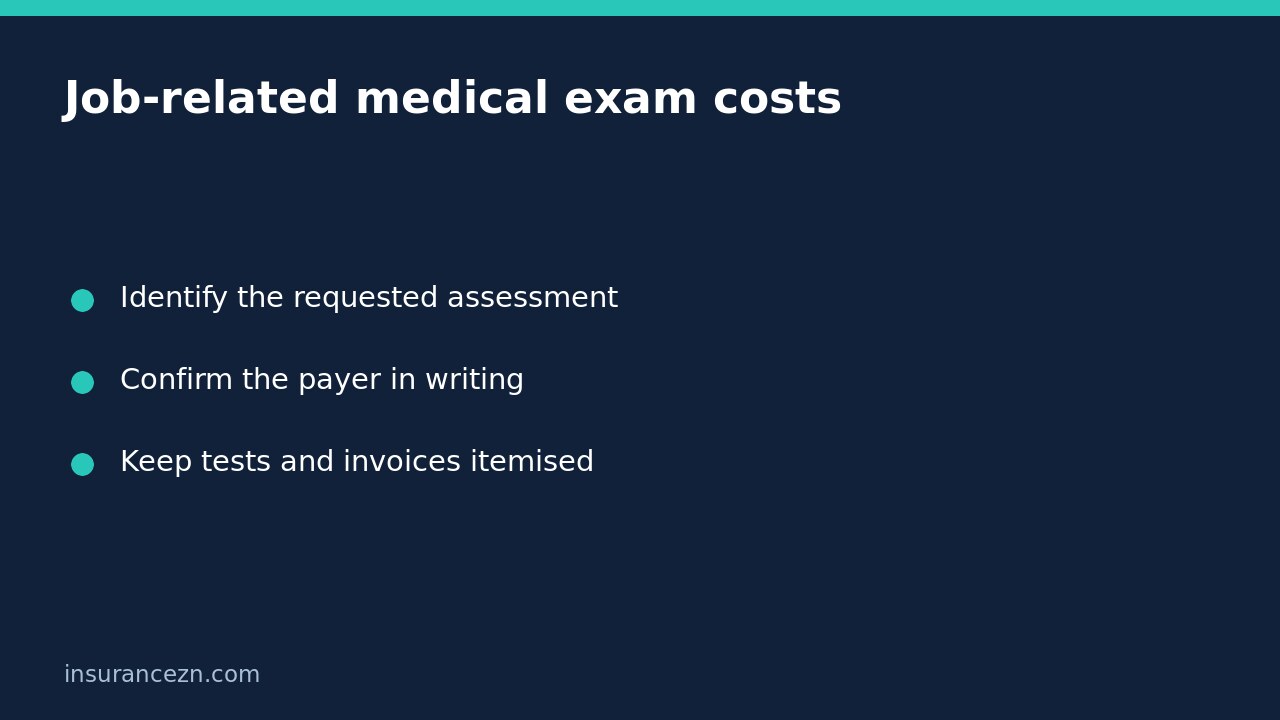
Start with the organisation requesting the examination. Ask for the written assessment instructions, the nominated provider if there is one, the reporting requirements and the payment contact. Avoid booking additional tests merely because another applicant says they had them.
Then ask the clinic to separate the proposed charges. Depending on the actual request, these might include the assessment consultation, a written report, and separately requested tests. These are possible invoice components to clarify, not a recommendation that everyone needs these services.
- What assessment and report has the organisation requested?
- Is this clinic an accepted provider for that request?
- What is the total quoted fee and what does it exclude?
- Will another provider issue separate accounts?
- Who receives the invoice and who must pay on the day?
- Are cancellation or rebooking charges applicable?
Record the quote date and the assumptions behind it. A report-only quote may not include a later request for additional testing. Ask for an updated estimate if the scope changes.
Distinguish direct billing from reimbursement
An organisation arranging an appointment does not necessarily mean the clinic has authority to invoice that organisation. Confirm whether there is a purchase order, booking reference or other billing instruction, and check that the clinic has received it.
If you are expected to pay first and seek reimbursement, ask the requesting organisation which charges it has agreed to reimburse, what documents it needs and where to submit them. A submitted expense request is not an approved reimbursement, and an approved request is not money received in your bank account.
For example, imagine a clinic quotes for an assessment plus a report, while a recruitment email mentions only an assessment. Before attending, send the itemised quote to the nominated contact and ask which components are authorised. This hypothetical example illustrates a scope mismatch; it does not establish that an employer must fund any particular charge.
Check any claimed insurance benefit against the exact service
If someone suggests claiming through your health fund, contact the fund with the service description, provider details, purpose of the examination and any item numbers supplied by the clinic. Ask for a service-specific answer under your actual product, not merely confirmation that you hold extras cover.
Do not ask the clinic to relabel an employment report as treatment to obtain a benefit. If the appointment also identifies a health concern requiring separate clinical care, ask the practitioner to explain the clinical next steps and the billing for those separate services. Never delay urgent medical care while resolving administrative payment questions.
Our explanation of why general medical cost figures are not a personal quote reinforces the same budgeting principle: use the actual provider’s itemised estimate for your circumstances, not a generic published figure.
Final booking checklist
Does an employer referral prove insurance cover? No. A request establishes the reason for an assessment, not Medicare eligibility or private health benefit entitlement.
What should I retain? Keep the original assessment request, clinic estimate, written payer instructions, final itemised invoice, payment receipt and any processed reimbursement confirmation. Store health information securely and ask which authorised contact needs each document.
What if the payer is unclear? Ask the organisation and clinic to reconcile the billing instructions before relying on reimbursement. Do not treat a vague assurance as confirmation of the approved scope or amount.
Sources: PrivateHealth.gov.au overview of Medicare and private health coverage and private health insurance basics. These sources provide the general coverage framework, not a decision on an individual employment examination or employment-law dispute.