
Water damage is one of the most common and financially devastating events homeowners face. Whether it stems from a burst pipe during freezing temperatures, a ruptured appliance line in the kitchen, or severe storm flooding, the immediate aftermath involves stress, cleanup costs, and the complex process of navigating an insurance claim. Many policyholders assume their standard homeowners insurance covers all water-related incidents, but this is often a critical misunderstanding that can lead to significant out-of-pocket expenses. To secure a fair settlement and ensure your home is restored properly, you must understand the specific distinctions between covered perils, exclusions, and the nuances of your deductible. This guide provides a practical framework for evaluating your policy when filing a claim for water damage.
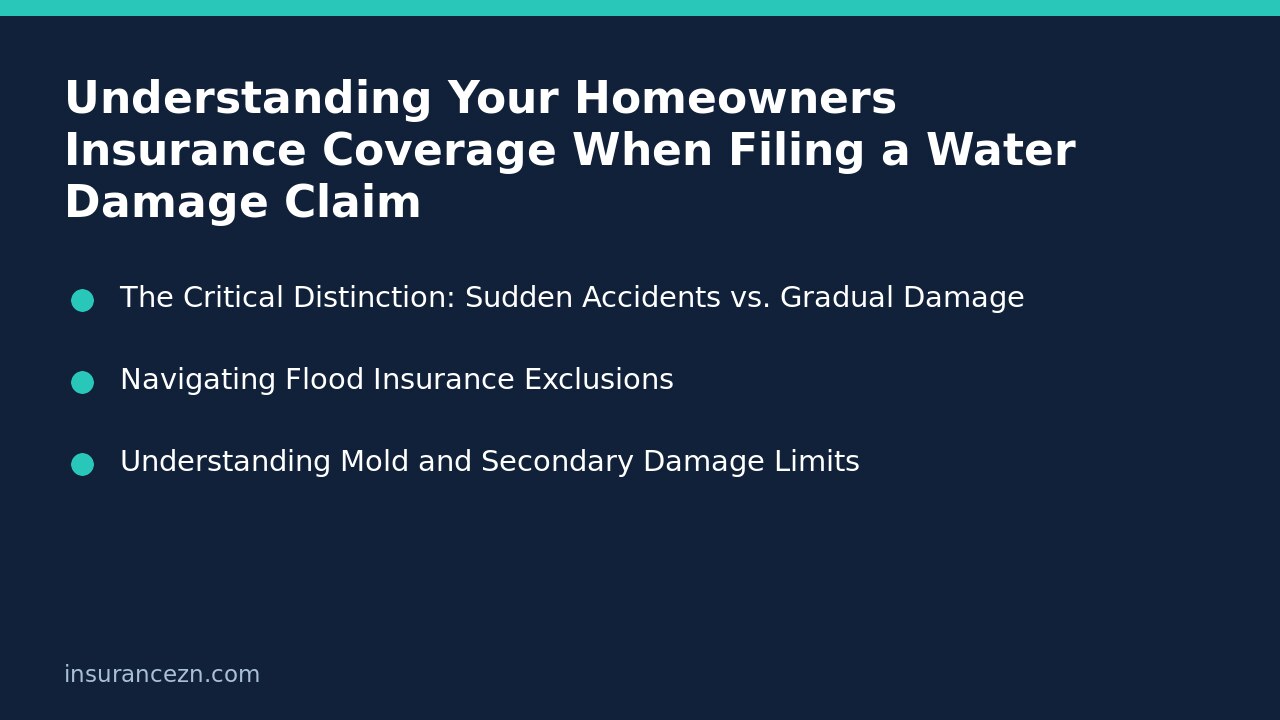
The Critical Distinction: Sudden Accidents vs. Gradual Damage
The single most important factor in determining whether a water damage claim will be approved is the cause and timing of the incident. Most standard homeowners insurance policies provide coverage for “sudden and accidental” discharge of water. This includes scenarios like a washing machine hose bursting, a toilet overflowing due to a mechanical failure, or a pipe freezing and cracking overnight. In these instances, the damage is unexpected and immediate, triggering the policy’s protection.
Conversely, insurance generally excludes damage resulting from long-term maintenance issues or gradual seepage. If you notice water staining on your ceiling that has been growing slowly over six months due to a slow leak in the roof or plumbing, most policies will deny coverage for both the mold and the structural damage. Insurers view this as a known wear-and-tear issue that is the homeowner’s responsibility to repair through regular maintenance.
Real-World Example:
Imagine you wake up to find your basement flooded. An investigation reveals a pipe behind the drywall froze and burst at 3:00 AM. Your policy will likely cover the water extraction, drying of carpets, and replacement of damaged drywall. However, if the same flood occurred because you neglected to replace a worn-out seal on a window well for three years, leading to groundwater seepage, your claim would likely be denied. The timing and suddenness are the deciding factors.
Navigating Flood Insurance Exclusions
A frequent point of confusion involves the difference between water damage from plumbing issues and flooding. Standard homeowners insurance policies explicitly exclude “flooding.” In the context of insurance definitions, flooding refers to an external source of water that enters your home in large quantities, such as rising groundwater, overflowing bodies of water (rivers, lakes), or storm surges.
If you live in a designated flood zone, you may have purchased a separate National Flood Insurance Program (NFIP) policy or a private flood insurance policy. Without this specific endorsement or separate policy, any claim related to external flooding will be rejected by your standard carrier. Even if you are not in a high-risk flood zone, you should verify your policy language, as some regions have mandatory flood purchase requirements for certain properties. Always check your declarations page to see if “flood” is listed under exclusions or if you have added a flood endorsement.
Understanding Mold and Secondary Damage Limits
When water damage occurs, it often leads to mold growth, which complicates the claims process. Most standard policies do not cover mold resulting from a covered water loss (like a burst pipe), but they often include limited coverage for mold remediation, typically capping payouts between $1,000 and $5,000 depending on the insurer. This limit is usually applied regardless of the actual cost to remove the mold.
However, if the water damage was due to an excluded peril (like flooding or gradual seepage), the mold coverage will almost certainly be denied. Furthermore, many policies exclude mold caused by humidity issues or poor ventilation that existed prior to the loss. When filing a claim, it is crucial to document the source of the moisture immediately. If you delay cleanup and allow mold to spread from a covered event into an excluded area (like outside walls), the insurer may argue that the expansion was due to your lack of timely mitigation rather than the initial accident.
The Role of Deductibles and Limits in Water Damage Claims
Before filing a claim, review your deductible structure. Many homeowners policies feature a separate water damage deductible or a specific sub-limit for certain categories like “watercraft” or “flood.” While many standard policies have a single deductible for all perils, some offer the option to buy a lower deductible specifically for water damage (often called a “special deductible”) in exchange for a higher premium. If you purchased this option, ensure you are applying the correct amount when calculating your claim costs.
Additionally, be aware of policy limits. While most structures and personal property have high limits, specific items like jewelry or art might have lower sub-limits. More importantly, check if there are aggregate limits for water damage exclusions in specific zones. If your home has a basement that is prone to minor seepage, some policies may cap the payout for water entering from below ground at a much lower amount than the general structure limit.
Mitigation Duties and Avoiding Claim Denials
One of the most common reasons for claim denials or reductions is the failure to mitigate further damage. Your insurance policy includes a duty to mitigate, meaning you must take reasonable steps to prevent additional loss after the initial event. For example, if your roof is blown off during a storm and rain begins to enter, you must cover the hole with a tarp immediately. If you wait until the next day to get a contractor out there, and the water damage spreads to the insulation and electrical wiring, the insurer may deny coverage for the secondary damage caused by your delay.
Checklist for Immediate Action After Water Damage:
* Stop the Source: Shut off the main water valve if a pipe has burst or stop the machine that is leaking.
* Document Everything: Take photos and videos of the damage, the source of the water, and any damaged belongings before cleaning up.
* Mitigate Quickly: Use buckets, towels, or tarps to contain standing water. Move furniture off wet carpets.
* Notify Your Insurer: Call your insurance company as soon as possible to report the loss and start the adjuster assignment process.
* Keep Receipts: Save receipts for any emergency repairs, rental equipment (like dehumidifiers), or temporary lodging if your home is uninhabitable.
Conclusion: Preparing for the Claims Process
Filing a water damage claim requires a clear understanding of what your policy covers and what it excludes. The distinction between sudden accidents and gradual neglect is the primary line in the sand for most claims. By understanding flood exclusions, mold limits, deductible structures, and your obligation to mitigate further damage, you can navigate the process with confidence. Remember that terms, availability, eligibility, laws, and prices depend on your specific insurer, policy, and jurisdiction. Always review your declarations page and consult your agent if you are unsure about a specific exclusion before water damage occurs. Proper preparation and immediate action after an incident are the best ways to ensure a smooth claims experience and a full recovery for your home.