
For business owners, the physical office is often the heart of operations, housing critical equipment, inventory, and intellectual property. However, this concentration of value also makes it a primary target for risks ranging from fire and theft to natural disasters like floods or hurricanes. Commercial property insurance serves as a financial safety net, reimbursing you for damage to your building and its contents. Yet, securing the right coverage requires more than just picking a policy off the shelf; it demands a strategic understanding of what is covered, how limits are calculated, and where common pitfalls lie. This guide provides a comprehensive overview to help you safeguard your office assets effectively without overpaying for unnecessary protection or underestimating your true risk exposure.
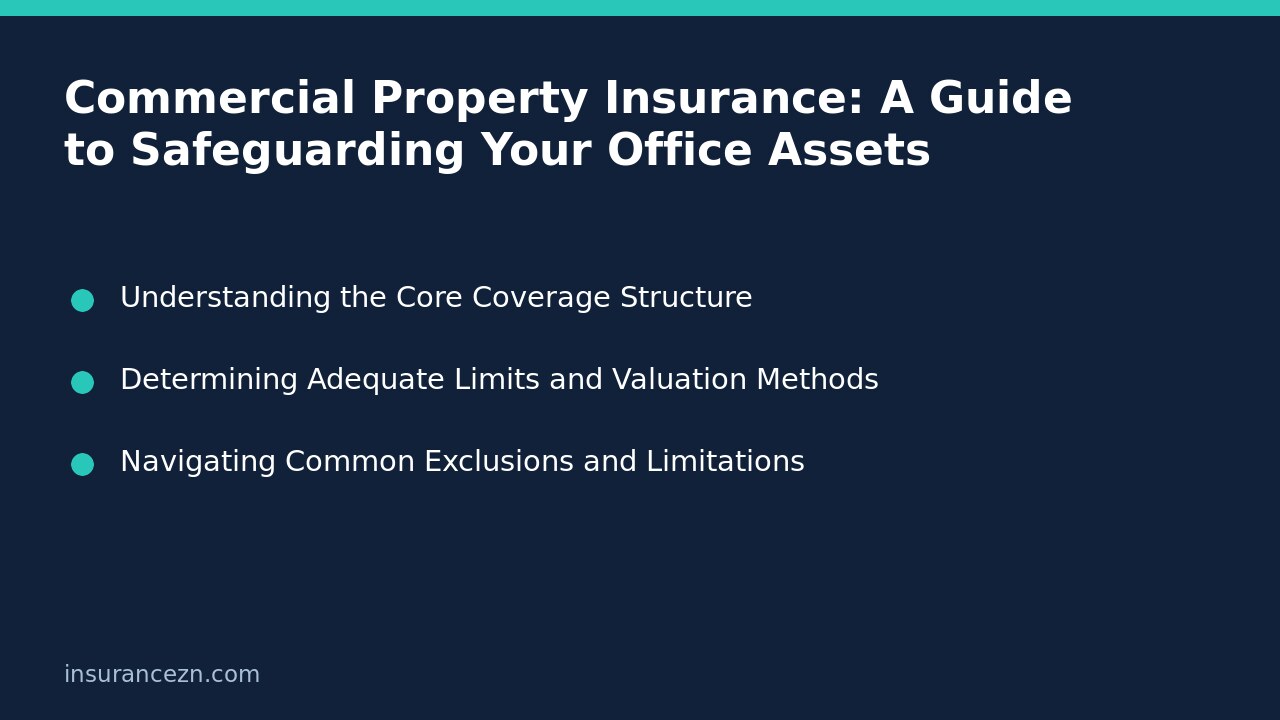
Understanding the Core Coverage Structure
At its foundation, commercial property insurance typically covers two main categories: the building itself and the business personal property within it. It is crucial to distinguish between these, as many owners mistakenly assume their policy covers the entire structure if they lease space. If you own the building, the policy should cover the walls, roof, and foundations against named perils or all-risk events. However, if you are a tenant, your landlord’s insurance usually covers the structure; your policy is limited to “business personal property,” which includes furniture, electronics, inventory, and trade fixtures like built-in shelving.
The coverage extends beyond physical objects to include business interruption. If a covered peril forces you to close your doors temporarily, this portion of the policy can help pay for lost income and ongoing operating expenses, such as rent or payroll, until you can reopen. This is often the most valuable component of a commercial property policy, yet it is frequently underutilized or misunderstood by small business owners.
Determining Adequate Limits and Valuation Methods
One of the most significant errors in commercial property insurance is setting coverage limits too low. Many policies offer “Actual Cash Value” (ACV) rather than “Replacement Cost.” Under ACV, your claim payout is reduced by depreciation. For example, if a five-year-old server rack worth $10,000 new is destroyed, an ACV policy might only pay $4,000 after subtracting five years of wear and tear. Conversely, replacement cost coverage pays the amount needed to buy a new item with similar features, minus your deductible, without deducting for age.
To ensure you are adequately protected, you must calculate the total value of your assets. This includes not just furniture, but also specialized machinery, custom software licenses, and backup data storage costs. A practical step is to conduct a regular inventory audit. If you operate in an industry where equipment fails rapidly or technology becomes obsolete quickly, relying on standard depreciation schedules may leave you underinsured when rebuilding is necessary.
Navigating Common Exclusions and Limitations
No policy covers every event, and understanding the exclusions is just as important as knowing the inclusions. Standard commercial property policies often exclude flooding, earth movement (earthquakes), and sinkholes. These are typically categorized as separate perils that require specific endorsements or standalone policies. Similarly, businesses with high-value jewelry, fine art, or expensive electronics may find these items excluded unless scheduled specifically on the policy.
Another frequent point of contention is “business personal property” limits relative to the building’s value. Some insurers cap your contents coverage at a percentage of the building’s insured value (e.g., 50% or 70%). If your office is filled with expensive servers and specialized manufacturing tools, this cap could leave you severely underinsured. Always review your policy declarations page to see if these sub-limits apply and request adjustments if necessary.
The Importance of Flood and Earthquake Endorsements
In many regions, flood and earthquake damage are the leading causes of commercial property loss that standard policies do not touch. If your office is located in a Zone 2 or higher for flooding, or in a seismically active area, relying on a standard policy is a dangerous gamble. Adding an endorsement for these perils is relatively inexpensive compared to the potential loss.
When adding these endorsements, be aware that definitions of “flood” can vary. For instance, some policies cover water backing up through sewers but exclude groundwater seepage from heavy rains. Similarly, earthquake coverage often requires a separate deductible, which might be a percentage of the building’s value rather than a flat dollar amount. It is essential to read the specific language regarding these add-ons to ensure they align with your geographic risk profile.
Mitigating Risk to Secure Better Premiums
Insurance carriers use risk-based pricing, meaning that businesses demonstrating proactive safety measures often qualify for lower premiums. Installing a fire suppression system, upgrading electrical wiring to modern codes, or installing security cameras and alarm systems can significantly reduce your risk score. Some insurers offer discounts for bundling property insurance with business interruption coverage or cyber liability insurance.
Furthermore, maintaining a clean claims history is vital. Frequent small claims can raise your premium over time or lead to non-renewal. Instead of filing a claim for minor damages that you can afford to repair out-of-pocket, consider paying the expense yourself. This preserves your loss ratio and keeps your premiums stable in the long run.
Real-World Scenario: The Tech Startup Fire
Consider a tech startup located in an older downtown building. They have servers, workstations, and prototypes worth $200,000, but their property policy lists contents coverage at only $50,000 due to a misunderstanding of valuation methods. A fire breaks out in the electrical room. The damage is total. Because the policy has a sub-limit clause capping contents at 40% of the building value, and the startup cannot prove the full replacement cost immediately, they receive a partial payout that leaves them unable to replace their critical hardware. They face weeks of downtime and lost revenue because they lacked sufficient business interruption coverage tied to the actual asset values.
In contrast, if the same startup had conducted a detailed asset inventory, purchased replacement cost coverage, and scheduled high-value items individually, the insurer would have paid the full amount needed to rebuild the operation. This example highlights why “coverage” is not the same as “protection”; you must actively manage your limits to match your actual exposure.
Final Checklist for Policy Review
Before renewing your commercial property insurance, run through this checklist:
1. Inventory Audit: Have you updated your list of assets since the last policy review?
2. Valuation Check: Are you paying for replacement cost rather than actual cash value?
3. Exclusion Scan: Does the policy explicitly include flood or earthquake if applicable to your location?
4. Sub-limit Review: Are there caps on specific categories like electronics or jewelry that might be too low?
5. Business Interruption: Is the lost income coverage period sufficient to cover a realistic rebuilding timeline?
6. Discounts: Have you installed any new safety devices that qualify for premium discounts?
Remember that insurance terms, availability, eligibility, laws, and prices depend entirely on the specific insurer, the policy language, and your jurisdiction. Always consult with a licensed broker or agent to tailor a policy to your unique business needs. By taking a proactive approach to commercial property insurance, you ensure that an unexpected disaster does not become a permanent setback for your business.