
Reporting property damage caused by theft or vandalism is a stressful process that requires precision and speed. Many policyholders find themselves fighting over claim denials or receiving significantly lower settlements simply because they made avoidable errors during the initial reporting phase. These mistakes often stem from confusion about what constitutes a covered loss, how to properly document evidence before police arrival, or failing to understand specific policy exclusions like “vandalism” versus “malicious mischief.” To secure the compensation you are entitled to, it is crucial to navigate this process with a clear understanding of insurer expectations. This guide outlines the critical errors homeowners make when filing these claims and provides actionable steps to prevent them.
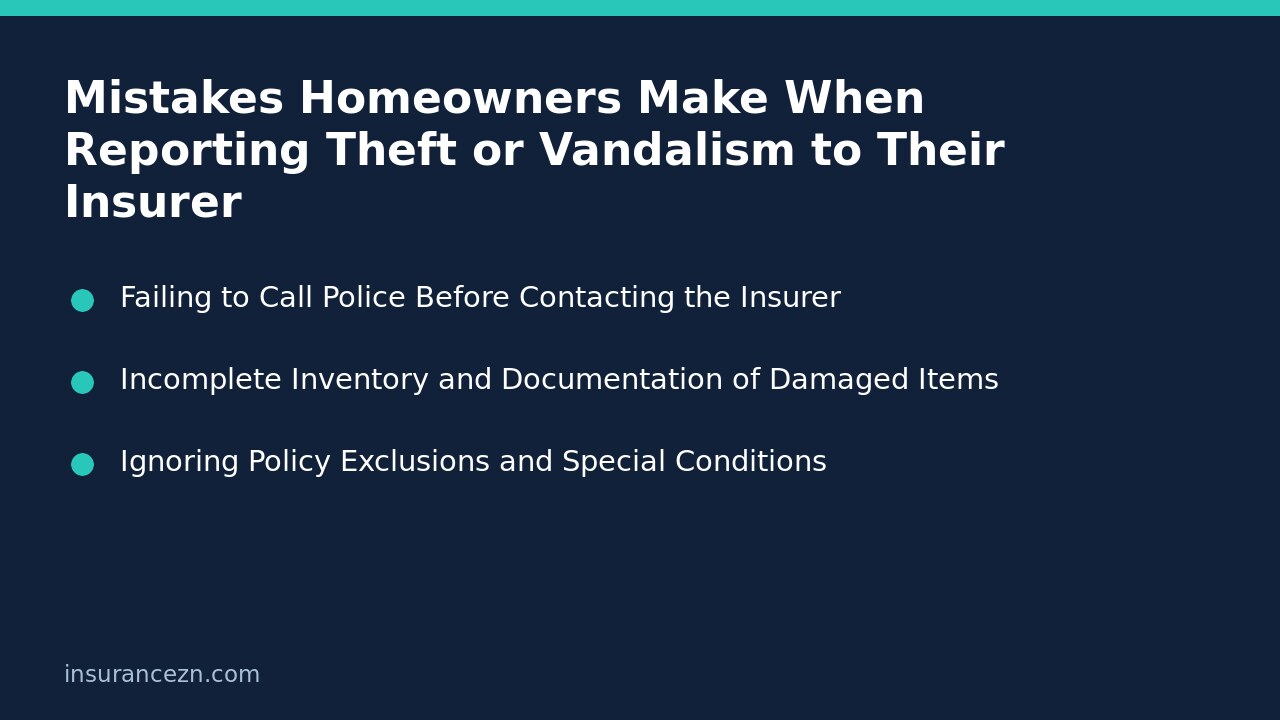
Failing to Call Police Before Contacting the Insurer
One of the most common and damaging mistakes a homeowner can make is contacting their insurance company before calling the police. While it might seem logical to notify your insurer immediately upon discovering broken windows or stolen electronics, insurers often require an official police report as the primary condition for processing theft or vandalism claims. Without this document, many policies will outright deny coverage.
When you call the police, they generate a report number and create an official record of the incident. This document serves as the backbone of your insurance claim. If you skip this step and wait until after the police arrive to get a report number, or if you assume the police don’t need to be involved because “nothing was taken,” you risk creating a gap in your documentation. Even if local law enforcement determines there is no crime scene to investigate, they must still issue a formal report stating that fact. Always obtain this report number before speaking with an adjuster; it validates the claim and proves that the loss was not self-inflicted or accidental.
Incomplete Inventory and Documentation of Damaged Items
Another frequent error involves under-documenting the extent of the damage or the value of stolen items. Homeowners often focus only on what they can see immediately, forgetting to check hidden areas like closets, safes, or behind furniture where thieves may have accessed. Furthermore, many people fail to create a comprehensive list with descriptions and approximate purchase dates before the scene is disturbed.
To avoid this, take photos and videos of every damaged area from multiple angles. Capture the state of your home before you clean up debris or move items. If items are stolen, note exactly what was missing based on your records. Insurers rely heavily on proof of loss forms that require specific details: brand, model, serial number (if available), and age of the item. Without this data, an adjuster may apply depreciation rates that leave you undercompensated. For example, claiming a five-year-old laptop was stolen requires showing purchase receipts or credit card statements to prove its original value; vague descriptions like “a computer” are often rejected.
Ignoring Policy Exclusions and Special Conditions
Homeowners frequently assume that all theft and vandalism are covered automatically under their standard property policy. However, nuances in policy language can lead to significant exclusions. For instance, many policies have specific sub-limits for jewelry, art, or electronics, meaning a single high-value item might only be covered up to $1,500 regardless of its actual worth. Additionally, some policies exclude losses occurring during certain hours of the night or in unoccupied homes (often defined as more than 30 consecutive days).
There is also a distinction between “vandalism” and “malicious mischief.” While many modern policies cover both, older or specific commercial endorsements might treat them differently. If your policy has a clause regarding “concealed perils” or requires you to have an alarm system active at the time of the incident, failing to meet these conditions can void coverage. Always review your declarations page to check for sub-limits and exclusions related to high-value items before filing a claim.
Delaying the Claim Filing Process
Time is a critical factor in theft and vandalism claims. Homeowners often delay reporting an incident hoping that they will remember more details or find missing items themselves. This hesitation can lead to the destruction of evidence, such as broken glass being swept up or surveillance footage overwriting itself on security systems. Most insurance policies have strict time limits for reporting losses; delaying beyond a few days can give the insurer grounds to deny the claim based on “failure to notify.”
Furthermore, if you do not report the loss promptly, it becomes difficult to distinguish between a recent break-in and an older one that went unnoticed. Security cameras often retain footage for only 30 to 90 days. If you wait too long to file, you lose the visual evidence that could corroborate your story or identify suspects. Immediate action ensures that the integrity of the scene is preserved and that all digital records are still accessible.
Not Verifying Coverage Before Filing
Many homeowners make the mistake of assuming their current policy covers every type of loss they have experienced in the past. Insurance terms, availability, eligibility, laws, and prices depend entirely on the specific insurer, the individual policy, and local jurisdiction. What was covered last year might not be covered today if you missed a premium payment, failed to renew an endorsement, or if the insurer updated their underwriting guidelines.
Before filing, review your policy’s “Coverage A” (Dwelling) and “Coverage C” (Personal Property) sections. Ensure that the type of loss matches the definitions in your contract. For example, some policies exclude damage caused by riots unless you have purchased a specific rider. By failing to verify these details upfront, you might file a claim only to discover later that the specific line item was excluded or limited. Always read the fine print regarding “vandalism” versus “malicious mischief” and check for any required security system mandates in your region.
Real-World Example: The Broken Window Scenario
Consider a homeowner who discovers their front window shattered one morning. Instead of calling the police first, they immediately call their insurance agent to file a claim. They explain that a rock was thrown through the glass. The adjuster asks for a police report number, which the homeowner does not have because no police were called. The insurer denies the claim, citing lack of official verification and potential fraud risk. Had the homeowner called 911 first, received a report number, documented the scene with photos, and then filed the claim with that report number, the process would likely have proceeded smoothly. This example highlights why following the correct sequence—Police, then Insurer—is non-negotiable for most theft and vandalism claims.
Checklist for Reporting Theft or Vandalism
To ensure a successful claim, follow this practical checklist immediately after an incident:
1. Ensure Safety: Make sure you and others are safe before entering the property.
2. Call Police: Contact local law enforcement to file an official report. Obtain the report number and write it down.
3. Document Everything: Take extensive photos and videos of broken windows, doors, or damaged walls from multiple angles. Do not clean up debris yet.
4. Inventory Losses: List all stolen or damaged items with descriptions, serial numbers, and estimated values. Gather receipts if possible.
5. Secure the Scene: Board up holes temporarily to prevent further entry, but keep evidence visible for the adjuster.
6. Contact Insurer: Call your claims department, provide the police report number, and submit your inventory list.
7. Review Policy: Double-check your policy limits for specific categories like jewelry or electronics before finalizing the claim details.
By adhering to these steps and avoiding common pitfalls, homeowners can streamline the claims process and increase their likelihood of receiving a fair settlement. Remember that insurance is a contract based on strict adherence to policy terms; treating it with care and attention to detail is the best defense against denial or dispute.