
Flood insurance is often misunderstood as a blanket safety net for properties located in flood-prone areas. However, the reality of flood coverage is defined by strict limitations known as exclusion clauses. These clauses specify exactly what damage is covered and, more importantly, what is not. A primary source of claim denials or significant underpayment stems from policyholders failing to understand these exclusions before a disaster strikes. When water enters a home due to rising ground levels, the expectation of coverage can clash with the fine print regarding maintenance issues, structural deficiencies, and specific types of floodwater entry.
The most critical mistake homeowners make is assuming that “flood” covers all water damage scenarios. Insurance policies distinguish sharply between external flooding caused by natural forces and internal water damage resulting from poor maintenance or gradual seepage. If a homeowner ignores an exclusion clause regarding foundation cracks or failing plumbing, they may find themselves with zero coverage when a storm triggers the issue. Understanding these distinctions is not just about reading terms; it is about managing risk and avoiding financial ruin when the next heavy rainstorm arrives.
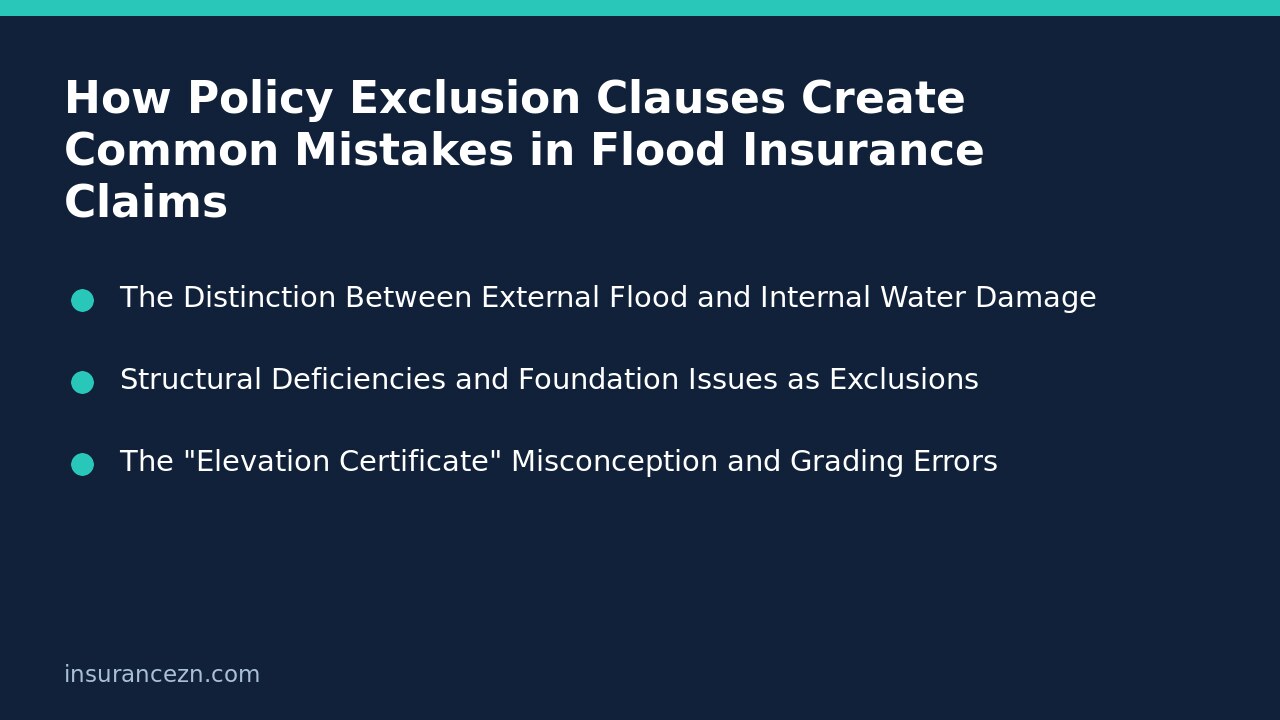
The Distinction Between External Flood and Internal Water Damage
The foundational exclusion in almost every flood insurance policy separates external flooding from internal water intrusion. External flooding occurs when water flows over the land, entering a structure from the outside through doors, windows, or walls due to rising ground water. This is typically covered under standard policies. However, internal water damage—where water enters through a broken pipe, an overflowing bathtub, or a leaking roof—is almost universally excluded unless purchased as a separate endorsement or rider.
A common mistake occurs when a homeowner attributes all wetness in the house to external flooding. If a storm causes the ground to rise and water seeps up through a cracked basement floor, that is covered. But if that same storm causes wind damage to a roof, allowing rain to enter, or if the high water pressure bursts a pipe inside the walls, those specific damages are often denied. Policyholders frequently fail to separate these events during the claims process, submitting a single claim for “flood damage” when the adjuster must sort out which parts are covered and which fall under general home insurance exclusions or maintenance responsibilities.
Structural Deficiencies and Foundation Issues as Exclusions
Another major area of confusion involves structural deficiencies. Insurance contracts generally exclude coverage for damages that result from pre-existing conditions, poor workmanship, or lack of proper maintenance. If a homeowner has a known foundation crack that allows water to enter during heavy rains, the insurance company will likely deny the claim based on an exclusion related to “structural deterioration” or “defective design.”
The logic behind this clause is that insurance is designed to cover sudden, accidental events caused by nature, not to act as a maintenance fund for aging infrastructure. A frequent error is ignoring minor leaks or foundation shifts in anticipation of a flood season. When a major storm hits, the water exploits these weak points. If the policyholder attempts to claim for the resulting damage without addressing the underlying defect, the insurer will argue that the water entry was inevitable due to the structural flaw, not an act of God. This distinction is vital; ignoring a known risk factor can lead to a complete denial of the claim, leaving the homeowner liable for all repair costs.
The “Elevation Certificate” Misconception and Grading Errors
Many homeowners believe that once they have flood insurance, their property is fully protected regardless of its specific elevation relative to the Base Flood Elevation (BFE). Exclusion clauses often hinge on the accuracy of the property’s elevation data. If a policyholder fails to maintain an accurate Elevation Certificate or if the certificate was filed with incorrect information regarding the building’s grade, coverage can be significantly reduced or voided for certain limits.
A specific mistake involves alterations made to the home after the policy was issued without updating the insurer. For instance, if a homeowner adds a finished basement or raises the electrical panel but fails to notify the insurer, the policy might exclude coverage for those specific additions during a flood event. Furthermore, some policies contain clauses that reduce coverage if the property is found to be in a higher-risk zone than initially documented, often due to updates in FEMA maps. Relying on outdated map data without verifying the current status of the property can leave a homeowner exposed to gaps in their protection that they never anticipated.
Sewage and Sump Pump Backups: Often Misunderstood Exclusions
One of the most surprising exclusions found in standard flood policies is coverage for sewage and sump pump failures. Even if water enters the home from outside, if that water carries fecal matter or toxins, or if it enters specifically because a sump pump failed due to lack of maintenance, the claim may be denied. Standard policies often cover backup of sewers or drains only if an additional rider is purchased for an extra premium.
Homeowners frequently assume that because their flood policy covers “water damage,” it must include sewage backups. However, standard forms explicitly exclude this unless endorsed. A common scenario involves a storm causing water to back up into the basement through floor drains. If the homeowner did not purchase the specific sewer backup endorsement, the cleanup costs and property damage related to the contaminated water will not be reimbursed. This mistake highlights the necessity of reviewing the “debris removal” and “contaminated water” clauses carefully to understand what triggers a denial.
Common Mistakes in Documentation and Timeliness
The interplay between exclusion clauses and the claims process often leads to errors in documentation. When a loss occurs, homeowners sometimes delay reporting the claim or fail to document which parts of the damage were caused by external flooding versus internal issues. Because exclusion clauses require the insurer to determine the primary cause of loss, vague descriptions can lead to denials based on the presumption that maintenance issues contributed to the damage.
For example, if a homeowner waits weeks to file a claim after a flood, water damage may spread from an initial entry point (covered) to other areas via mold or structural weakening (often excluded). The insurer may argue that the delay allowed secondary damage to occur, invoking exclusions related to “failure to mitigate.” Additionally, failing to photograph the condition of the home before cleanup begins can make it impossible for adjusters to distinguish between new flood damage and pre-existing wear, triggering disputes over coverage limits.
Real-World Example: The Basement Leak Scenario
Consider a homeowner in a known flood zone who purchased standard flood insurance but neglected to repair a small crack in their foundation wall. During a severe storm, water rises outside and seeps through the crack into the basement. Simultaneously, the high water pressure causes a window well to overflow, bringing in dirty water. The homeowner files a claim for total basement restoration.
In this scenario, the insurer may cover the water entering from the ground level up to a certain limit. However, if an inspection reveals that the foundation crack was known and unrepaired for years, the portion of the damage directly attributable to the structural deficiency may be denied under the structural exclusion. Furthermore, if the homeowner did not have the sewer backup rider, any sewage-contaminated water entering through floor drains would also be excluded. The mistake here was assuming a single policy covered all water-related issues without distinguishing between external flood events and internal maintenance failures.
Checklist for Avoiding Exclusion-Related Claim Mistakes
To navigate these complexities, homeowners should adopt a proactive approach before a disaster occurs:
* Review the Declarations Page: Identify specific endorsements for sewer backup and identify any limitations on basement coverage.
* Inspect Structural Integrity: Repair foundation cracks and ensure proper grading around the home to prevent water entry from structural weaknesses.
* Maintain Elevation Certificates: Ensure all elevation data is current and filed correctly with the insurer, especially after renovations.
* Document Everything: Keep a detailed log of maintenance repairs and take photos of the property’s condition regularly.
* Understand Contamination Clauses: Know exactly what happens if sewage or toxic water enters the home and whether you need additional riders.
Conclusion
Policy exclusion clauses are the gatekeepers of flood insurance claims, determining the boundary between covered disaster relief and personal financial responsibility. The most common mistakes involve confusing external flooding with internal water damage, ignoring structural deficiencies, misunderstanding sewer backup coverage, and failing to update elevation data. By carefully reading policy language, maintaining property conditions, and distinguishing between different types of water intrusion, homeowners can avoid the pitfalls that lead to claim denials. Flood insurance is a valuable tool, but it is not a cure-all; understanding its limitations is the first step toward true resilience against natural disasters.
Disclaimer: Insurance terms, availability, eligibility, laws, and prices vary by insurer, policy type, and jurisdiction. This article provides informational guidance only and does not constitute individualized financial or legal advice. Always consult your specific policy documents and a licensed insurance professional for details on your coverage.