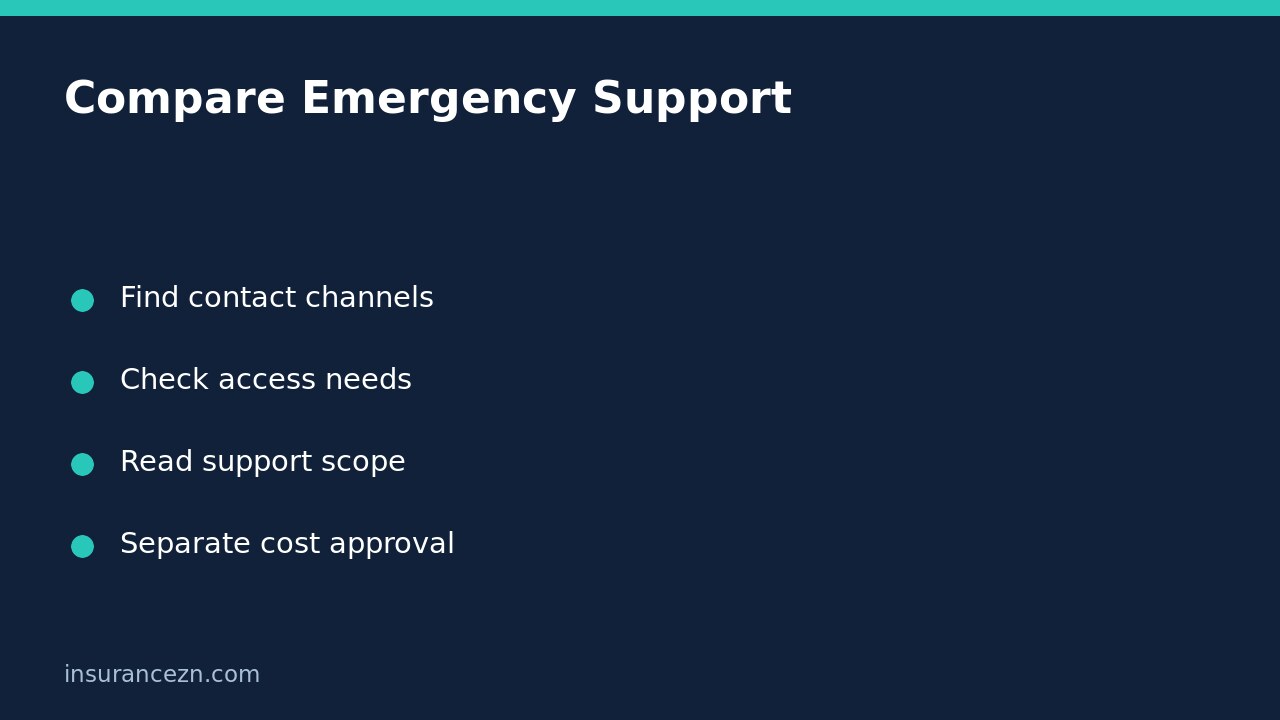

When comparing travel insurance from Australia, read how you would actually reach emergency assistance overseas, not only the medical benefit limit. Check the available channels, stated availability and what the assistance service can do. Getting through to a helpline is different from having a medical expense approved.
Smartraveller’s travel insurance guidance explains that insurers can provide practical as well as financial support, and recommends reading the Product Disclosure Statement (PDS), including what emergency support is provided. It also says the Australian Government cannot pay travellers’ bills. Assistance access is therefore a useful comparison task in its own right, rather than something to leave until an emergency.
Locate the actual overseas assistance instructions
For each shortlisted policy, locate the emergency-assistance section in the PDS and the insurer’s official contact information. Distinguish emergency assistance from sales, policy changes and routine claims enquiries. A prominent Australian customer-service number is not necessarily the intended contact for an overseas medical emergency.
Record where the instructions appear and whether the insurer identifies a separate assistance organisation. If the documents and website appear inconsistent, use an ordinary enquiry channel to ask which instructions apply to that product. Do not resolve the inconsistency by copying a number from an unofficial search result.
Compare any stated hours and time-zone information. Do not assume that a contact form, social-media inbox or general email address is monitored as an emergency channel merely because it accepts a message. Look for an explicit description of its purpose.
Check access against your actual travel circumstances
Consider how you would communicate from the destinations on your itinerary. Ask the insurer through its non-emergency enquiry service what official alternatives exist if you cannot make an international voice call. If accessibility or language support matters, ask about the available arrangements instead of assuming that all products provide identical facilities.
- Which official channel is intended for urgent overseas assistance?
- Is there a documented alternative when the main channel cannot be used?
- What information should a traveller or authorised companion have ready?
- How are communication or accessibility needs handled?
- Where are any contact instructions and limitations documented?
These are comparison questions, not assurances that an insurer offers every channel or service. If a feature is important to your decision, retain a written response tied to the proposed policy. Do not call an emergency line merely to test whether somebody answers; use published information and ordinary enquiries for pre-purchase checks.
Compare the service’s role, not just its existence
Read what the assistance team says it can arrange and what requires further assessment. Ask how travellers should seek guidance about treatment, hospitals and possible transport, and which decisions depend on the policy’s conditions. Avoid interpreting a broad promise of help as unlimited authority to incur costs.
Smartraveller advises considering destinations, activities, age and health when choosing cover. Those eligibility checks remain important even when a product advertises emergency assistance. A helpful contact service does not remove an activity exclusion, create cover for an undeclared condition or extend the insured travel period.
If comparing a medical-only product with a broader policy, separately consider the non-refundable bookings you could be funding yourself. A medical assistance service does not establish cancellation protection for the same trip.
Keep contact, treatment and payment as separate decisions
Consider a hypothetical traveller who becomes ill abroad and whose companion reaches the assistance team. The successful call establishes contact. It does not, by itself, establish that every proposed procedure, private hospital charge or journey home is insured. The medical situation, policy terms and any approval requirements still need to be addressed.
Ask each insurer how its policy describes notification and authorisation requirements, and what to do when urgent circumstances prevent prior contact. Do not invent a universal deadline or assume retrospective approval. In an emergency, seek urgent local medical help first; do not delay necessary care while comparing insurance wording or waiting for an administrative reply.
Similarly, a hospital agreeing to treat someone and an insurer agreeing to fund a bill are different events. Ask how payment arrangements are explained under the proposed product, but do not assume the traveller will never need accessible funds or that a benefits headline guarantees direct billing.
Use a short decision record before purchasing
For each policy, write down the assistance channel, documented availability, alternatives relevant to your needs, scope of help and any unanswered questions. Compare those facts alongside the actual benefits, excesses, exclusions and premium for the same travellers and itinerary.
Is a large medical limit enough? It does not explain how assistance is accessed or which expenses qualify. Does assistance approval mean every claim is accepted? Check exactly what was approved and its conditions; do not extend a specific answer to unrelated costs. What comes after purchase? Save the applicable documents and official instructions where you and an appropriate companion can retrieve them securely.
This is general information for Australian readers, not personal financial advice. Cover and assistance depend on the policy, PDS, schedule, disclosures, exclusions and insurer assessment. No contact channel or assistance conversation guarantees treatment eligibility or claim payment.