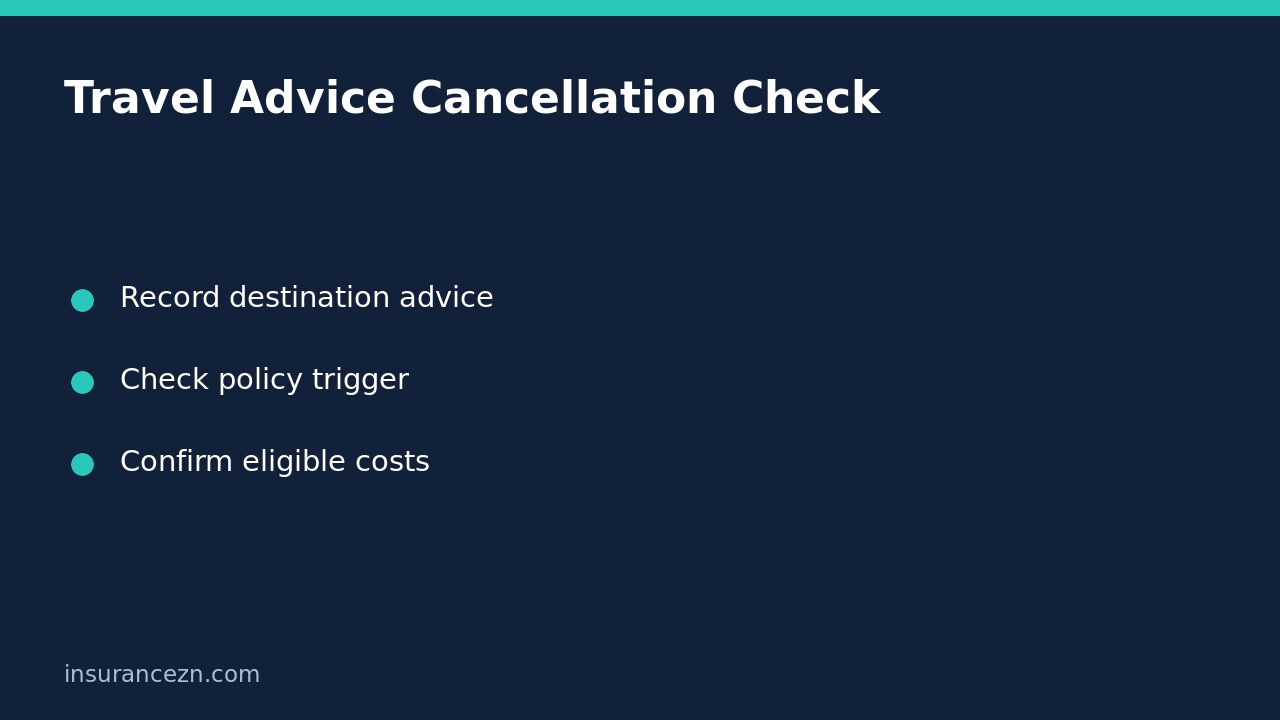

When comparing travel insurance, ask what happens if Smartraveller raises the advice level for your destination after you book. Do not assume that a higher warning automatically activates cancellation cover, or that a comprehensive policy covers every change. Compare the actual policy trigger, relevant dates and eligible unrecoverable costs before choosing.
This is general information for Australian readers, not personal financial advice. Read the applicable Product Disclosure Statement (PDS), policy schedule, exclusions and any current insurer notices. Coverage and claim outcomes depend on the product and your circumstances; this checklist does not establish an entitlement.
Separate safety advice from the insurance decision
Smartraveller’s official travel-insurance guidance tells Australians to check the current situation in each destination and whether a policy covers cancellations if the advice level goes up after booking. It also warns that travellers usually will not be covered when something goes wrong in a Do not travel destination. Those are reasons to examine the wording, not a universal cancellation benefit.
A travel-advice update helps you make safety decisions. Your insurer applies a separate contractual assessment. A policy may describe particular events, advice changes or timing conditions rather than simply covering anything that makes a traveller uncomfortable. Read the exact clause and ask how it applies to your itinerary. Never treat buying insurance as permission to disregard official safety advice.
Compare the trigger before comparing the dollar limit
For each shortlisted policy, locate the cancellation section and any general exclusions. Ask the insurer to identify the wording that addresses government travel-advice changes and explain what would need to happen for your proposed trip to qualify. A large cancellation limit is not useful for a loss that never meets the trigger.
- Which authority’s advice does the clause refer to?
- Does it require a specified advice level, an increase, a named event, or another condition?
- Which dates matter: booking, policy purchase, the event becoming known, or the advice change?
- Does the wording address your destination, the affected region, and relevant travel dates?
- What exclusions or insurer notices could affect the event?
Ask for a written response with the relevant clause reference. A general sales assurance such as cancellation is included does not resolve these details. Keep the policy version and any notice that applies to the quote; do not substitute a newer or older document because its title looks similar.
Use an itinerary timeline to expose uncertainty
Imagine you have booked a holiday, bought a policy later, and then seen an increased destination warning before departure. This example does not establish cover. Build a timeline containing the booking confirmation, insurance commencement details, official advice update and any information about the underlying event.
Give that same timeline to both insurers while comparing. Ask whether their answer depends on when the event became known rather than only when the warning appeared. If the answer is conditional, record the condition instead of converting it into a promise. A written explanation of the wording is valuable, but it is still not approval of a future claim with facts that have not yet occurred.
Include stopovers and transit countries. Smartraveller says to choose a policy covering every country you travel to, including transit points. If a warning affects only one part of a multi-country itinerary, ask how the cancellation section would treat the affected booking and the remaining journey.
Compare recoverable money separately from insured loss
Create a booking list with supplier name, amount paid, refund conditions and any cancellation deadline. Ask airlines, accommodation providers and tour operators what can actually be refunded or changed. Do not count a possible supplier refund as both money returned and an insurance payment.
Then ask each insurer how the policy treats the remaining costs, any excess, relevant limits and documentation. Avoid cancelling solely to create a claim before understanding the consequences. At the same time, monitor genuine supplier deadlines and urgent safety instructions; waiting for insurance administration can itself change your options.
If you are comparing a cheaper product with narrower benefits, our medical-only travel insurance comparison explains why medical protection and cancellation funding need separate consideration.
Questions to settle before buying or cancelling
Does any advice increase mean I can claim? No automatic entitlement follows from the increase alone. Match the facts to the policy’s specified trigger, exclusions and dates.
Does an enquiry register a claim? Do not assume that it does. Ask whether you have received general guidance, opened an actual claim, or obtained a claim decision, and retain the relevant reference.
What should I save? Keep the itinerary, policy documents, dated advice information, supplier refund responses and the insurer’s written explanation. If plans change, request a fresh assessment rather than relying on an answer to a different journey.
Source: Smartraveller, Travel insurance, especially its destination-advice, cancellation and PDS guidance.