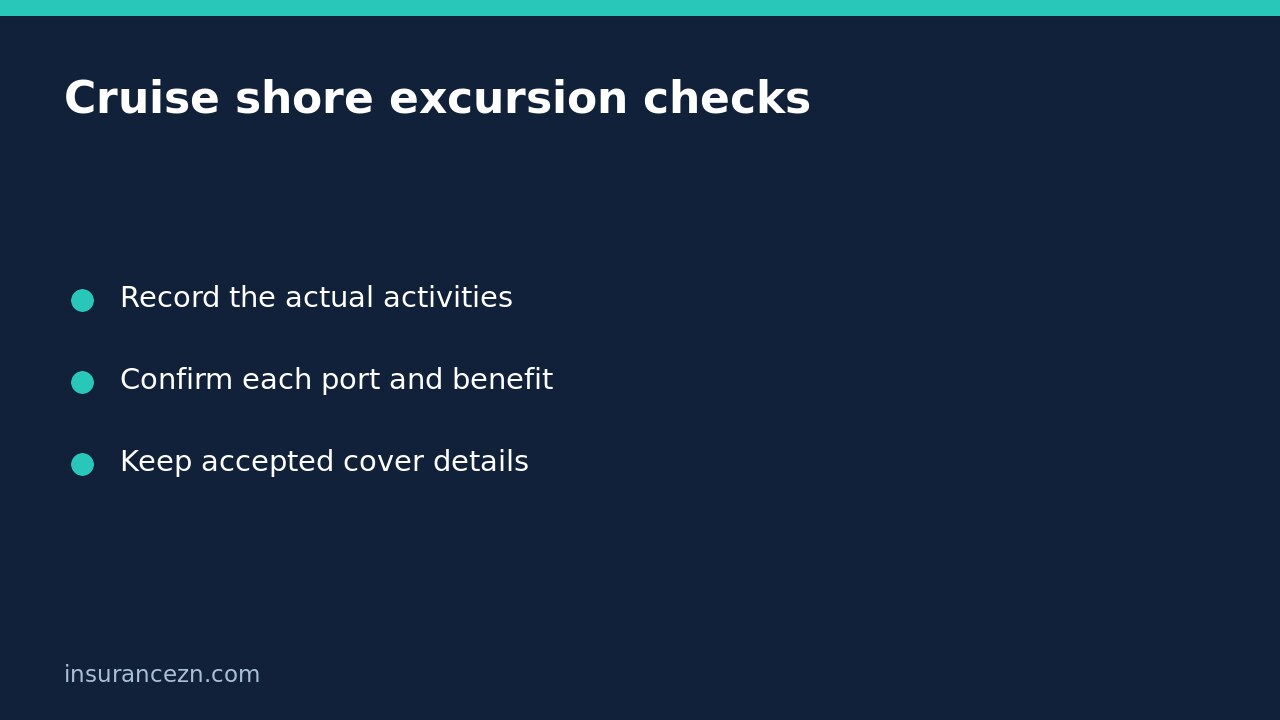

Before choosing travel insurance for a cruise, compare the activities you will actually do during each shore visit. Confirmation that a policy includes cruising is not enough to establish that a particular scooter ride, guided dive or other excursion is accepted. Check the destination, activity and relevant benefit separately, using the actual itinerary rather than the tour’s marketing name.
Smartraveller’s cruise guidance expressly tells Australians to choose cover for cruising and their onshore activities. It also warns that adventure activities overseas may not meet Australian safety standards. The government’s guidance supports making these checks; it does not supply the acceptance rules of your individual policy.
Turn the excursion listing into an activity record
Download the detailed itinerary before paying. Ask the organiser what happens between leaving the ship and returning to port. A description such as an island discovery tour may include several different activities rather than just a bus journey.
Record the country and port, operator, transport used, specific activities, equipment and any relevant participation requirements. Where details matter to the insurer, obtain them from the operator rather than guessing. Separate optional extras from the basic excursion, especially when travellers can decide to join them on the day.
- Are you a passenger, driver, swimmer, diver or observer?
- Does the activity require experience, qualifications or a local licence?
- Is there a separate operator at the activity site?
- Is the activity compulsory or can you decline it?
- Could a route change add another destination or different activity?
The operator accepting your booking is not evidence that your insurer accepts the activity. Likewise, legal permission to participate is not an assessment of personal competence or medical suitability.
Compare benefits rather than one yes-or-no answer
Give each insurer the same written activity record and ask for a response tied to the quoted product. Confirm whether an optional activity or cruise section must be included and whether it appears on the issued documents. Then distinguish emergency medical expenses, evacuation or transport, personal liability, equipment damage and cancellation or interruption benefits.
Acceptance for one benefit does not establish all the others. For example, do not infer that medical cover for an activity also pays for damage to rented equipment or a third party’s property. Ask which exclusions and conditions apply to each relevant section, including required qualifications or safety equipment, without inventing universal thresholds.
For a planned introductory dive, use the more detailed introductory scuba activity-check guide. A tour described as suitable for beginners still needs product-specific checking.
Check the port as well as the ship
Smartraveller recommends checking the travel advice for onshore destinations and notes that advice levels can affect insurance. Compare the policy’s actual destination and travel-advice conditions, including the relevant dates, rather than deciding that an included cruise route overrides them.
Look at how you would obtain medical assistance ashore. Ask the organiser about its emergency arrangements and save the insurer’s assistance details offline. Assistance access is not advance approval of every medical bill. In an emergency, seek urgent help first; do not delay necessary care while completing an insurance comparison.
Keep shore medical treatment distinct from returning to the ship or travelling onward. Ask the insurer what conditions govern each potential expense. A broad evacuation heading is not proof that any preferred transport or destination will be approved.
Use a practical two-quote comparison
Consider a hypothetical traveller comparing two policies for a port-day tour combining a coach transfer and a guided water activity. Both quotes mention cruise cover. The traveller sends the full activity description to each insurer instead of assuming the cruise option includes everything ashore.
Her comparison records the accepted activity, covered destination, relevant medical and transport sections, required options, exclusions, excess and total payable premium. An unanswered liability question remains marked unconfirmed. She does not turn silence into an included benefit or select a policy solely because one headline limit is larger.
If she later replaces the water activity with a different excursion, she repeats the check before participating. A previous response about the original tour does not establish acceptance of a materially different activity.
Reconcile changes before relying on them
When an insurer accepts an amendment, check the issued policy schedule or endorsement, effective date, additional premium and any outstanding requirements. A submitted request or payment receipt alone does not show that the exact change was accepted and commenced. Preserve the original quote and the updated documents together.
Does booking through the cruise line guarantee cover? No. The booking channel does not replace the policy’s activity and benefit conditions.
What if the itinerary changes while sailing? Prioritise safety, obtain the new details and ask the insurer about the changed destination or activity using ordinary support channels where possible. Do not assume automatic acceptance or retrospectively describe an unconfirmed excursion as covered.
This is general information for Australian readers, not personal financial advice. Read the PDS, policy wording, exclusions and issued schedule. Eligibility, accepted activities, benefit limits and claims outcomes depend on the actual product and circumstances.