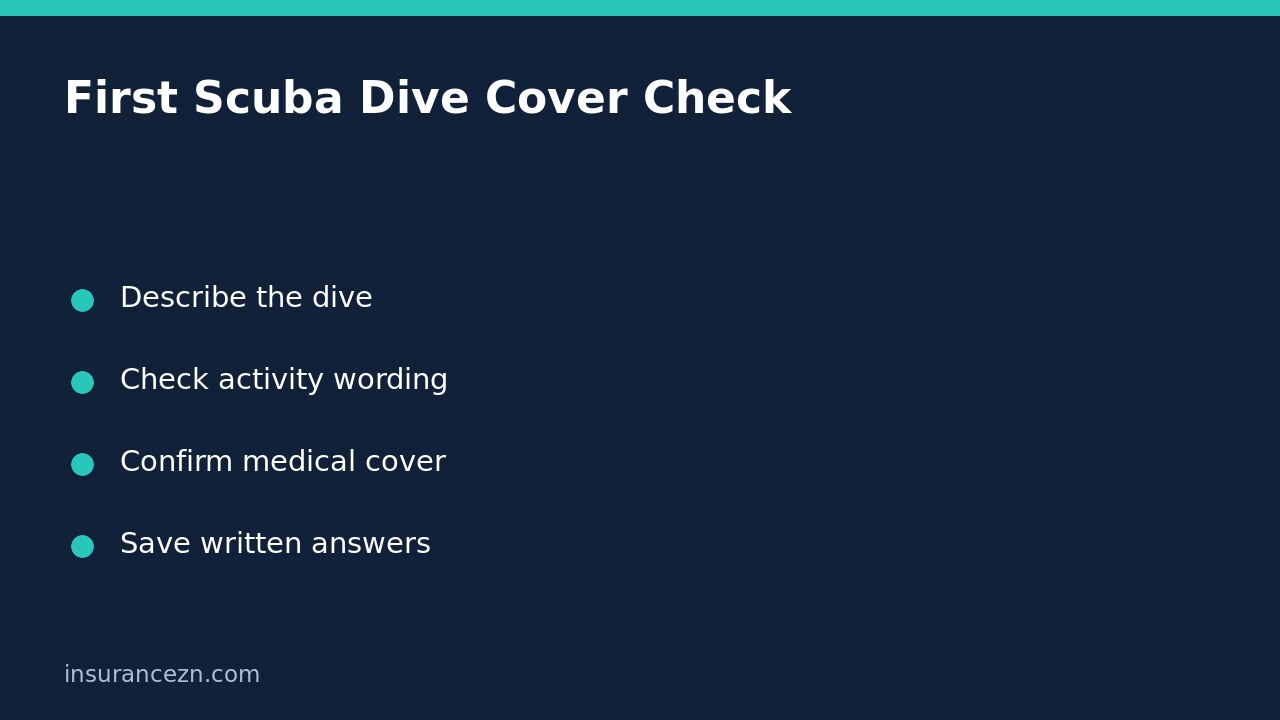

A beginner scuba experience is still an activity to check against your travel insurance wording. The words introductory, discovery or resort dive on a booking page do not establish that an insurer covers it. Before comparing prices, describe the actual planned dive and ask each insurer whether that activity is included under the product you intend to buy.
This is general information for Australian readers, not personal financial advice. Cover depends on the policy, Product Disclosure Statement (PDS), exclusions and any accepted conditions or endorsements. This checklist does not establish that any particular dive is insured.
Why the tour name is not enough
Smartraveller’s travel insurance guidance says insurers exclude activities from standard policies, that scuba diving may require extra cover, and that travellers should check activity definitions. It also notes that some comprehensive policies include scuba while others charge extra. Comprehensive therefore describes a product type, not a guarantee about your booked experience.
Keep the operator’s itinerary and activity description beside the policy wording. If a brochure describes both snorkelling and a scuba session, do not treat those as interchangeable. Ask about each activity you will actually undertake. An operator accepting your booking is not confirmation from your insurer.
Prepare one activity brief for every quote
Use the same factual description when contacting shortlisted insurers so their answers are comparable. Ask the operator for details you do not know rather than guessing.
- The country, departure location and planned date of the dive.
- Whether you will breathe from scuba equipment or only snorkel at the surface.
- The advertised maximum depth and the type of supervision.
- Whether the session involves instruction, certification or an existing qualification.
- Any additional dives or activities included in the booking.
These are comparison questions, not universal insurance conditions. This article does not assume a standard depth limit, instructor requirement or qualification rule. The relevant conditions must come from the particular insurer and product.
Compare eligibility separately from medical benefits
First establish whether the activity is accepted. Then ask which benefits could respond if you become ill or injured during it. A policy may contain a medical section without that section overriding an activity exclusion. Conversely, an activity appearing on a list does not remove medical declarations, exclusions or claim requirements elsewhere in the contract.
Ask the insurer to identify the applicable wording for emergency medical expenses and assistance, and explain whether any relevant transport benefit has separate conditions. Do not infer unlimited evacuation, your preferred hospital or a guaranteed flight home from a general statement that scuba is covered. Record unanswered questions as unresolved rather than filling the gaps yourself.
Provide accurate health information requested by the insurer. Smartraveller advises declaring pre-existing health conditions and asking when you are unsure about cover. Insurance acceptance and whether diving is medically suitable for you are separate matters; take health questions to an appropriate clinician and the activity operator.
A practical two-policy comparison
Imagine two products: one quote appears cheaper and another includes an optional adventure package. Neither price tells you whether your specific introductory dive fits the wording. Send both insurers the same activity brief and request a written answer identifying the product and relevant section.
For the first quote, ask whether a paid option is required and what it changes. For the second, ask whether the package actually includes this activity rather than assuming the word adventure settles the issue. Compare the final premium, excess, benefit limits, exclusions and any stated conditions only after resolving activity eligibility. These are hypothetical comparison steps, not findings about real policies.
For another example of checking the underlying activity rather than its marketing label, see our hiking altitude comparison checklist.
Save the accepted arrangement before departure
Retain the PDS version, certificate, activity description and insurer correspondence together. If an amendment is required, ask for confirmation that it has been accepted, what it changes and when it takes effect. A submitted request or automated acknowledgement is not evidence that an exclusion has been removed.
If the operator changes the dive plan, compare the replacement activity with the insurer’s previous answer. Ask again where the facts differ. Do not presume an earlier answer covers a deeper dive, another location or an additional session.
Quick questions before paying
- Does the written answer refer to the exact product and activity?
- Have all relevant health disclosures and insurer requirements been addressed?
- Are any required changes accepted and effective before the activity?
- Do you understand the excess, limits and emergency assistance process?
If you cannot resolve a coverage question, do not describe the dive as insured. Choose whether to change the activity or seek a product with terms that clearly match it.