
Choosing between an individual health insurance plan and a family plan is one of the most significant financial decisions a household makes each year. Many consumers assume that adding a spouse or children to an existing individual policy is always the cheaper option, but this is not universally true. The decision hinges on complex variables including premium structures, deductibles, out-of-pocket maximums, and specific state regulations regarding dependent coverage. This guide breaks down how to accurately compare these options to ensure you are securing the right balance of protection and affordability for your household.
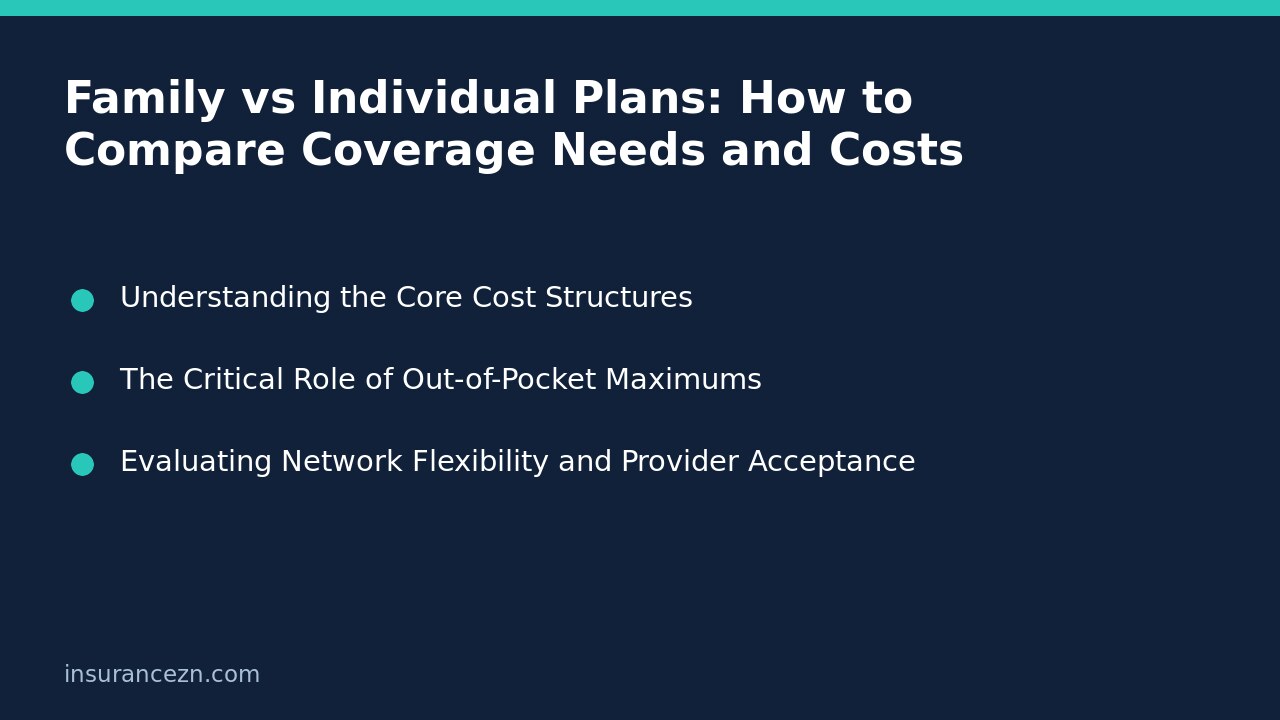
Understanding the Core Cost Structures
To make an informed comparison, you must first understand how insurers calculate costs differently for singles versus families. In many markets, particularly in the United States, health insurance premiums are often calculated on a “per person” basis with a family loading factor. For example, if an individual premium is $500 per month, a family plan might charge $1,800 to $2,400 for four people, depending on whether the state mandates that spouses and children count as one additional unit or multiple units.
However, some insurers offer “single” rates that are significantly lower than half of a family rate, while others price family plans nearly linearly based on headcount. This variance means that simply doubling an individual premium is rarely accurate. Conversely, the deductible structure differs drastically. An individual plan usually has a $1,000 to $2,500 deductible per person. When you switch to a family plan, the deductible often resets to a single household maximum (e.g., $10,000) that covers all members, rather than summing each person’s individual deductible. This is crucial for families expecting high medical utilization; if one member incurs significant costs, they might hit the family maximum before exhausting their full coverage potential under separate policies.
The Critical Role of Out-of-Pocket Maximums
When comparing needs and costs, the out-of-pocket maximum (OOPM) is often more important than the monthly premium. This figure represents the most you will pay in a calendar year for covered services after your deductible is met. Individual plans typically set this limit per person, whereas family plans set it per household.
Consider a scenario where one child requires extensive surgery costing $15,000. Under two separate individual policies with a $5,000 OOPM each, the family would pay $5,000 for the child and potentially $5,000 for the parent if they also needed care, totaling $10,000 in patient responsibility. Under a single family plan with a $10,000 household OOPM, the total exposure is capped at $10,000 regardless of how many members utilize care. If you are healthy and expect low medical usage, two individual plans might save money on premiums. However, if there is any risk of high utilization, the family plan’s lower aggregate OOPM usually provides superior financial protection.
Evaluating Network Flexibility and Provider Acceptance
Coverage needs extend beyond raw numbers; they include access to preferred doctors and hospitals. Individual policies sometimes offer slightly broader networks than family plans within the same carrier product line, though this is becoming less common as carriers standardize their offerings. More importantly, some states have strict rules about “family stacking.” In jurisdictions where a spouse cannot be added to an individual policy without switching to a true family plan, you must compare the network adequacy of both options carefully.
If your primary care physician does not accept assignments on the family plan but does on the individual plan (a rare but possible occurrence due to specific contract terms), that could be a dealbreaker. Always verify that the entire household’s preferred providers are in-network for the specific plan tier you are choosing. Remember that “in-network” status can change annually, so checking the provider directory for the upcoming policy year is an essential step in your comparison process.
Navigating State Regulations and Dependent Rules
Laws governing who can be covered under what type of plan vary significantly by jurisdiction. Some states enforce strict rules preventing insurers from charging higher premiums for family members if they are added to a single policy, effectively forcing a family rate structure once a second adult is included. Other states allow “single” rates for any combination of people, provided the coverage is continuous and not purchased solely to avoid taxes or fraud.
Additionally, age limits for dependent coverage play a role. Historically, children could stay on parents’ plans until age 19. Today, under federal law (the Affordable Care Act in the U.S.), this extends to age 26 regardless of marital status or student status. However, once a child turns 26, they must transition to their own individual plan or a true family plan if the parent is self-employed and has a grandfathered policy that allows it. Understanding these legal boundaries is vital before comparing costs, as attempting to add an ineligible dependent can lead to claim denials.
Real-World Example: Calculating the Break-Even Point
Let’s look at a concrete example to illustrate the math. Imagine a couple earning individual premiums of $450 each ($900 total) with a $1,200 deductible per person and a $6,000 OOPM per person. Their family plan costs $2,100 but has a $2,800 deductible for the whole family and a $12,000 household OOPM.
In Year 1, if neither spouse sees a doctor, the individual plans cost $900 while the family plan costs $2,100. The couple saves $1,200 by staying separate. In Year 2, if one child needs emergency room visits totaling $3,000, the deductible is met for that child. Under individual plans, they pay $1,200 for the child and $6,000 for themselves (if they hit their own limits), totaling $7,200 in potential patient costs plus premiums. Under the family plan, they pay the $3,000 for the child, and if the parents also utilize care, they share the cost against the $12,000 household cap. The break-even point occurs when the sum of individual premiums plus expected medical out-of-pocket costs exceeds the family premium plus the adjusted household deductible. For healthy families with low utilization, individual plans often win on cash flow; for families with chronic conditions or recent high-cost events, the family plan offers better risk pooling.
Common Mistakes to Avoid When Comparing Plans
Many consumers make specific errors when evaluating these options. First, they ignore the “continuous coverage” requirement. If you cancel a family plan and try to re-enroll members individually later, some insurers may charge a penalty or deny coverage due to pre-existing conditions if the gap in coverage exceeds 63 days (under ACA rules). Second, people often forget to check tax implications. In some jurisdictions, self-employed individuals can deduct health insurance premiums as a business expense, which might make two individual plans more attractive than one family plan from a net-income perspective. Third, failing to review the “essential health benefits” list is dangerous; ensure that both plan types cover maternity care, mental health services, and prescription drugs equally, as some narrow networks in individual plans might exclude specific treatments available in family plans.
Final Checklist for Decision Makers
Before finalizing your choice, run through this practical checklist:
1. Calculate Total Annual Premiums: Multiply monthly rates by 12 for both scenarios.
2. Assess Risk Profile: Estimate potential annual medical costs for all household members.
3. Compare Deductibles and OOPMs: Determine if the family maximum offers better protection than the sum of individual limits.
4. Verify Network Status: Confirm that current doctors are in-network for the specific plan selected.
5. Check State Laws: Ensure your local regulations allow the configuration you intend to purchase.
6. Review Open Enrollment Dates: Remember that switching between plans usually requires waiting for the annual open enrollment period unless a qualifying life event occurs.
By methodically analyzing premiums, deductibles, and regulatory constraints, you can select the health insurance configuration that best aligns with your family’s financial reality and medical needs.