
When shopping for auto insurance, the age of the driver is often the single most significant factor influencing your premium. For families adding a new driver to their policy, understanding the stark difference between rates for teen drivers and adult drivers is essential for budgeting and financial planning. Generally, teenage drivers face significantly higher premiums due to statistical risk factors involving inexperience and a lack of defensive driving skills. In contrast, adult drivers with several years of clean driving records typically enjoy much lower rates. However, simply knowing that “teens cost more” isn’t enough; you need a strategic approach to compare quotes effectively, negotiate discounts, and understand how specific policy structures impact the final price tag for each demographic.
This guide provides a detailed breakdown of why these rate disparities exist, how to structure policies to manage costs, and practical steps to ensure you are comparing apples to apples when reviewing quotes from different carriers. By mastering these comparisons, parents can make informed decisions that balance safety requirements with long-term financial health.
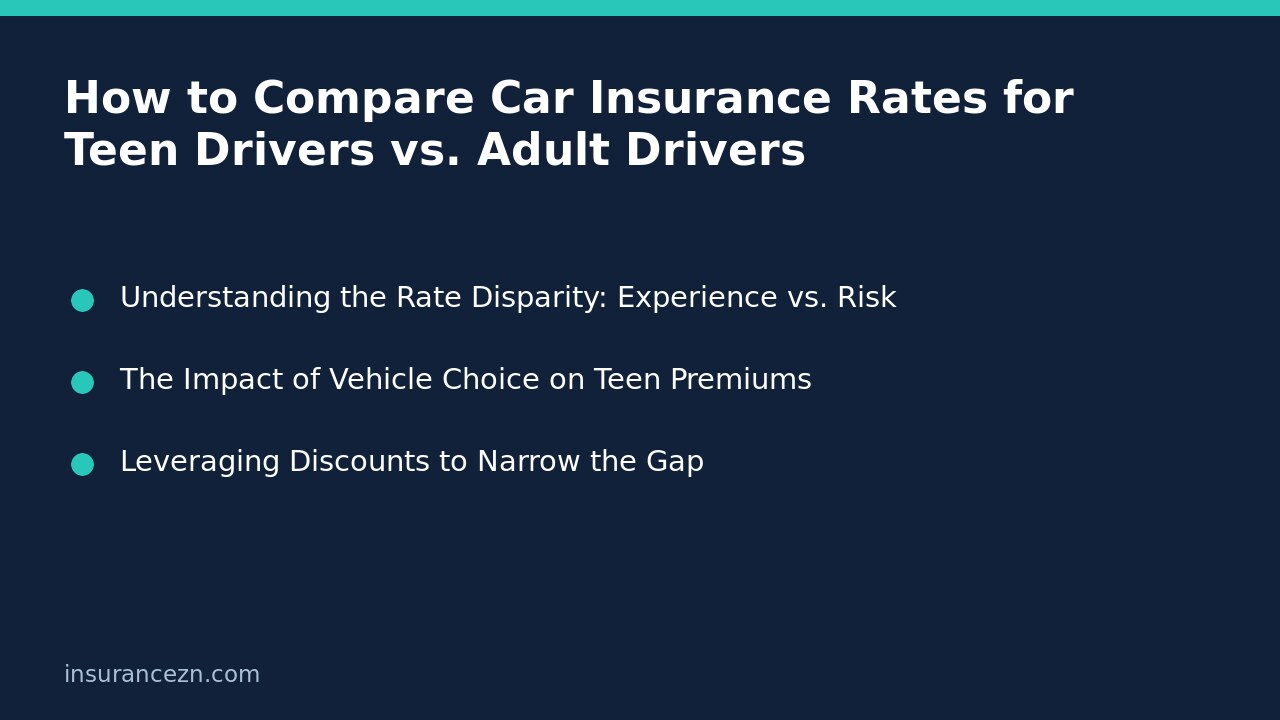
Understanding the Rate Disparity: Experience vs. Risk
To compare rates accurately, one must first understand why the numbers differ so drastically between a 16-year-old and a 35-year-old. Insurance companies use actuarial data to predict the likelihood of a claim. Statistically, new drivers under 25 are far more likely to be involved in an accident than older drivers. This is not due to malicious intent but rather a lack of muscle memory, hazard perception, and emotional regulation while driving.
Consequently, insurers often charge teen drivers three times the rate of adult drivers for the same vehicle and coverage limits. For example, if a 40-year-old driver might pay $120 per month for full coverage, a 16-year-old sibling could see that same coverage cost upwards of $350 to $400. When comparing quotes, it is crucial to recognize that these base rates are just the starting point. The final premium is also heavily influenced by the vehicle type, location, driving history, and specific discounts available. A common mistake homeowners make is comparing a quote for a teen driver in isolation versus an adult driver without accounting for how adding the teen affects the existing household policy or if the teen needs their own separate policy.
The Impact of Vehicle Choice on Teen Premiums
One of the most effective levers parents have when comparing car insurance rates for teens is the choice of vehicle. Insurance algorithms heavily weigh the car’s safety features, theft statistics, and repair costs. Sports cars with high horsepower and poor crash-test ratings will skyrocket a teen’s premium, whereas vehicles equipped with advanced driver-assistance systems (ADAS) like automatic emergency braking and lane-keep assist can lower rates.
When comparing quotes, try selecting two different vehicle categories to see the impact. For instance, compare a quote for a popular sedan known for safety (like a Honda Civic or Toyota Corolla) against a slightly more expensive SUV with similar safety ratings. You might find that the higher upfront cost of the SUV is offset by lower insurance premiums due to its size and safety features. Conversely, choosing a luxury vehicle often results in higher deductibles and premiums because repair costs are astronomical. Always ensure the vehicle you choose for a teen driver has a high crash-test rating from organizations like the IIHS or NHTSA, as this directly influences the insurer’s risk assessment.
Leveraging Discounts to Narrow the Gap
Discounts play a massive role in bringing teen insurance rates closer to adult levels. Many insurers offer substantial reductions for students who maintain good grades, a practice known as “good student” discounts. These can range from 10% to 25% off the base premium. Other common discounts include completing a defensive driving course, which demonstrates proactive safety training, or bundling auto insurance with home or renters insurance if the teen lives at home.
When comparing rates, do not just look at the total monthly cost; look at the discount structure of each carrier. Some insurers may have a higher base rate but offer aggressive discounts for new drivers, while others might have lower base rates but fewer discount opportunities. For example, one provider might offer a 5% discount for being a member of a specific automotive club or having airbags installed, while another offers a larger break for installing a telematics device (a black box) that monitors driving habits like hard braking and speeding. Utilizing these tools can make a teen’s rate look much more competitive against an adult’s rate.
Structuring the Policy: Add-On vs. Separate Policies
A critical decision when comparing rates is whether to add the teen driver to the parent’s existing policy or purchase a separate policy in the teen’s name. In most jurisdictions, if the teen lives with the parents and uses the family car, they must be listed on the parents’ policy regardless of who pays for it. Adding them as a “named driver” usually results in a lower premium than buying a separate policy because the teen benefits from the parent’s years of claim-free history (the “multi-policy” or “good driver” discount).
However, there are nuances to consider. If the teen drives a car that is not owned by the parents, or if they live away at college and primarily drive their own vehicle, the dynamics change. In some cases, a separate policy might be necessary, but this often resets the driving history clock, leading to higher rates initially. When comparing quotes, explicitly ask agents how they classify a new driver living at home versus one living away. Ensure you are comparing scenarios where the teen is legally required to be covered under the household policy versus optional separate coverage, as mixing these up can lead to significant gaps in protection or unfair rate hikes.
Real-World Comparison Example and Checklist
To illustrate how these factors interact, consider this hypothetical scenario:
* Driver A: 25-year-old male, clean record, drives a 2018 Toyota Camry.
* Estimated Monthly Premium: $95.
* Driver B: 16-year-old female, new license, drives the same 2018 Toyota Camry with her parents listed on the policy.
* Base Estimated Monthly Premium: $380.
Scenario Adjustment: Driver B completes a certified defensive driving course and maintains a GPA of 3.5. She also installs a telematics device that tracks her driving for six months, showing no hard braking or speeding.
* Adjusted Estimated Monthly Premium: $290.
In this example, the gap narrows from $285 to $195 per month. While still higher than the adult rate, the cost is now manageable. If Driver B had chosen a high-performance sports car instead of the Camry, her premium could have jumped to over $450, negating the benefits of the discounts.
Comparison Checklist for Parents:
1. Verify Coverage Limits: Ensure both teen and adult quotes include liability limits that meet your state’s minimum requirements plus additional protection (e.g., $250k/$500k bodily injury and $100k property damage).
2. Check Deductible Options: Higher deductibles (e.g., $1,000 instead of $500) lower the premium but increase out-of-pocket costs in a claim. Teens should generally stick to standard deductibles unless parents have a robust emergency fund.
3. Ask About Telematics: Inquire if the insurer offers usage-based insurance (UBI) programs specifically for new drivers that can replace traditional high-risk pricing models.
4. Review State Laws: Confirm whether your state requires teens to be listed on the parents’ policy or if they can legally carry their own insurance while living at home.
5. Calculate Total Cost of Ownership: Remember that insurance is only one part of the cost; factor in gas, maintenance, and depreciation when comparing vehicles for a teen driver.
Conclusion
Comparing car insurance rates for teen drivers versus adult drivers requires looking beyond the headline price. The disparity exists due to statistical risk, but it can be mitigated through strategic vehicle selection, maximizing available discounts, and understanding policy structures like adding a teen to a parent’s existing coverage. By focusing on safety features, utilizing telematics programs, and maintaining excellent academic records, families can significantly reduce the financial burden of insuring a new driver. Always remember that insurance terms, availability, eligibility, laws, and prices depend on the specific insurer, the policy details, and your jurisdiction. This guide is for informational purposes only and does not constitute individualized financial or legal advice.