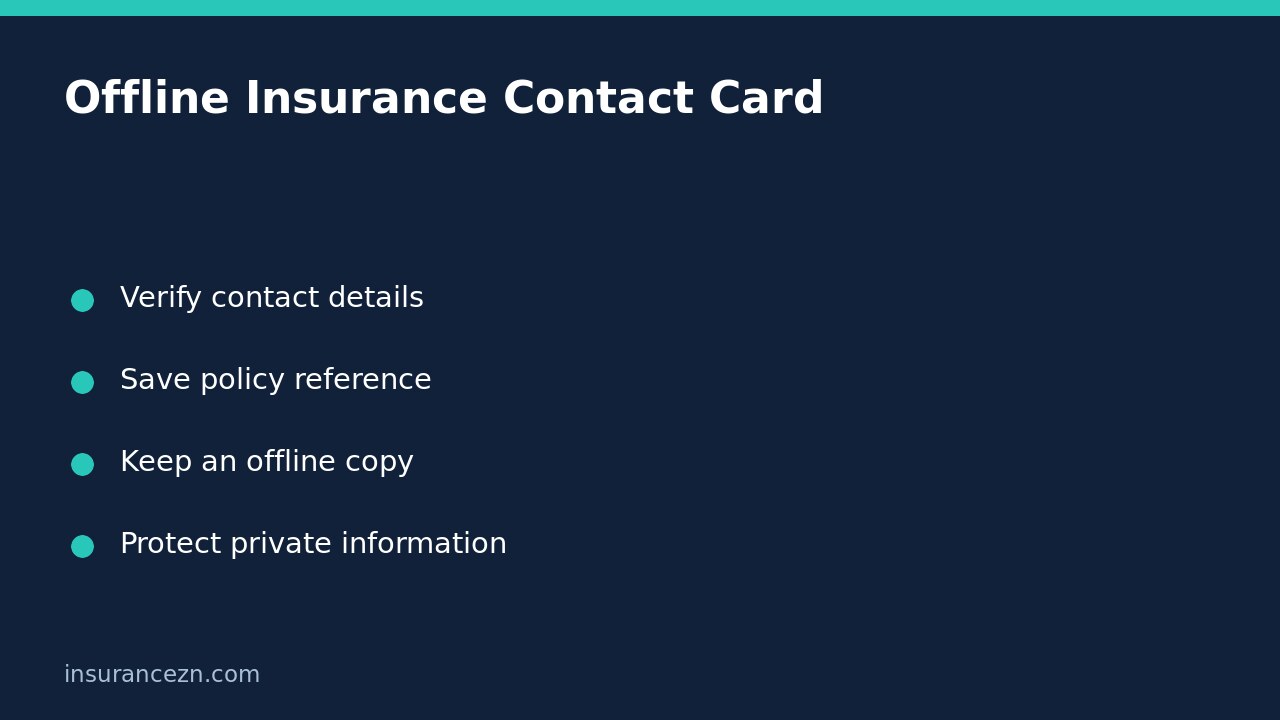

An offline travel insurance emergency card is a small, accessible record of the insurer’s assistance contact and your policy reference. Prepare it before leaving Australia so a flat phone battery, missing internet connection or inaccessible email account does not leave you searching for essential details. It is a contact aid, not evidence that a particular treatment or claim has been approved.
This is general information for Australian readers, not personal financial advice. Cover depends on your policy, Product Disclosure Statement (PDS), exclusions, limits and insurer decisions. Follow medical advice and seek urgent local help when needed; do not delay necessary emergency care to complete an insurance checklist.
Start with verified policy documents, not a search advertisement
Download the certificate, relevant PDS and any accepted amendments from the insurer’s official channel. Check that the policy belongs to the correct travellers and covers the intended dates. Find the emergency assistance section and distinguish it from the ordinary sales or claims-enquiry contact. A domestic customer-service number may not be the route specified for help overseas.
Smartraveller’s travel insurance guidance says the PDS explains emergency support, inclusions, exclusions and the claims process. It also explains that the Australian Government cannot pay travellers’ medical bills. The card should therefore point to the actual assistance arrangements in your documents, rather than treating consular help as substitute insurance.
Put only the useful minimum on the card
- Traveller name as recorded on the certificate.
- Insurer and product name, policy reference and insured travel dates.
- Verified international assistance number, copied exactly from current documents.
- Any official alternative contact method the insurer provides.
- A trusted travelling companion or emergency contact, with permission.
- A note saying where the full offline policy documents are stored.
Ask the insurer before departure whether the assistance number works from your destinations and what to do if voice calls are unavailable. Do not assume a domestic free-call number can be reached abroad, or that an advertised chat service handles urgent medical situations. Record the answer and when it was checked. Avoid putting unverified telephone numbers copied from an old blog on the card.
Make the copy usable when your phone is unavailable
Keep a paper copy separately from your phone and save a local digital copy that opens without a network connection. Test the saved file in airplane mode before travelling; a link to cloud storage is not an offline document. This is a preparation check, not a test call to an emergency assistance service.
Consider a hypothetical traveller whose policy certificate is in email behind a login code sent to a lost phone. A separate card provides the reference and verified assistance route while account access is restored. It does not solve every problem: the traveller may still need another telephone, identification checks and supporting documents.
Protect the information too. The card does not need payment-card details, passwords, identity-document scans or a full medical history. Store sensitive supporting records securely and decide what a companion genuinely needs to access. Do not publish the completed card on social media.
Separate contact, assistance and financial approval
Reaching an assistance service is not the same as having a claim accepted. A reference number or automated acknowledgement also does not establish that a hospital bill will be paid. Ask which next steps apply under your policy, what information is required and whether a proposed non-urgent arrangement needs approval. Obtain written confirmation of any approval and its scope when practicable.
Keep the interaction reference, staff contact details and copies of relevant messages. Follow clinical advice for urgent needs rather than waiting for administrative paperwork. This article does not establish universal pre-authorisation rules: those must come from the specific policy and insurer.
Refresh the card after a policy change
If you extend the trip, add a destination or amend cover, check the processed policy record and replace outdated copies. A submitted amendment request is not confirmation that the new itinerary has been accepted. For route planning, also read our transit-stop insurance checklist; a useful contact card cannot repair an uninsured destination.
Quick questions before packing
Can a screenshot replace the PDS? No. It can make key details accessible, but retain the full documents for conditions and instructions.
Should everyone share one card? Confirm who is insured under each policy. Separate policies need their own references and assistance details.
What is the final check? Confirm that the contact information is current, the offline files open, the paper copy is readable and a trusted companion knows where to find it.