
Navigating health insurance when you have a pre-existing condition can feel like searching for a needle in a haystack. For years, individuals with chronic illnesses, past surgeries, or ongoing management needs faced exorbitant premiums, waiting periods, or outright denial of coverage. However, the landscape has shifted significantly due to robust consumer protections and the introduction of new plan types designed specifically to bridge this gap. The short answer is that the “best” coverage today depends heavily on your location, but generally involves a mix of government-backed plans like Medicare Advantage or Medicaid, state-specific high-risk pools, and private marketplaces offering guaranteed issue policies. Understanding these distinctions is critical because choosing the wrong plan could leave you vulnerable to denied claims or sudden financial strain when medical needs arise.
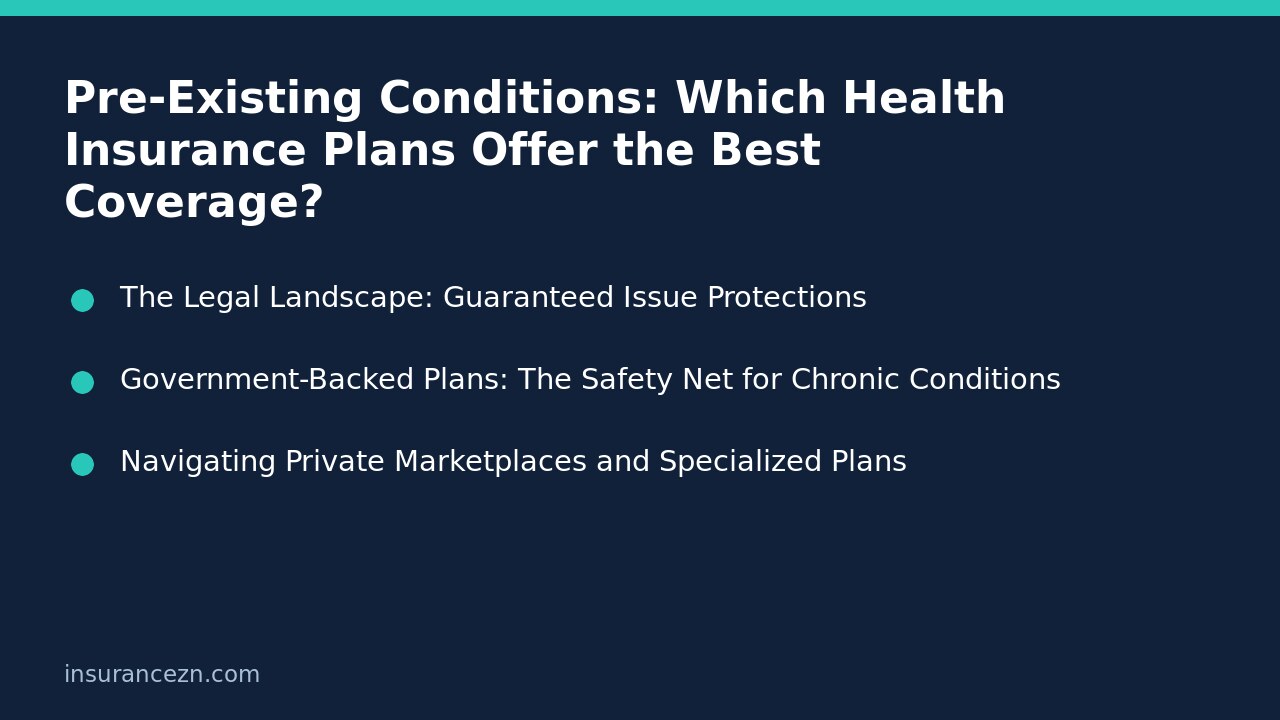
The Legal Landscape: Guaranteed Issue Protections
To determine which plans offer the best coverage, one must first understand the legal mechanisms that protect consumers with pre-existing conditions. In the United States, the Affordable Care Act (ACA) established a landmark rule known as “guaranteed issue.” This provision prohibits insurance companies from denying you coverage or charging you more based on your health status, medical history, or genetic information.
Under these rules, almost all plans sold on the Health Insurance Marketplace (the Exchange) and most employer-sponsored plans must accept applicants regardless of their medical history. However, it is vital to note that while you cannot be denied coverage, some private plans may still impose limitations on specific treatments related to your condition or offer a “pre-existing condition exclusion period” if the plan was purchased outside of an ACA-compliant marketplace (such as short-term limited-duration insurance). Therefore, the safest route for guaranteed coverage is purchasing through the federal or state Marketplace during open enrollment or a special enrollment period triggered by life events.
Government-Backed Plans: The Safety Net for Chronic Conditions
For individuals with serious pre-existing conditions who require consistent, long-term care, government-backed plans often provide the most comprehensive and reliable coverage. Medicare Advantage (Part C) plans are particularly notable because they bundle hospital insurance, medical insurance, and usually prescription drug coverage into one plan. These private insurers must adhere to federal guidelines that prevent them from discriminating based on pre-existing conditions. Many of these plans offer Extra Help or special cost-sharing reductions for beneficiaries with low incomes or specific chronic diseases like diabetes or heart failure.
Similarly, Medicaid serves as a critical safety net for individuals with pre-existing conditions who have limited income and resources. Eligibility criteria vary by state, but once enrolled, Medicaid typically covers essential health benefits without exclusions based on medical history. For those falling between the cracks of traditional Medicare or private insurance, High-Risk Pools (also known as State Risk Pools) exist in many jurisdictions. These specialized funds are designed to cover individuals who cannot obtain affordable coverage through the standard marketplace due to pre-existing conditions. While premiums for these pools can be higher than average market rates, they provide a guaranteed path to coverage where standard private plans might fail.
Navigating Private Marketplaces and Specialized Plans
When exploring private options, the distinction between “standard” ACA-compliant plans and “specialized” products becomes crucial. Standard Bronze, Silver, Gold, and Platinum plans found on the Marketplace are fully protected by federal law; you cannot be excluded for a pre-existing condition. However, the cost-sharing structure (deductibles and copays) will still apply to your specific medical needs.
Specialized plans, such as Chronic Care Management (CCM) plans or those offered by carriers with specific wellness programs, may provide additional value. These plans often feature lower out-of-pocket maximums for members managing conditions like asthma, hypertension, or mental health disorders. When evaluating these, look for plans that include “value-based care” models where providers are incentivized to keep you healthy rather than just treating symptoms. Always verify that the plan network includes specialists experienced in your specific condition, as out-of-network care for pre-existing issues can be a major source of friction and extra cost.
Real-World Example: Managing Type 2 Diabetes
Consider the case of Maria, a 45-year-old woman diagnosed with Type 2 diabetes five years ago. She has a history of hypertension and requires daily insulin management. If Maria were to buy a short-term health plan or a grandfathered policy (rare now but theoretically possible in specific contexts), her coverage for insulin might be capped at $100 per month, leaving her to pay the difference. Furthermore, if she needed an expensive new insulin pump, that claim could be denied as “experimental.”
By contrast, if Maria selects an ACA-compliant Gold plan on the Marketplace or a Medicare Advantage Plan with Drug Coverage (MA-PD), her coverage is guaranteed. Her plan must cover insulin under federal limits (capped at $35 per month for many plans) and covers necessary monitoring equipment without arbitrary exclusions. She would also have access to diabetes education programs and nutrition counseling included in the standard Essential Health Benefits package. This example illustrates why relying on non-compliant or short-term plans is a financial risk for anyone with a documented medical history.
Common Mistakes to Avoid When Shopping
Many consumers make critical errors when trying to secure coverage for pre-existing conditions. A frequent mistake is assuming that any insurance policy will cover their specific medical history. Some applicants mistakenly believe they can buy a cheaper plan from a non-compliant carrier and simply hope the worst doesn’t happen. This strategy often leads to catastrophic bills when claims are denied. Another common error is ignoring “special enrollment periods.” If you lose your job or experience other qualifying life events, you have a limited window (usually 60 days) to sign up for ACA-compliant plans outside of the annual open enrollment period. Missing this window can force you into the Health Insurance Marketplace only during open enrollment, potentially leaving you without coverage if you do not qualify for a special enrollment trigger.
Additionally, be wary of agents who suggest “gap” policies or short-term plans as a primary solution for chronic conditions. These products are explicitly excluded from covering pre-existing conditions and often have lower maximum benefit limits that can be exhausted quickly. Always read the policy’s Certificate of Coverage to ensure there are no hidden exclusions related to your specific diagnosis.
Checklist for Evaluating Plans with Pre-Existing Conditions
Before finalizing a selection, run through this practical checklist to ensure you are getting the best possible coverage:
* Verify Compliance: Confirm the plan is ACA-compliant or Medicaid/Medicare eligible. Avoid short-term or fixed-indemnity plans unless you fully understand the exclusions.
* Review Formulary: Check if your specific medications (e.g., insulin, antidepressants, biologics) are on the plan’s preferred drug list.
* Check Network Depth: Ensure top-tier specialists for your condition (e.g., endocrinologists, cardiologists) are in-network.
* Calculate Total Cost: Factor in premiums, deductibles, copays, and out-of-pocket maximums. A lower premium often means higher costs when you need care for your pre-existing condition.
* Investigate Additional Benefits: Look for plans offering telehealth, disease management programs, or gym memberships that support long-term health maintenance.
Conclusion
Finding the right health insurance plan with a pre-existing condition is less about luck and more about understanding the regulatory protections available to you. The best coverage generally comes from ACA-compliant Marketplace plans, Medicare Advantage options, or state-sponsored high-risk pools, all of which guarantee issue based on your medical history. By avoiding non-compliant short-term policies and carefully reviewing network restrictions and drug formularies, you can secure a plan that supports your health journey without the fear of denial. Always remember to consult with a licensed insurance agent who specializes in chronic care needs to navigate the specific nuances of your state’s regulations and ensure you are protected against unexpected medical costs.