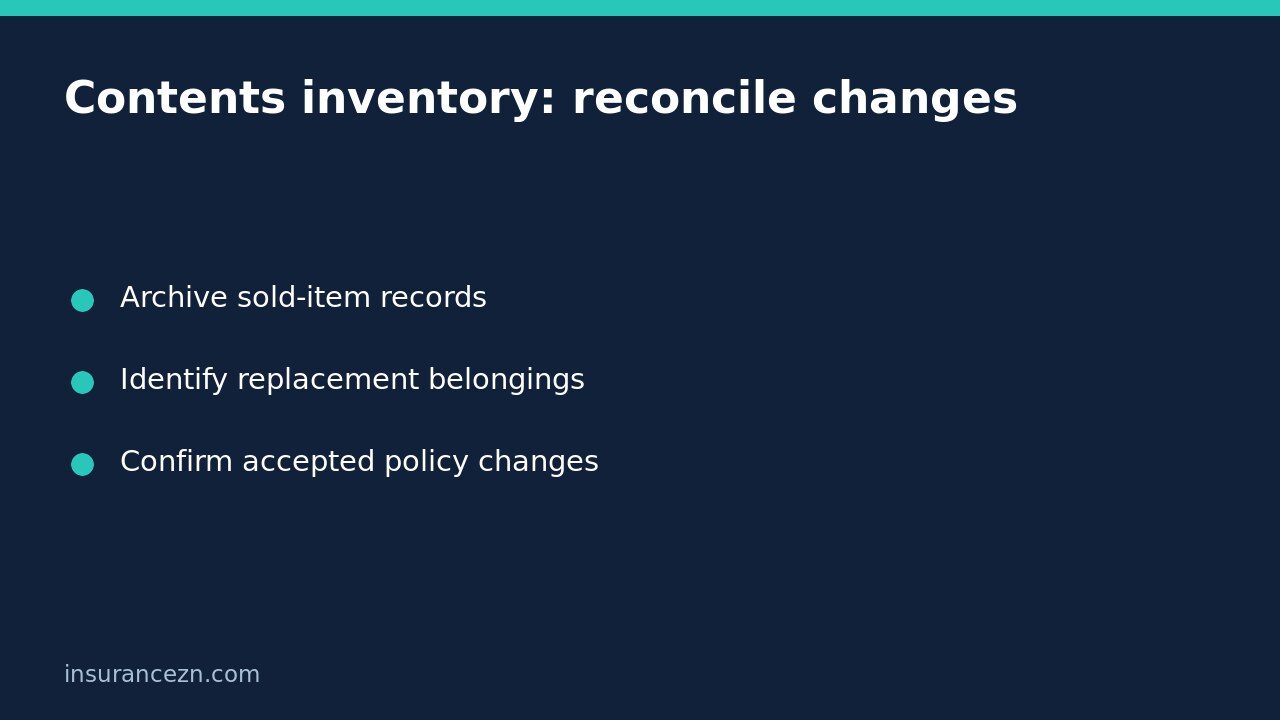

After selling a sofa, replacing a laptop or giving away furniture, update your contents inventory without erasing its history. Separate what you own now from items that have left the household, add the actual replacements, and then review the insurance implications. Editing a spreadsheet does not change the insured amount or remove a separately listed item from your policy.
This is general information for Australian readers, not personal financial advice. Read the relevant PDS, policy wording and schedule. The treatment of belongings, replacement values and requested amendments depends on the product and your circumstances.
Keep a current list and a historical record
In its home-inventory guide, Suncorp describes an inventory as a list of personal items with evidence of value. It recommends recording purchase information, cost and identifying details such as serial numbers, and retaining photographs and backups. The article is dated July 2021; its recordkeeping ideas are useful, but its product descriptions and app references should not be treated as confirmation of today’s policy terms or services.
Build on that recordkeeping approach by giving each item an identifier and a status. Useful statuses include currently owned, sold, gifted, disposed of and awaiting clarification. Keep a dated historical copy before changing the current list. Do not mark an uncertain item as sold simply because you cannot immediately find it.
A historical entry is particularly important if an earlier claim or ownership question remains unresolved. The item may no longer belong in today’s household total while still being relevant evidence of what you owned on a previous incident date.
Record what changed, rather than overwriting the old item
For each outgoing item, note the date, what happened and any supporting evidence you already hold. A sale receipt, marketplace transaction record or collection message may help explain the change. Avoid collecting unnecessary personal information about a buyer merely to maintain an inventory.
Create a separate entry for a replacement rather than editing the old serial number into the new one. Record its make, model, identifying number, purchase date and available receipt. Photograph distinctive features where safe and practical. A generic description such as ‘computer’ may make it difficult to distinguish two devices later.
- Link the old and new entries with a replacement note.
- Keep the old item’s photos and documents in a historical folder.
- Check whether accessories stayed with you or left with the sold item.
- Identify purchases that replaced only part of a set.
- Separate another household member’s belongings from items you own.
Review the total without confusing sale prices and replacement costs
A second-hand sale amount is not automatically the right amount to subtract from a replacement-cost estimate. Equally, the original purchase price of an old item is not automatically the cost of replacing its equivalent now. Review the settlement basis in your policy and use a consistent, supportable method when estimating current contents needs.
For example, a hypothetical household sells an older television and buys a different model. Simply removing the sale proceeds from last year’s contents total misses the new purchase altogether. Leaving both televisions marked as currently owned also misstates the inventory. The better approach is to archive the sold unit, identify the new one, and reassess the household’s current belongings on the relevant policy basis.
A fresh total can be higher or lower. Do not reduce cover purely because some belongings were sold without considering replacements, accumulated purchases and the rest of the home.
Reconcile separately listed valuables with the insurer
Check the policy schedule for items listed by description or value. If a listed item has been sold, ask the insurer what is required to remove or amend that entry. If its replacement differs in identity, specifications or value, describe the actual change rather than requesting only a different dollar figure.
Our guide to updating a remade engagement ring’s insurance description explains why an item’s identity matters as well as its valuation. A replacement belonging raises a similar record-matching question, although the applicable cover still needs its own assessment.
Keep the request and obtain the processed schedule, effective date and any premium adjustment. An acknowledgement or uploaded receipt establishes that information was sent, not that the insurer accepted a policy amendment. Check unresolved questions before relying on revised cover.
Renewal checklist and common questions
Should I delete sold items permanently? Archive their records rather than leaving them in the current total or destroying useful historical evidence. Keep records securely and limit access to sensitive documents.
Does updating my inventory notify the insurer? Not by itself. Follow the insurer’s policy-change process and confirm the result separately.
What should I check before renewing? Compare the current inventory with the schedule, check separately listed items, review the insured amount and applicable limits, and save a dated copy of the revised records. Back up evidence somewhere that remains accessible if the home or your usual device is unavailable.