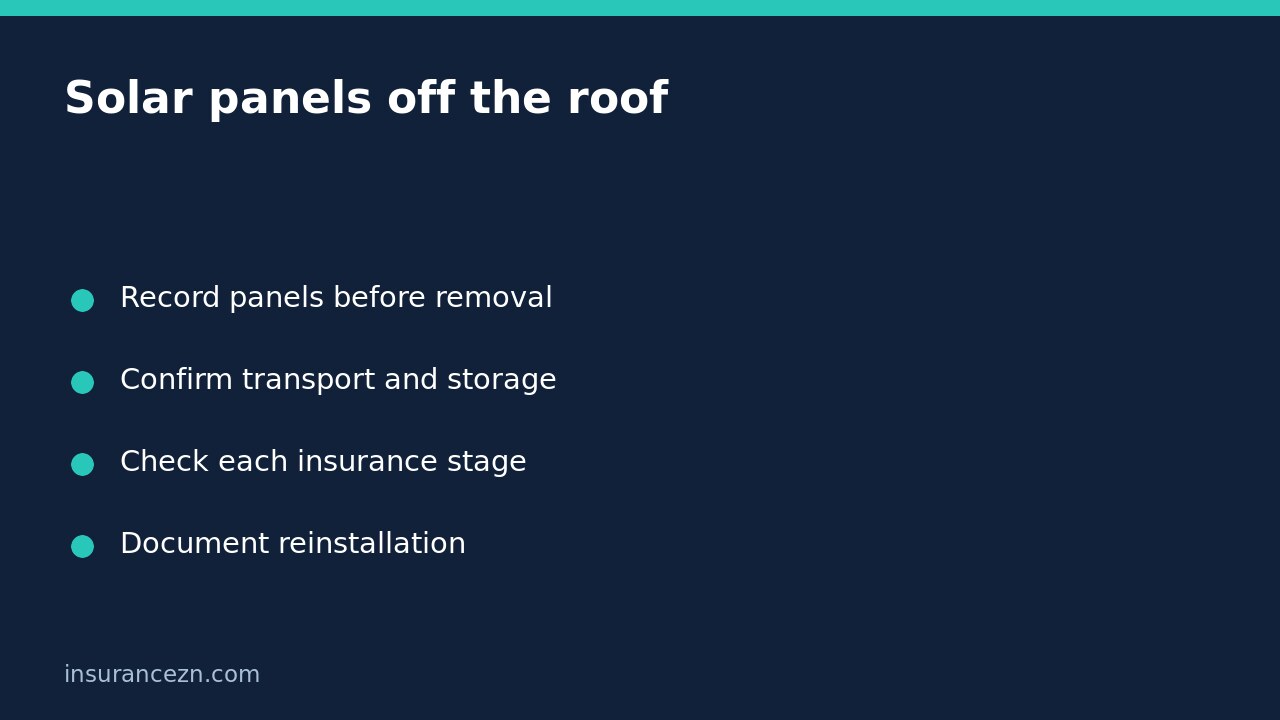

If solar panels will be removed temporarily for roof work, ask your home insurer about the removal, transport, storage and reinstallation stages before work starts. Existing cover for an attached solar system does not, by itself, confirm the position while equipment is detached or held by a contractor.
The practical task is to map who has each item and obtain a written answer about the exact arrangement. Do not move equipment yourself or approach unsafe roofing or electrical work to gather evidence; use appropriately qualified contractors.
Why the attached-system description is only a starting point
As a provider-specific example, Suncorp’s home insurance overview lists permanently attached fixtures, such as solar panels, in its building-insurance description. That supports asking about attached equipment under building cover. It does not establish the treatment of detached panels, off-site storage, contractor mistakes or every component of another insurer’s product.
The same overview directs customers to the relevant Product Disclosure Statement for terms, conditions, limits and exclusions. Read your own applicable PDS and schedule, then ask the insurer to apply them to the proposed work. Do not treat a product summary or another homeowner’s experience as acceptance of your particular project.
Make a stage-by-stage equipment record
Request a written scope from the roofer and solar contractor. Identify who will disconnect the system, remove and pack the panels, move them, hold them and reconnect them. If one business subcontracts a stage, record the business actually taking custody rather than assuming the roof contractor keeps possession throughout.
- Before removal: record panel numbers, model information and existing condition where safely available.
- During transport: identify the collection and delivery addresses, carrier and expected dates.
- During storage: record the location, security arrangements, custodian and likely duration.
- During reinstallation: identify the installer, components being reused or replaced and proposed completion date.
Ask the contractor to provide dated photographs and an inventory if obtaining those details would otherwise require climbing or electrical access. Keep original reports and distinguish previously recorded defects from damage first observed later; a later observation alone does not prove when or how damage occurred.
Ask the home insurer about each stage, not just solar cover
Send the scope and timeline through an approved contact channel. Explain whether the roof works are maintenance, renovation or repairs associated with an existing claim. If a claim already exists, keep its reference and ask the claim handler how the panel work fits within the authorised scope.
Ask whether your exact equipment remains insured while detached at home, in transit and at the named storage site. Request clarification of applicable events, limits, excesses, exclusions and notification requirements. These are matters to establish from the actual policy, not a claim that all policies include or exclude detached equipment.
Also ask what happens if work is delayed or storage changes. If an amendment is required, request confirmation of what was accepted and its effective date. An emailed enquiry or payment request is not proof that the insurer has processed a change.
Check contractor responsibility separately
Obtain the contractor’s written arrangements for loss or damage while equipment is in their custody, including transport and subcontracting. A business saying it is insured does not establish that your panels, the specific operation or every cause of damage is covered.
Ask which party should receive a damage report and what documentation it needs. Keep your contract and any relevant insurance information, but do not assume a liability certificate guarantees compensation. Your home insurer’s position, the contractor’s obligations and an insurer’s later assessment are separate questions.
If this is part of an insurance repair, distinguish approval of roof work from approval of panel removal, replacement or extra electrical costs. For recording concerns after repairs, see our room-by-room rectification-list guide; the evidence-recording approach is useful, but it does not create a solar-system guarantee.
Reconcile the handover before closing the file
After reinstallation, compare the returned inventory and completion documents with the original scope. Ask the qualified installer to document any replacements, testing and outstanding defects. Successful electrical operation is not proof that an insurance amendment or claim payment has been processed.
Can I assume contents cover takes over? No. Detaching equipment does not establish a new insured category. Obtain your insurer’s answer for the specific items and location.
What if the storage address changes? Tell the insurer and responsible contractor promptly and request an updated answer before relying on the previous arrangement.
What should I retain? Keep inventories, photographs, custody dates, written cover answers, approved scopes, invoices and completion records together. If loss occurs, preserve the facts without guessing causation or lodging duplicate claims to force an outcome.
This is general information for Australian readers, not personal financial advice. Cover depends on your policy, applicable PDS, schedule, accepted amendments and circumstances. A product overview, contractor assurance or evidence upload is not confirmation of claim acceptance or payment.