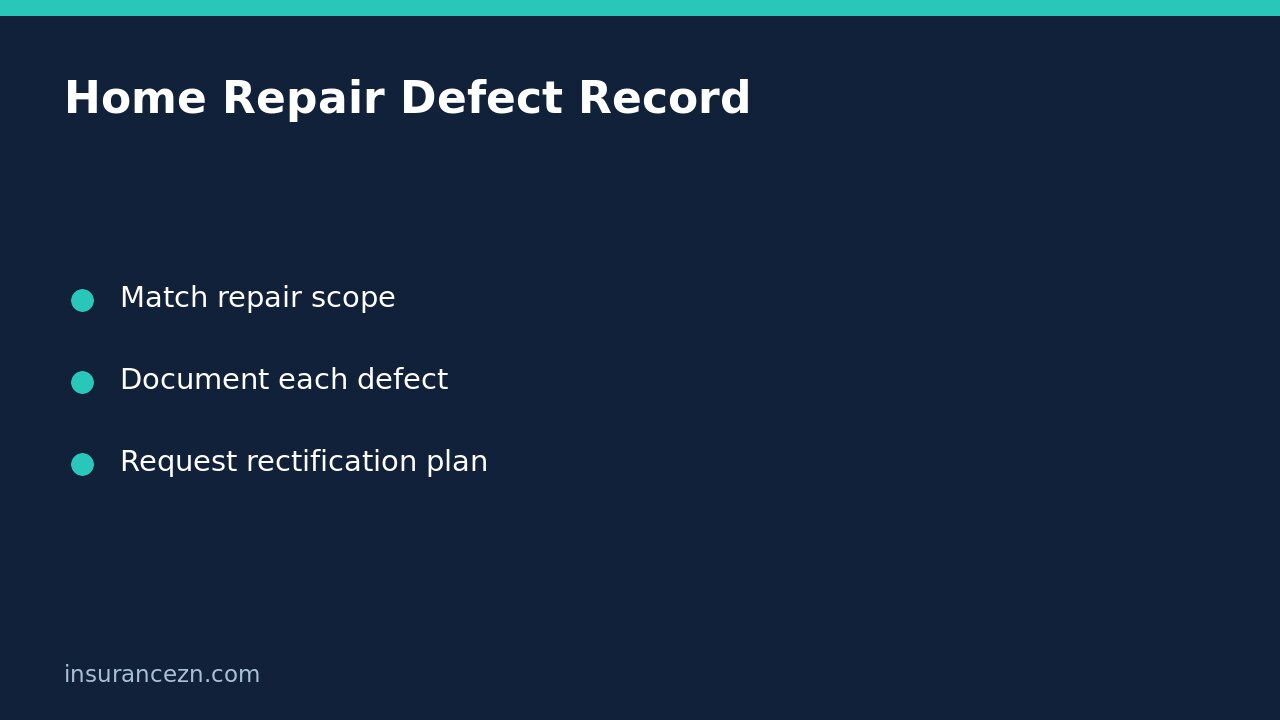

If repairs arranged by your home insurer still appear defective, start with a clear list showing what was agreed, what was done and what remains wrong. Send it to the insurer handling the claim and request an inspection and written rectification response. Do not assume a contractor’s completion message resolves every item, or arrange substantial replacement work before clarifying approval.
This is general information for Australian readers, not personal financial advice or legal advice. Your policy, PDS, repair arrangements and applicable law determine available remedies. A defect list supports a discussion; it does not establish a guaranteed entitlement to further repairs or payment.
First separate safety problems from finish defects
A sticking cupboard door is different from exposed wiring, an unstable ceiling or suspected structural movement. Keep people away from hazards and seek appropriate urgent professional help. Do not climb into damaged roof spaces, disturb electrical equipment or remove potentially hazardous material to obtain photographs. Tell the insurer promptly about safety concerns and ask how emergency protection should be handled.
Record when you noticed each problem. Distinguish an issue present when work was handed over from damage that appeared later. You do not need to diagnose the cause yourself: describing what you can see is often more useful than asserting that a builder used the wrong method without supporting expertise.
Build a room-by-room list against the repair scope
Collect the approved scope of works, variations, relevant correspondence and any completion documents. Give each disputed item a reference number and a precise location. The aim is to let someone who has never visited your home understand exactly what needs checking.
- Location: kitchen ceiling above the rear window, not simply kitchen.
- Agreed work: identify the relevant scope item or approved variation.
- Observed issue: describe the crack, leak, incomplete finish or malfunction.
- Evidence: attach dated photographs and relevant messages.
- Requested action: ask for inspection, an explanation or a proposed correction.
For example, a fictional homeowner might record: Item K1, repainting under scope item 7, visible blistering photographed after handover, request an inspection to identify the cause and suitable correction. That is more actionable than asking the insurer to redo the whole kitchen without explaining the problem. Keep the original image files as well as any annotated copies.
Ask for the assessment behind the response
Legal Aid NSW’s disaster insurance factsheet recommends reading insurer assessment and expert reports and checking their accuracy. It also advises contacting the insurer when insurer-arranged repairs are not done properly. This February 2020 publication is useful for practical record-keeping, but its descriptions of historical Code timelines and repair warranties should not be treated as a current universal promise.
Ask for the reports, inspection notes and scope information relevant to the disputed repair. If the insurer says the issue is unrelated maintenance, ask which findings support that distinction and how they relate to your photographs. Separate a factual disagreement, such as the wrong room being inspected, from a technical disagreement about the cause. A suitably qualified independent opinion may help with the latter, but ask about costs and reimbursement before commissioning it.
Request a specific rectification plan
Send your numbered list through a channel that creates a written record. Request confirmation of which items will be inspected, who will attend, what access is needed and when you should expect a response. For accepted items, ask for the proposed work, responsible contractor and arrangements for checking completion. Keep earlier versions of the list rather than silently deleting resolved items.
If new damage is discovered during the inspection, record it separately and ask whether the scope needs revisiting. Avoid assuming that every new observation is covered or that a contractor can approve additional insurance spending. If the repair dispute also affects where you can live, separately review temporary accommodation limits before cover runs out; a defect complaint does not automatically extend that benefit.
What if the response does not resolve the problem?
Ask the insurer to consider a formal complaint, identifying the disputed items, supporting evidence and outcome you seek. Request its written position and current complaint process. Where necessary, seek independent legal or financial counselling help about further options rather than relying on an old factsheet for present deadlines.
Should I pay another builder immediately? Obtain the insurer’s response and clarify authority first, except where urgent safety needs require appropriate immediate action. Does signing a completion form remove every concern? Do not assume either that all rights disappear or that the form has no effect. Read it, record unresolved items and seek advice before signing anything you do not understand.