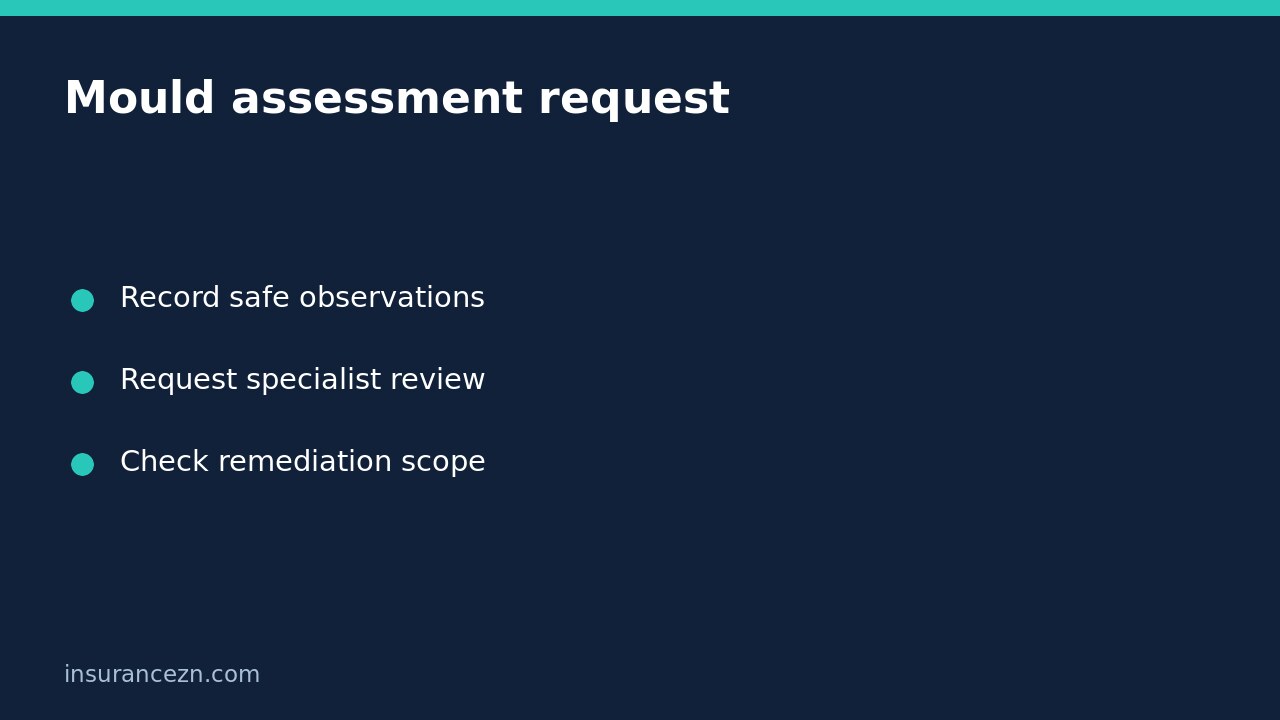

If mould appears after water damage that is being assessed under your home insurance, ask the insurer whether a hygienist should inspect the affected areas. A routine repair quotation may not answer questions about contamination, hidden moisture or the conditions needed before rooms can be used again. Requesting a specialist is not the same as proving that every mould-related cost is covered.
This is general information for Australian readers, not personal financial advice or legal advice. Cover depends on your policy, Product Disclosure Statement (PDS), exclusions, limits and the facts of the damage. Obtain professional advice for your circumstances.
Separate the safety question from the coverage question
Do not enter an unsafe building or disturb suspected contamination to collect evidence. Follow emergency authorities and qualified professionals. If you are concerned about symptoms or whether a family member should enter an affected room, seek medical guidance rather than relying on an insurance assessment.
The insurer needs to consider the cause of the water damage and the applicable policy. A specialist may need to consider the condition of materials and an appropriate remediation method. Those are connected but different tasks: an accepted storm claim does not automatically establish cover for every later problem, and a coverage dispute does not make a room safe.
Legal Aid NSW’s October 2023 disaster-claims publication specifically suggests asking the insurer to send a hygienist if you are worried about mould. Use that practical starting point without treating the older publication as a statement of current deadlines or an assurance of benefits.
Record observations without diagnosing the problem
Prepare a short room-by-room record from places you can safely access. Describe what you can observe rather than naming a mould species or declaring the building habitable. Useful details include:
- The room, wall or cupboard involved and when you first noticed the change.
- Photographs taken safely, with dates and a wider view showing location.
- Whether the area was included in the original water-damage inspection.
- Any earlier drying, cleaning or repair visits, including contractor names.
- Changes since those visits, such as renewed staining or a persistent odour.
Keep existing reports and messages together. Do not remove linings, lift contaminated carpet or use household chemicals simply to make a stronger insurance claim. Ask for instructions about evidence preservation and safe professional handling.
Make the specialist request specific
A focused message is easier to act on than an unqualified demand to replace everything. For example: ‘Claim reference: [number]. After the water-damage inspection, we observed staining and an odour in the rear bedroom cupboard. Please confirm whether a hygienist will assess this location and any related concealed areas, and how you will determine the remediation scope. We have attached dated photographs taken without disturbing materials.’
Ask who will appoint the specialist, what questions the inspection will address and when you can expect an update. If you want to commission your own report, ask about cost approval first. Do not assume reimbursement because the report might assist the claim.
Check the assessment against the repair proposal
Request the relevant specialist report and the proposed scope of work. Compare the actual locations: does the report discuss the cupboard while the repair quote only lists painting the bedroom wall? Ask the insurer to explain any mismatch before work conceals the area.
Questions can cover the proposed drying and remediation sequence, which materials are to be retained or replaced, who will perform the work, and what inspection or documentation will be used to assess completion. These are questions for qualified professionals, not a do-it-yourself remediation specification. An absence of visible staining alone should not be your substitute for professional advice about the agreed work.
If repairs have already occurred and you are documenting unresolved work, use a room-by-room rectification list to connect each concern with its location, evidence and requested response.
Quick questions before the next appointment
- Has the insurer acknowledged the mould concern separately from the original leak?
- Which rooms and concealed areas are within the proposed assessment?
- Who authorises any specialist costs?
- What safety or access instructions apply while assessment continues?
- Will you receive the report and a written explanation of the coverage decision?
Does requesting a hygienist guarantee payment? No. It helps clarify the evidence and proposed response; coverage remains subject to the policy and assessment. If the insurer declines the request, ask for its reasons and what evidence it considers sufficient. Keep any complaint focused on the unresolved assessment question rather than asserting a diagnosis you cannot substantiate.
Source and publication context
Legal Aid NSW: Insurance claims after a disaster, October 2023 supports requesting specialist reports and a hygienist where mould is a concern. This article uses its stable practical guidance, not historical service contacts, procedural deadlines or a universal statement of Australian insurance entitlements.