
If you have already paid an excess on an Australian home insurance claim and receive another request, reconcile the records before making another payment. The second message could concern an unallocated payment, a settlement deduction, another applicable excess or a different claim. Neither a bank debit nor a reminder alone explains the current balance.
This is general information for Australian readers, not personal financial advice. Your policy, applicable PDS, claim circumstances and insurer’s written assessment determine the excess payable. This checklist is for resolving payment records, not deciding whether your claim should be accepted.
Identify what the new request actually relates to
Compare the claim number, property address, incident date, policyholder and requested amount with the original correspondence. A policy number can have more than one claim associated with it. Record who issued the request and its date, without assuming that similar amounts mean the requests are duplicates.
Use your insurer’s established website, app or contact details to verify an unexpected request. Avoid relying on payment links in an unsolicited message. Ask whether the request is current, which excess it represents, and what event or policy provision makes it applicable.
If the message concerns the same event, ask whether it is a reminder of the original amount or a separate amount newly assessed. If it concerns a different event, keep the records separate rather than moving an earlier payment between claims yourself.
Check whether the excess was collected or deducted
Suncorp’s home claims page explains that, where excesses apply, it may deduct them from a cash payment or require payment to the insurer, and will explain when and how to pay. That is Suncorp’s published process, not a universal collection rule for every Australian insurer.
This distinction matters when you are comparing a settlement statement with an earlier payment receipt. A deduction shown in an offer may be proposed rather than already processed. Conversely, an amount you paid may have reached the insurer but not yet been allocated to the correct claim.
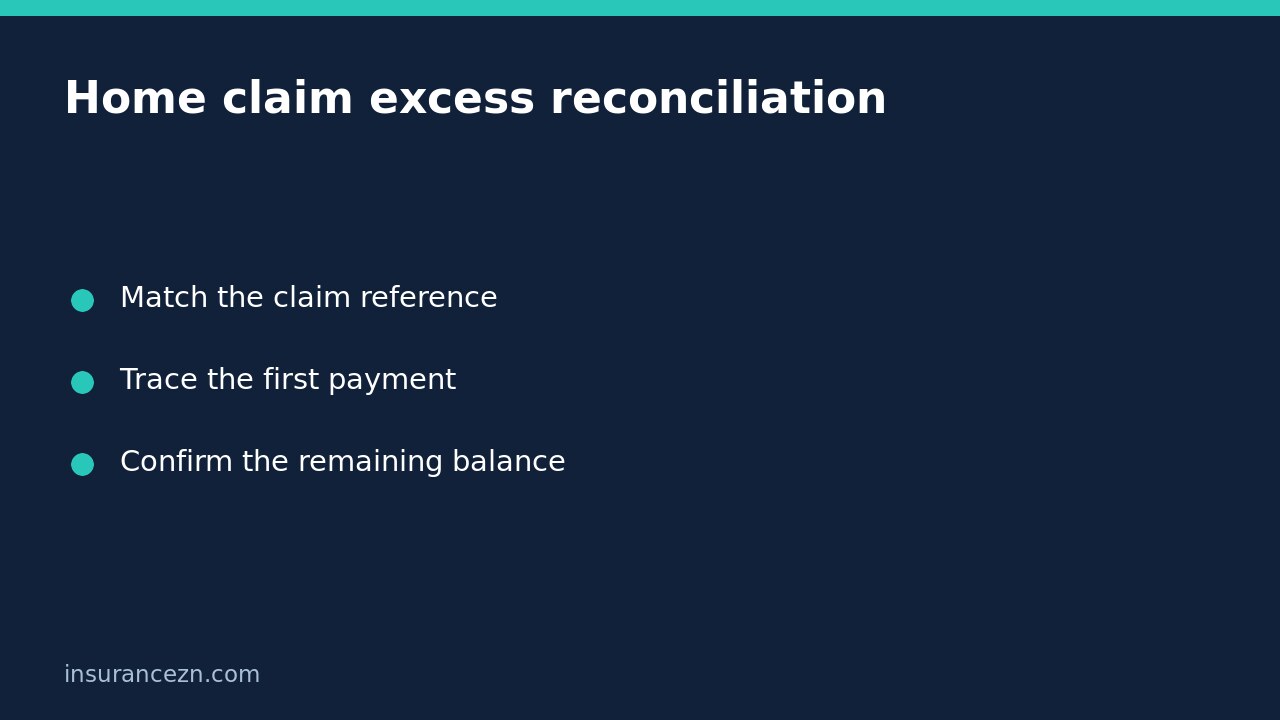
Gather the original excess notice, receipt, payment reference, bank transaction date and any settlement breakdown. Ask the insurer to show the assessed excess, amounts actually received, deductions actually made and remaining amount due. Do not count a proposed deduction as a second completed collection.
Build a short reconciliation record
Create a record with separate entries for each transaction. Include the claim reference, transaction date, amount, recipient, payment reference and whether the insurer has confirmed allocation. Keep a statement of an amount due separate from evidence that money moved.
For example, a customer pays an excess and later receives a settlement breakdown still showing an excess deduction. This does not by itself prove overcharging: the breakdown might predate the payment or remain an unprocessed draft. The useful question is whether the final payment calculation credits the earlier receipt. Request an updated reconciliation rather than guessing which document is authoritative.
Send only the evidence needed to trace the transaction. Redact unrelated bank activity and unnecessary account information. Keep copies of the original documents as well as any corrected versions so the change remains understandable.
Request a processed outcome, not just an acknowledgement
A practical message is: ‘For claim [reference], I paid the requested excess on [date], using reference [reference]. I have now received another request. Please confirm the assessed excess, where the first payment was allocated, any actual settlement deduction and the remaining amount payable. If a correction is required, please send the updated statement and confirm when it has been processed.’
Ask whether collection reminders can be paused while the evidence is checked and whether any outstanding amount affects the next repair step. Do not assume a pause has been granted, or ignore a genuine due date without contacting the insurer.
If the insurer identifies an overcollection, request written confirmation of the correction and how any refund or credit will be handled. An acknowledgement that documents were received is not confirmation that the ledger or payment calculation has changed.
Common questions before closing the issue
Does paying the excess prove all repairs are approved? No. Confirm the authorised repair scope separately. Excess collection, claim assessment and repair approval are different records.
Should I open a new claim to fix the payment? A payment-allocation query should identify the existing claim. Ask the insurer how to correct that record rather than duplicating the incident.
What if the explanation still does not reconcile? Request a written response through the insurer’s complaint process, including the transaction evidence and the precise correction you are seeking. Avoid inventing a refund deadline or assuming the complaint itself changes the amount due.
Keep the reconciled excess statement alongside your room-by-room repair rectification list if repairs also need attention. Resolving a payment discrepancy does not confirm that defective work has been fixed.