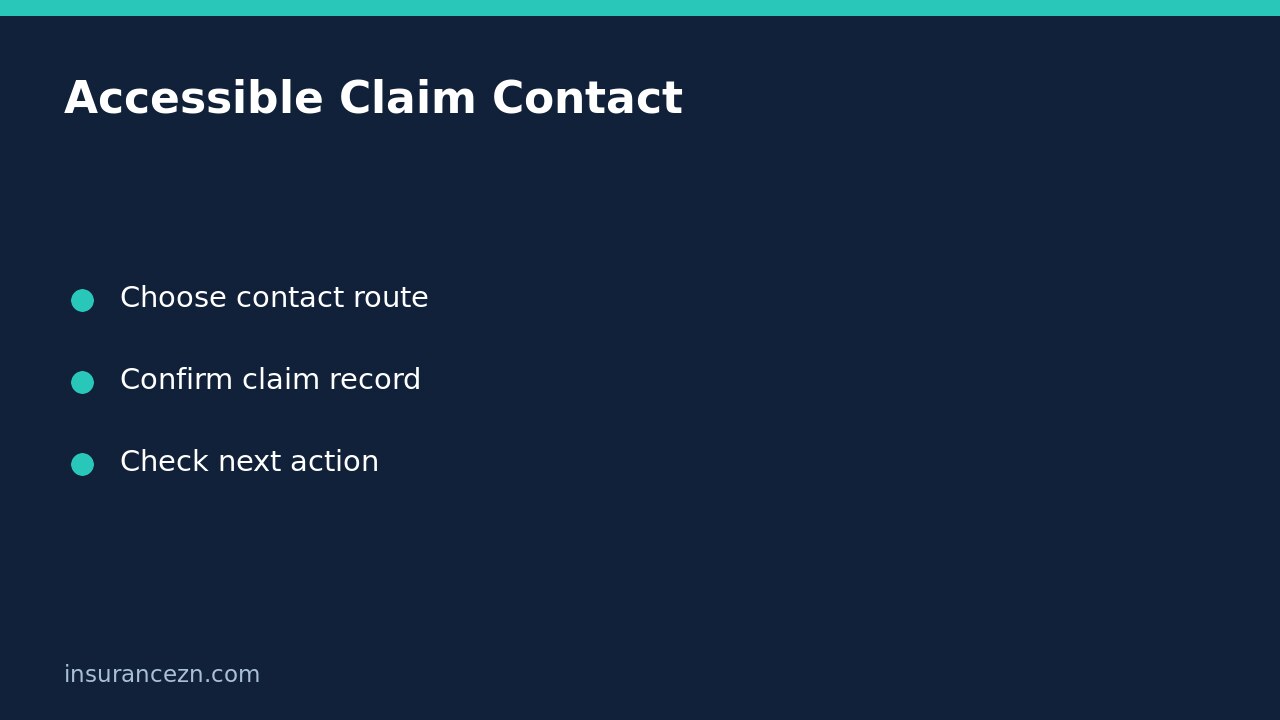

If hearing or communication difficulties make an insurance claim call hard to follow, ask the insurer to agree an accessible contact arrangement before the next detailed conversation. Identify the existing claim, explain the practical communication barrier, and request a written summary of the next action. A relay-assisted conversation can help you communicate; it does not itself establish claim acceptance or approval of expenses.
This is general information for Australian readers, not personal financial advice. Your policy, Product Disclosure Statement (PDS), applicable terms and the insurer’s assessment determine cover. Contact arrangements and support options differ between providers and products.
Choose a route that works for the actual conversation
Start at your insurer’s current official contact or accessibility page. Describe what you need to participate: for example, a relay-assisted call, time to read questions, or a written follow-up. Ask which options the claims team can actually provide rather than assuming every online channel supports every task.
As one provider-specific example, Suncorp’s accessibility page directs people who are d/Deaf, hard of hearing or have a speech or communication difficulty to their preferred National Relay Service call channel and then to supply Suncorp’s contact number. Use the current official page for contact details. That instruction is not evidence that every insurer has identical processes or that a relay service can decide a claim.
The page also contains older technology references. Its general website-accessibility statements should not be treated as a guarantee that a particular claims form or document will work with your device. If a document is inaccessible, identify its title and ask for a usable alternative.
Prepare a short claim-contact brief
Before making contact, write down the claim reference, policyholder name, relevant incident date and the single task you need completed. Keep the brief factual and limit sensitive information to what is necessary. Use a verified channel, and do not send account passwords or authentication codes in an ordinary email.
- What communication barrier is preventing the next step?
- Which contact method would make that step workable?
- Which document or question needs clarification?
- What response or action is currently due?
- Where can a written summary be sent safely?
If another person will help, ask the insurer what identification and authority it requires. Communication assistance is not automatically permission for someone else to negotiate a settlement, change payment details or accept an offer. Keep those permissions separate and no broader than intended.
Confirm the support request reached the claim record
An acknowledgement that your message arrived is not confirmation that the claims team has recorded and can use the requested arrangement. Ask what was entered, which team can see it, and whether it applies to the next callback. Record the answer and any unresolved limitation.
For example, a claimant might request a written outline before discussing an assessor’s report. The useful confirmation is not simply ‘we received your enquiry’. It identifies the report, confirms how questions will be provided, and explains who will arrange the follow-up. Do not assume an unanswered request has changed an appointment or deadline.
Suncorp’s support hub separates claim support, extra care and complaints pathways. This illustrates why a general support enquiry should not be confused with a lodged claim or formal complaint. Check the appropriate pathway for your own product.
Read back the outcome without overstating it
After the conversation, request a concise summary: documents required, questions answered, outstanding issues, responsible team and the next contact step. Correct misunderstandings under the existing claim reference. Preserve both the original summary and the correction rather than silently replacing the record.
Keep communication outcomes distinct from insurance decisions. An accessible appointment being arranged is not approval of repairs. Evidence being received is not acceptance of its conclusions. A staff member explaining an offer does not mean you have accepted it. Before signing anything, our guide to what remains open in a partial settlement can help organise separate settlement questions.
Quick questions before the next callback
Should I lodge a second claim to get support? Do not duplicate an existing claim simply to request a workable contact method. Quote its reference and ask the insurer to connect the support request to it.
Does requesting written communication pause a deadline? Do not assume so. Ask explicitly about the particular deadline and obtain confirmation of any agreed change. Keep unresolved dates visible in your notes.
What if the arrangement fails? Record what failed, when it happened and what practical alternative you need. Ask for the insurer’s support or complaints channel as appropriate, while keeping urgent safety or medical needs separate from insurance administration.