
Filing a homeowners insurance claim is often the most stressful moment in a property disaster. Between the emotional weight of damage and the logistical nightmare of repairs, policyholders frequently forget to gather essential paperwork until it is too late. This delay can lead to denied claims, reduced settlement amounts, or prolonged disputes with adjusters. The key to a smooth process lies in preparation before the first official claim number is even issued. By assembling a comprehensive dossier of documents immediately after an incident, you position yourself for a faster resolution and a fair payout.
This guide outlines the critical documents you need to collect, organize, and submit. It covers pre-disaster maintenance records, immediate post-loss evidence, and specific forms required by most carriers. Whether you are dealing with water damage from a burst pipe or wind damage from a storm, having these materials ready will streamline the interaction between your claims adjuster and your insurance provider.
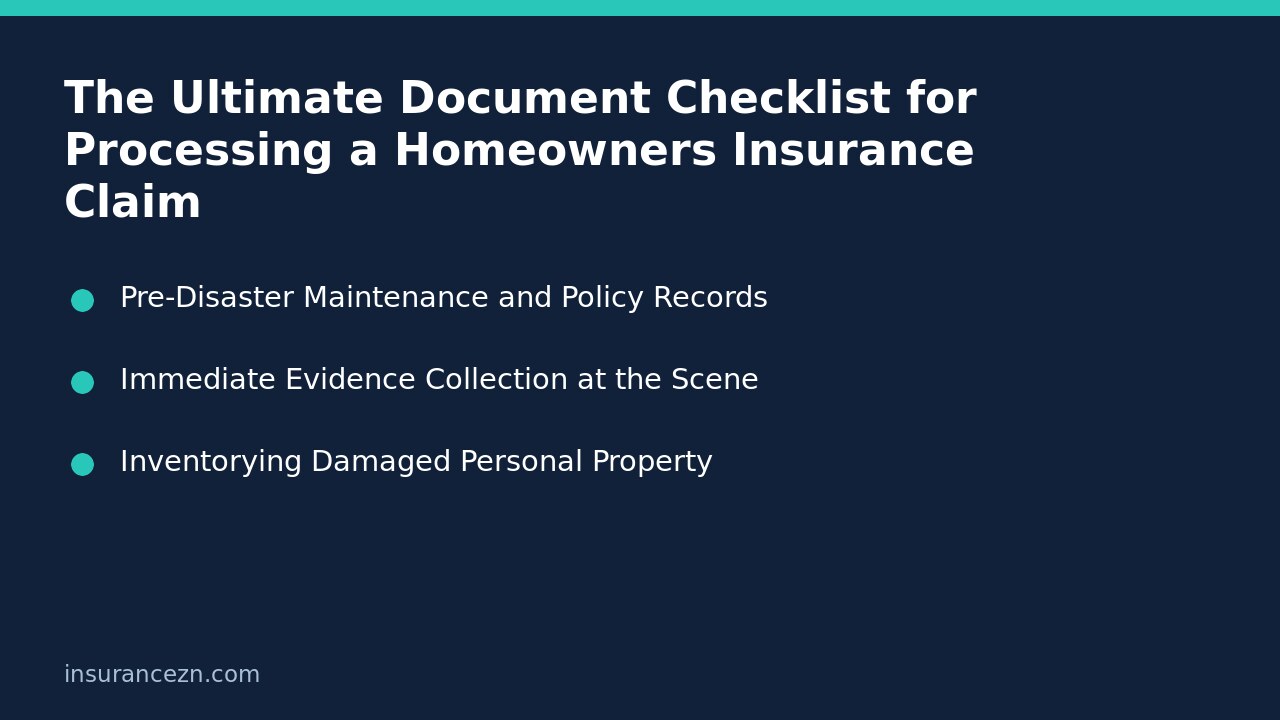
Pre-Disaster Maintenance and Policy Records
Before an incident occurs, gathering your foundational records is the first step in building a strong claim file. Insurance companies require proof that you maintained your property according to policy standards. Without these documents, an insurer might argue that negligence contributed to the loss.
Your primary document should be a clear copy of your active homeowners insurance policy. This includes the declarations page, which lists your coverage limits, deductibles, and named insureds. You also need a history of premium payments to prove continuous coverage. If you have ever upgraded your policy or added endorsements (such as flood or earthquake riders), ensure those specific addendums are included in your file.
Next, collect proof of ownership for the property itself. This includes the deed, mortgage statements, and any recent tax assessments. While less common now due to digital records, some older policies may require a copy of the original purchase agreement or closing documents. It is also wise to gather records of routine maintenance that demonstrate you are a responsible homeowner. Photos of your roof taken annually, receipts for gutter cleaning, and logs of HVAC servicing can be crucial if an adjuster questions whether wear and tear contributed to a claim.
Immediate Evidence Collection at the Scene
Once a loss has occurred, your immediate actions determine the quality of your evidence. The goal here is to document the extent of the damage without causing further harm or violating safety protocols. Do not attempt to repair damaged areas until an adjuster has inspected them, as repairs can inadvertently destroy vital evidence.
Start by taking comprehensive photographs and videos of all damage from multiple angles. Capture wide shots to show the overall context and close-ups to highlight specific details like cracks, stains, or broken materials. If water has entered your home, photograph the source of the leak, standing water, and any mold growth. Include images of personal property that was damaged, such as furniture soaked by floodwater or electronics fried by a power surge.
If the damage is caused by an external event like a fallen tree or a vehicle accident, document the surroundings. Take photos of the street signs, nearby landmarks, and the weather conditions at the time of the incident. This helps establish causation. If you have security camera footage from your property or smart home devices that captured the moment of the incident, save these files immediately to cloud storage or an external drive, as they may be overwritten by routine system updates.
Inventorying Damaged Personal Property
One of the most common reasons for claim delays is a lack of documentation regarding damaged personal belongings. Insurance policies often require you to prove ownership and value for items lost in fire, theft, or severe weather. A generic list is rarely sufficient; specific details are required for accurate valuation.
Create a detailed inventory list for every item that was damaged or destroyed. For each entry, include the following information:
* Description: Be specific about the item (e.g., “Samsung 65-inch QLED TV,” not just “Television”).
* Date of Purchase: If unknown, provide an estimated date and a receipt if available.
* Original Cost: List what you paid for the item.
* Replacement Cost: Estimate the current price to buy a similar new item.
* Condition at Time of Loss: Note if it was brand new, gently used, or heavily worn.
If you have digital records, upload receipts from credit card statements, bank accounts, or dedicated apps like Sortly or Tagg. Photos of your belongings taken before the loss are invaluable; many homeowners do not realize they have photographic proof of their possessions until a claim is filed. If you have old boxes or packaging for high-value items, keep them as they often contain original price tags and manuals that serve as proof of value.
Communication Logs and Correspondence
The administrative side of a claim involves significant communication between you, your insurance agent, the claims adjuster, and potentially third-party vendors. Keeping a meticulous log of these interactions is essential for accountability.
Maintain a chronological spreadsheet or notebook where you record every call, email, or meeting related to the claim. For each entry, note the date, time, and name of the person you spoke with. Summarize the conversation in detail, including any agreement made, promises given, or instructions received. If an adjuster requests additional information via email, save that correspondence immediately.
If you are working with a public adjuster or a contractor for repairs, document all communications regarding scope of work and cost estimates. Disputes often arise when contractors provide verbal quotes that do not match written agreements. Ensure all contracts, change orders, and progress reports are filed in your claim folder. If there is a disagreement about the cause of loss or the extent of damage, having a clear paper trail can prevent misunderstandings from escalating into legal disputes.
Post-Loss Forms and Final Submission
As the claims process moves toward resolution, you will encounter specific forms required by your insurance carrier. These documents serve as the formal bridge between your evidence and the final settlement check. The most critical of these is the proof of loss form. This official document requires you to declare the total value of the claim based on the inventory and photos you previously gathered.
Fill out this form accurately, referencing your supporting documents. Inaccuracies here can lead to automatic adjustments or requests for further investigation. You may also need to submit a sworn statement affirming that the information provided is true and complete to the best of your knowledge. Some carriers require a separate application for additional living expenses (ALE) if your home is uninhabitable; this requires proof of rental costs, hotel bills, and grocery receipts during the displacement period.
Before submitting your final package, conduct a thorough review. Check that all photos are legible, inventory lists match the physical evidence, and contact information is up to date. Submit everything through the carrier’s preferred channel, whether that is an online portal, secure email, or certified mail. Retain copies of every document you send, including proof of mailing receipts if you use postal services. This final step ensures that your claim file is complete, organized, and ready for the adjuster’s review, paving the way for a timely and fair settlement.
Real-World Example: The Winter Storm Scenario
To illustrate how this checklist applies in practice, consider a homeowner whose roof was damaged by heavy snow and ice during a winter storm. Before the storm, they had uploaded photos of their attic and roof to a secure cloud folder. When the storm hit, they immediately documented the sagging roofline and water stains on the ceiling with high-resolution photos and videos. They did not attempt to patch the hole themselves but instead boarded up the area for safety.
Within 24 hours, they gathered receipts for temporary boarding materials purchased at a hardware store as proof of mitigation costs. They also compiled an inventory of damaged electronics in the living room that were ruined by the water intrusion. Using their pre-stored maintenance logs showing recent gutter cleaning and roof inspections, they addressed potential concerns about neglect. When the adjuster arrived three days later, the homeowner provided a digital folder containing all photos, receipts, and the completed proof of loss form. Because the documentation was complete and organized, the claim was processed within two weeks, resulting in a full settlement that covered both structural repairs and personal property replacement without delay or dispute.