

A large baggage benefit does not necessarily mean your most expensive possession is insured for its full replacement cost. Before comparing Australian travel insurance premiums, take one item you intend to carry and follow it through the policy wording: the item limit, any optional increase, applicable excess and conditions for a claim. This is a practical way to expose differences that a headline benefit table can hide.
This is general information for Australian readers, not personal financial advice. Cover depends on the policy, Product Disclosure Statement (PDS), schedule, exclusions and insurer assessment. The examples below are comparison exercises, not promises of payment.
Start with a named item, not the total baggage allowance
Choose something specific: a prescription device, laptop, musical instrument or piece of jewellery. Record what it is, who owns it, its approximate replacement cost and whether you have a receipt, valuation or other ownership evidence. Do not assume a purchase receipt means the insurer will pay the original purchase price.
Read the baggage section and definitions in each shortlisted PDS. Find the overall baggage limit and the separate limit that could apply to this item. Ask whether accessories are assessed separately or together. If the wording groups possessions, ask the insurer how your actual equipment would be treated rather than inferring an answer from a comparison website.
Use a one-item comparison worksheet
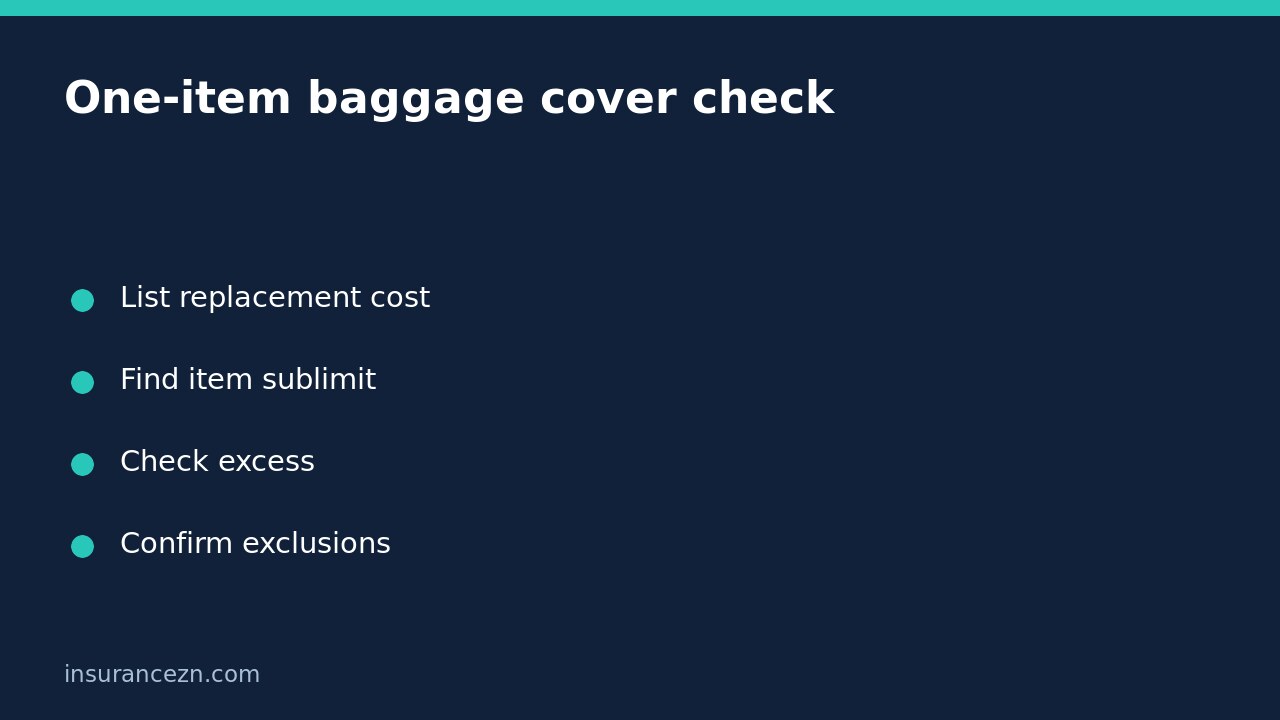
Make one column for each policy and record these points in plain language:
- The ordinary limit applying to the named possession.
- Any separate category limit or combined limit that could reduce the amount available.
- Whether extra cover can be purchased and whether the item must be individually listed.
- The excess relevant to a baggage claim and how it applies to multiple items from one incident.
- Any depreciation, repair, replacement or valuation conditions.
- Documents and circumstances the insurer would need to assess a claim.
Use an illustrative comparison without treating it as a payout calculation: one policy may advertise a higher total baggage benefit but have a lower relevant item limit than another. That could matter more for your laptop than the overall total. Conversely, paying for a higher item limit may not help if the circumstances of loss are excluded. Compare both the amount and the event being insured.
Check the situations in which the item will travel
Describe your real itinerary. Will you carry the item between hotels, leave it in accommodation, take it to a beach or place it in checked baggage? Ask where the policy addresses each situation. Do not assume all of them are excluded, or all of them covered: the point is to locate the actual conditions before purchase.
Smartraveller explains that valuables can have individual item limits and that unattended belongings are commonly outside cover. It also recommends checking the excess and reading the PDS. Use those warnings as prompts for specific questions, not as substitutes for your insurer’s wording.
Keep the security plan realistic. If a policy requires precautions that you cannot reasonably follow on the trip, a larger advertised benefit will not solve that mismatch. Ask for written clarification where a definition such as unattended is unclear.
Compare optional cover with what you already hold
Request a quote for any increased valuables protection before deciding the standard policy is sufficient. Confirm the increased limit on the final schedule, not just in a sales conversation. Retain the wording and confirmation that applied when you purchased.
If you intend to rely on a card benefit, first read our credit card travel insurance activation checklist. An attractive baggage benefit is not useful if the required activation conditions were not met. If another policy might also cover the item, disclose that when asked and check the claims coordination provisions; do not assume two policies permit double recovery.
Final questions before you pay
Does a higher baggage total solve a low item limit? Not necessarily. Identify the relevant item limit and whether increasing it requires a separate selection.
Is a listed item covered in every situation? No such assumption is safe. Listing and increased limits do not automatically remove exclusions or security requirements.
What should I save? Keep the PDS, schedule, item description, ownership evidence, relevant photographs and the insurer’s written answers together. Save an accessible copy before departure. This small evidence pack makes the comparison clearer now and gives you a useful starting point if you later need to make a claim.


