
Health insurance policies are often marketed as comprehensive safety nets, promising to cover the vast majority of your medical expenses ranging from routine check-ups to emergency surgeries. However, the fine print contains a critical component that can leave you financially vulnerable: exclusions. An exclusion is a specific condition, treatment, or service that your health insurance policy explicitly does not cover. Understanding these limitations is not just about reading legal jargon; it is an essential financial literacy skill that helps you avoid surprise bills and make informed decisions about your healthcare. This guide breaks down what exclusions are, why they exist, common examples you should look for, and how to navigate them effectively.
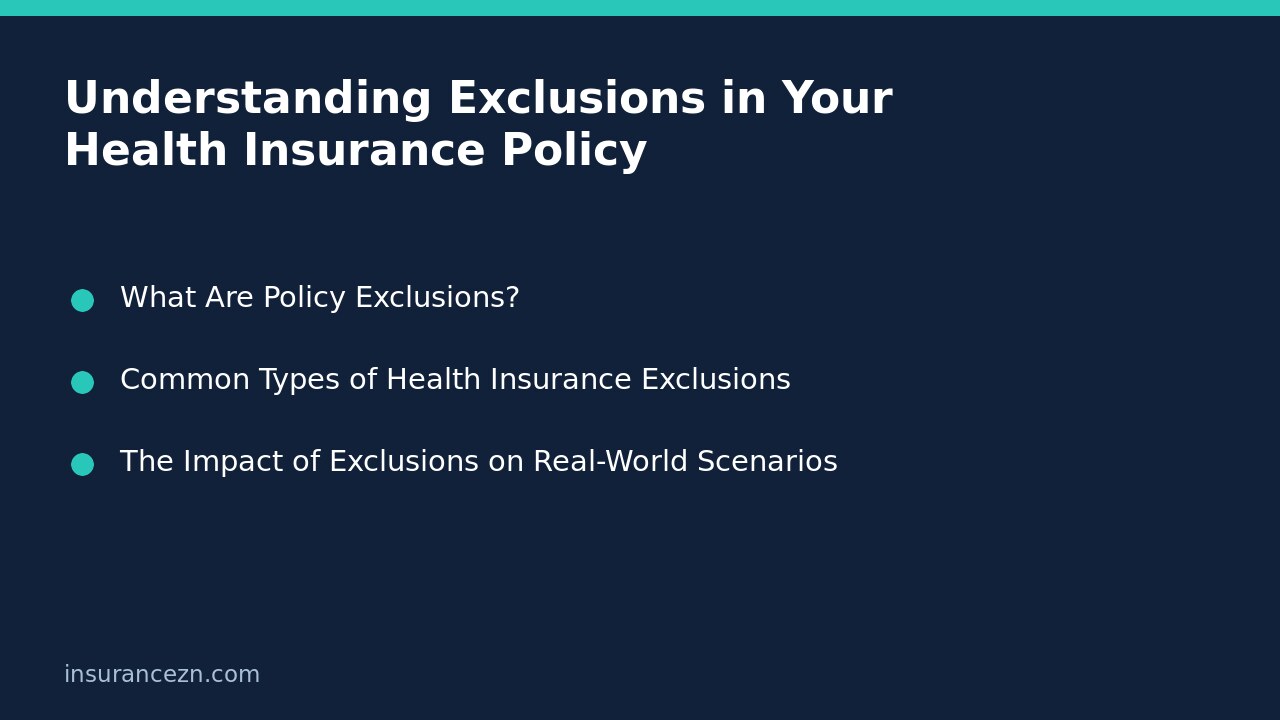
What Are Policy Exclusions?
At its core, a health insurance exclusion is a clause within your contract stating that the insurer will not pay for specific medical services or conditions. While coverage limits (maximum dollar amounts) and deductibles (what you pay before insurance kicks in) are common concerns, exclusions represent a complete denial of coverage for certain items. When an excluded service is performed, you are responsible for 100% of the cost, regardless of whether you have met your deductible or have remaining out-of-pocket maximums.
Insurers include exclusions to manage risk and control costs. They cannot cover everything because the healthcare system includes experimental treatments, cosmetic procedures, and high-risk conditions that do not fit standard actuarial models for a broad population. Furthermore, some services are deemed non-essential or preventative in nature depending on the specific plan design. It is crucial to distinguish between “standard exclusions,” which appear in almost every policy (like cosmetic surgery), and “plan-specific exclusions,” which vary based on your employer’s selection or the type of plan you purchased (e.g., HMO vs. PPO).
Common Types of Health Insurance Exclusions
To protect yourself, you must be familiar with the categories of services most frequently excluded from standard health plans. These generally fall into a few predictable groups:
Cosmetic and Elective Procedures
Perhaps the most well-known exclusions are those related to cosmetic enhancements. Procedures performed solely to improve appearance rather than to treat a medical condition are almost universally excluded. This includes Botox injections for wrinkles, liposuction without a documented medical necessity, rhinoplasty (nose jobs) unless correcting a breathing impairment caused by trauma or disease, and hair transplant surgeries. If you require surgery for a functional issue like sleep apnea, that is covered; if the same surgery is done purely for aesthetic reasons on an otherwise healthy individual, it is excluded.
Fertility Treatments
Reproductive health coverage varies significantly by region and plan type, but many standard policies exclude in vitro fertilization (IVF), egg freezing, surrogacy, and gestational carrier services. While some states mandate fertility benefits or offer subsidies, these are not part of the federal baseline for private insurance. Even when available, they often come with strict limits on the number of cycles covered or specific criteria regarding age and diagnosis.
Alternative and Experimental Therapies
Health insurers generally do not cover treatments that lack FDA approval or robust clinical evidence supporting their efficacy. This category includes acupuncture (unless specifically tied to pain management in plans that allow it), chiropractic care beyond a certain number of visits, herbal supplements, and unproven alternative therapies. Additionally, experimental drugs—those still undergoing clinical trials—are excluded because the safety profile is not yet established for general population use.
Pre-Existing Conditions (In Specific Contexts)
While the Affordable Care Act in the United States prohibits insurers from denying coverage or charging more based on pre-existing conditions, there are nuances regarding specific treatments. For instance, a policy might cover your diabetes but exclude coverage for complications arising from lifestyle choices made prior to enrollment if those choices were deemed reckless and undisclosed during the waiting period. More commonly, exclusions apply to weight-loss programs not medically necessary for treating obesity or bariatric surgery unless performed in an accredited facility with specific post-operative care plans.
The Impact of Exclusions on Real-World Scenarios
Consider the case of a professional athlete who undergoes a career-ending injury requiring reconstructive surgery. While the surgery itself might be covered, the policy may exclude coverage for any “enhancement” procedures performed during recovery to speed up healing or improve performance beyond standard medical restoration. Similarly, a patient seeking a second opinion from a specialist not in the network might find that the cost of that consultation is excluded if the plan strictly requires referrals within the designated network system.
Another frequent scenario involves dental and vision benefits bundled into health plans. Many “health” policies include limited dental or vision coverage but explicitly exclude orthodontics (braces) for adults or corrective lens surgery unless it is deemed medically necessary due to a congenital defect. Ignoring these exclusions can lead to significant out-of-pocket expenses that could have been avoided with prior knowledge.
How to Identify and Manage Exclusions
Reading the entire policy document is daunting, but you do not need to be a lawyer to understand your coverage. Start by looking for the section titled “Exclusions” or “What Is Not Covered.” This section is usually highlighted because it is legally binding and must be clear. Pay close attention to the definitions provided within that section; insurers often use specific language to define what constitutes an excluded condition versus a covered one.
Do not rely solely on summaries provided by insurance agents or online brochures. These marketing materials often highlight benefits while glossing over exclusions. Always request the full Summary of Benefits and Coverage (SBC) and read the fine print regarding exclusions before signing up for a new policy or renewing an existing one. If you are unsure about a specific procedure, contact the insurer’s customer service line and ask specifically if a particular service is excluded. Get that answer in writing via email or mail to create a paper trail.
Furthermore, maintain a list of your known medical history and planned procedures. Before scheduling any elective treatment, verify with both your doctor and your insurance provider whether that specific procedure falls under an exclusion clause. If a procedure is excluded but medically necessary, you may need to file an appeal or seek a second opinion from a specialist who can document the medical necessity clearly, potentially shifting the burden of proof to convince the insurer to make an exception.
Conclusion
Health insurance is designed to protect you from catastrophic financial loss due to illness or injury, but it is not a guarantee against all medical costs. Exclusions are the boundaries of that protection. By understanding what constitutes an exclusion—whether it be cosmetic surgery, fertility treatments, experimental drugs, or non-network services—you can navigate your healthcare journey with greater confidence. Never assume coverage exists; always verify it against the policy document. Taking the time to review exclusions now can save you thousands of dollars later and ensure that when you need care, you are not blindsided by a denied claim.