
Navigating the health insurance marketplace can feel like decoding a complex foreign language, filled with jargon, confusing forms, and overwhelming choices. One of the most critical components often overlooked by new applicants is understanding how subsidies and discounts work. These financial mechanisms are designed to make coverage affordable for millions of Americans, but they come with specific eligibility rules, application deadlines, and documentation requirements. Knowing exactly what you qualify for—and how to claim it—can save hundreds or even thousands of dollars annually on your monthly premiums. This guide breaks down the mechanics of Premium Tax Credits, Cost-Sharing Reductions, and other discount programs available through the federal and state exchanges.
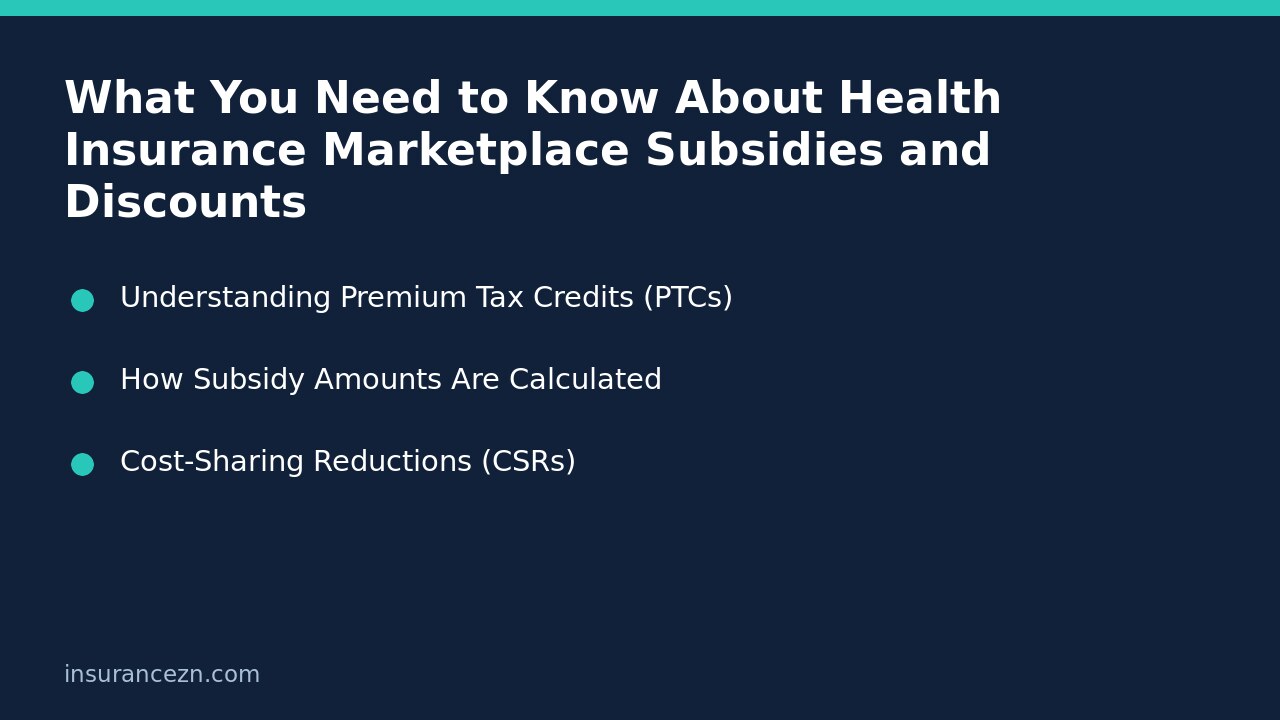
Understanding Premium Tax Credits (PTCs)
The most common form of assistance available on the Health Insurance Marketplace is the Premium Tax Credit (PTC). Unlike a voucher that goes directly to the insurer to lower your bill at the point of sale, a PTC reduces the amount you pay each month for your premium tax credit. However, there is an important nuance: if you do not enroll in a qualified health plan through the Marketplace during your enrollment period, you generally cannot receive this credit later.
Eligibility for a PTC depends on two primary factors: your household income and your eligibility for other government programs. To qualify, your annual income must fall between 100% and 400% of the Federal Poverty Level (FPL). The exact dollar amount of the FPL changes yearly based on family size; for example, in many regions, a single individual earning under roughly $16,000 might qualify, while a family of four might need to earn under approximately $65,000.
Additionally, you cannot have access to “affordable” minimum essential coverage through an employer or be eligible for Medicare or Medicaid. If your employer offers coverage that costs less than 9.5% of your household income and covers at least 60% of the cost of a self-only plan (the affordability standard), you are ineligible for the PTC. It is crucial to understand that “affordable” refers to the employee’s share of the premium, not the total cost of the plan.
How Subsidy Amounts Are Calculated
The amount of subsidy you receive is not a flat rate; it is dynamic and adjusts based on your income. The federal government calculates your expected contribution toward the premium using a sliding scale. Essentially, the more you earn, the more you contribute to your premium costs. The PTC covers the difference between what the plan costs and what you are expected to pay.
For instance, if your household income is 150% of the FPL, the government might cover roughly 60% to 80% of the average benchmark premium in your area. If you choose a Silver-level plan, this subsidy applies directly to your premium. If you choose a Gold or Platinum plan, which have higher base premiums, the subsidy still applies, but you will pay more out-of-pocket because the underlying cost is higher. Conversely, choosing a Bronze plan with a very low monthly premium might result in receiving less subsidy money, potentially leaving you with higher total annual costs if you utilize many services.
Cost-Sharing Reductions (CSRs)
While Premium Tax Credits lower your monthly bill, Cost-Sharing Reductions (CSRs) are designed to help you manage the costs you pay when you actually use healthcare services. These reductions lower your deductibles, copayments, and coinsurance. CSRs are only available if you enroll in a Silver-level plan through the Marketplace.
When you qualify for a CSR, the plan transforms into a “CSR-enhanced” Silver plan. The government provides extra funding to the insurer to cover these reduced cost-sharing costs. There are three tiers of CSRs based on income:
1. Lowest Tier: Reduces out-of-pocket maximums and deductibles significantly but keeps copays relatively standard.
2. Middle Tier: Further reduces the deductible and out-of-pocket maximum.
3. Highest Tier: Often referred to as “Extra Help,” this tier eliminates deductibles and copays entirely for primary care visits and prescriptions, leaving only a small coinsurance for expensive services like hospitalizations or specialist visits.
To qualify for any CSR tier, your income generally must be at least 105% of the FPL but not exceed 250% (though some states may offer different structures). If you enroll in a Bronze, Gold, or Platinum plan, you are ineligible for CSRs, even if your income qualifies.
Applying for Subsidies and Avoiding Common Mistakes
The application process is straightforward but requires accuracy. You apply during the Open Enrollment Period (typically November to January) or during a Special Enrollment Period triggered by life events like marriage, birth of a child, or loss of other coverage. When applying via HealthCare.gov or your state’s exchange portal, you will be asked for proof of income, such as recent pay stubs, tax returns, or unemployment benefit statements.
A frequent mistake applicants make is underreporting their income to qualify for higher subsidies. The government has robust data-matching systems that cross-reference information with the IRS and Social Security Administration. If you are found to have received more in subsidies than you were eligible for, you will be required to repay the excess amount, which can lead to significant financial penalties and a tax bill the following year.
Another common error is failing to update your income if it changes during the year. If your income drops significantly mid-year, you may qualify for additional assistance retroactively. Conversely, if your income rises above 400% of the FPL, you will not be eligible for subsidies at all. Always report your best estimate of full-year income during application; you can adjust this later with documentation if circumstances change.
Real-World Example: The Smith Family Scenario
Consider the Smith family, consisting of a mother, father, and two children. They live in a state that expanded Medicaid but they earn too much for Medicaid eligibility. Their combined annual salary is $52,000, placing them at roughly 160% of the Federal Poverty Level.
* Scenario A: They select a Bronze plan with a $200 monthly premium and no deductible. Without a subsidy, this costs $2,400/year. With a PTC, the government might cover 75% of the benchmark premium, reducing their monthly cost significantly.
* Scenario B: They select a Silver plan with a $450 monthly premium. This plan qualifies for CSRs. At 160% income, they qualify for the highest CSR tier. Their deductible is eliminated, and they pay only small copays for doctor visits. The PTC covers most of their $450 premium, while the CSR ensures their medical expenses remain low if they get sick.
In this example, Scenario B often results in lower total annual costs despite a higher monthly sticker price, because the combination of the PTC and CSR protects them from catastrophic bills.
State-Specific Variations and Special Programs
It is vital to remember that while federal rules set the baseline for subsidies, states have flexibility. Some states, like California (via Covered California) or Massachusetts, operate their own exchanges with potentially different subsidy calculation methods or additional discount programs. For example, some states offer “premium assistance” programs specifically for low-income residents that stack on top of federal credits. Others may have specific initiatives for rural residents or veterans.
Always check your state’s exchange website for local newsroom updates or special enrollment periods. Additionally, look for “Navigator” programs. These are trained, certified assistants who help you navigate the application process for free. They can explain how subsidies work in your specific jurisdiction and help you compare plans without any bias toward a specific insurance carrier.
Conclusion: Securing Your Financial Health
Health Insurance Marketplace subsidies and discounts are powerful tools that should not be ignored. Whether through Premium Tax Credits lowering your monthly payments or Cost-Sharing Reductions shielding you from high deductibles, these programs make quality healthcare financially accessible. The key to maximizing these benefits lies in accurate income reporting, selecting the right metal tier for your needs (often Silver for those seeking CSRs), and staying informed about state-specific variations. By taking the time to understand these mechanisms and applying correctly, you ensure that your health insurance budget reflects the support you are legally entitled to receive. Remember, terms, availability, eligibility, laws, and prices depend on the specific insurer, policy details, and jurisdiction; always verify current information with official government resources before making enrollment decisions.