
Most people assume that life insurance is the only financial safety net they need, leaving them vulnerable if they cannot work due to illness or injury. However, for the vast majority of families, disability income insurance provides a far more critical layer of protection than life insurance ever could. If you become unable to work, your ability to pay rent, buy food, and cover healthcare costs stops immediately unless you have an alternative income stream. This article explains why disability coverage is essential, how underwriters evaluate risk, and the specific steps you must take to secure approval for a policy.
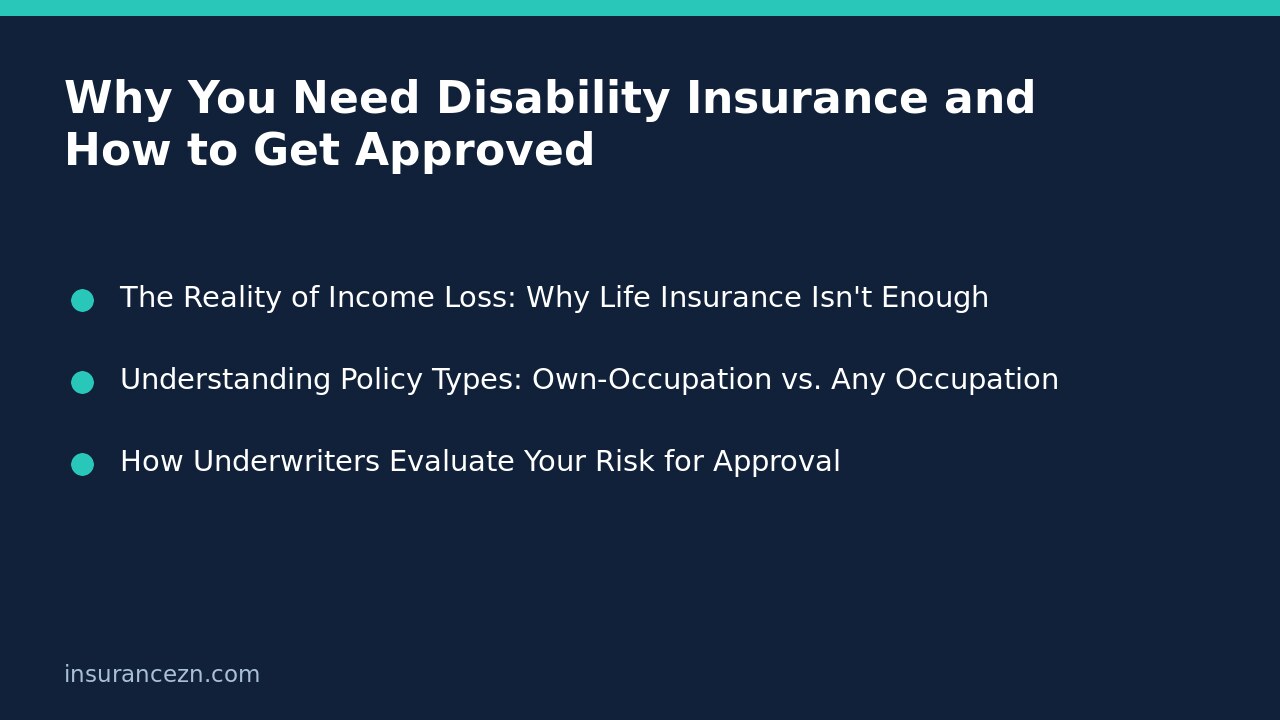
The Reality of Income Loss: Why Life Insurance Isn’t Enough
Life insurance pays out a lump sum only after you pass away. It does not help your family survive while you are alive but unable to work. Disability insurance replaces a portion of your earned income when an injury or illness prevents you from performing the material duties of your own occupation (or any occupation, depending on the policy).
The risk of disability is significantly higher than the risk of premature death. Statistically, you are more likely to become disabled before age 65 than to die before that age. Without coverage, a single injury could deplete savings within months. For example, a construction worker injured on the job might face high medical bills and zero income. Even for office workers, conditions like carpal tunnel syndrome, chronic back pain, or mental health crises can lead to long-term leave. Disability insurance bridges this gap, ensuring your standard of living remains stable when you cannot earn a paycheck.
Understanding Policy Types: Own-Occupation vs. Any Occupation
When shopping for coverage, the definition of “disability” is the most important factor in your approval and benefits. There are two primary types:
- Own-Occupation: This policy pays out if you can no longer perform the specific tasks of your current job. A surgeon who cannot operate but can still teach or consult would qualify for benefits under this definition.
- Any Occupation: This is stricter. It only pays if you cannot work in any job for which you are reasonably suited by education and experience. While easier to find, the payouts often start much lower because the insurer assumes you could easily switch to a less demanding role.
For best results, seek “Own-Occupation” coverage as long as your employer offers it or if you can afford the higher premium. This ensures that even if you must change careers due to disability, you retain income protection during the transition.
How Underwriters Evaluate Your Risk for Approval
Getting approved for disability insurance is not guaranteed; it is an underwriting process similar to life insurance. Insurers assess your risk of becoming disabled based on several key factors:
- Age: Younger applicants generally qualify more easily and get lower rates, as the probability of disability increases with age.
- Occupation: High-risk jobs (e.g., long-haul trucking, roofing, heavy machinery operation) face higher premiums or may be excluded entirely. Sedentary office roles are viewed more favorably.
- Health History: Current health issues, past surgeries, and family history of chronic diseases impact eligibility. Insurers look for stability in your medical record.
- Hobbies and Lifestyle: Dangerous hobbies like rock climbing, skydiving, or scuba diving can disqualify you or increase costs.
- Credit Score: Many insurers now use credit-based insurance scores to predict the likelihood of filing a claim. A lower score may lead to higher premiums or denial in some jurisdictions.
It is vital to be completely honest on your application. Misrepresenting your health history, even unintentionally, can result in a claim denial years later when you need it most. Insurers conduct thorough investigations, which can include reviewing medical records and contacting previous doctors.
Common Reasons for Claim Denials and How to Avoid Them
Many applicants are surprised by a denial letter because they did not understand the specific terms of their policy or how underwriting works. The most common reasons for denial include:
- Pre-existing Conditions: If you had symptoms of a condition before buying the policy, it may be excluded. However, if the policy covers “any occupation,” some insurers will cover conditions that do not prevent you from working in any job.
- Waiting Periods (Elimination Periods): Policies have a waiting period before benefits start, ranging from 30 to 180 days. If you apply for coverage and become disabled immediately after purchasing it, you must wait out this period regardless of when the policy started.
- Inconsistent Medical History: Discrepancies between what you told the agent and what your doctors recorded can lead to fraud accusations and denial.
To avoid these pitfalls, buy disability insurance as soon as you start earning an income that needs protecting. Do not wait until you feel “sick” or injured, as pre-existing conditions will be excluded. Always read the fine print regarding exclusions for specific activities or hobbies.
Step-by-Step Guide to Securing Your Policy
Follow these practical steps to navigate the application process and maximize your chances of approval:
- Assess Your Income Needs: Calculate how much you need monthly to cover essential expenses. A common rule of thumb is to aim for 60% to 70% of your gross income.
- Shop Around: Do not accept the first offer. Different carriers have different underwriting guidelines regarding specific jobs and health conditions. Some specialize in high-risk occupations.
- Gather Medical Records: Have your recent test results, doctor notes, and prescription lists ready. Being prepared speeds up the process and reduces errors.
- Complete the Application Accurately: Answer every question truthfully. If you are unsure about a term, ask for clarification before answering.
- Review the Policy Documents: Before paying your first premium, ensure the definition of disability matches your needs (Own-Occupation preferred) and that the elimination period is manageable.
Real-World Example: The Freelance Designer
Consider Sarah, a freelance graphic designer earning $60,000 annually. She works from home but relies on her computer for all tasks. One day, she suffers a severe carpal tunnel injury requiring surgery and months of recovery. Without disability insurance, she would lose her entire income while paying for medical bills and rent.
Sarah applies for an “Own-Occupation” policy with a 90-day elimination period. Because she is young (28) and has no prior health issues, she qualifies easily. When the injury strikes three months after buying the policy, she waits out the 90-day period. Once approved by her doctor that she cannot design graphics, her insurer begins paying $3,500 monthly. This allows her to focus on healing without the stress of financial ruin.
Conclusion: Don’t Wait Until You Are Disabled
Disability insurance is often called the “poor man’s annuity” because it provides a steady stream of income during your working years if something goes wrong. While the process involves understanding complex definitions and providing medical information, the reward is peace of mind and financial security.
The cost of disability insurance is relatively low compared to the potential loss of income. By taking action now, researching different carriers, and being transparent about your health, you can secure a policy that protects your future. Remember that terms, availability, eligibility, laws, and prices depend entirely on the insurer, your specific policy, and your jurisdiction. Always consult with licensed professionals to determine the best coverage for your unique situation.