
Repeatedly asking “any update?” can leave you with a long correspondence trail but no clear record of the problem you want resolved. If an Australian insurance claim is delayed, distinguish a routine request for progress from an expression of dissatisfaction and a request for a remedy. Ask the insurer to confirm how it has recorded your communication.
This does not mean that particular words are always legally required to make a complaint. An insurer may already recognise a complaint without a formal label. The practical mistake is assuming that your message has triggered a particular process without checking.
First identify what is actually holding up the claim
Separate three situations: you need an update, you disagree with how the claim is being handled, or you disagree with a coverage or settlement decision. Each needs a different question. If the insurer is waiting for a builder report, ask which report is outstanding, who is responsible for obtaining it and when the next update is expected.
If you have not supplied requested information, record what remains and explain any difficulty obtaining it. Request clarification where a demand is unclear. Do not describe every unresolved claim as an unjustified delay; establish the facts before drawing conclusions.
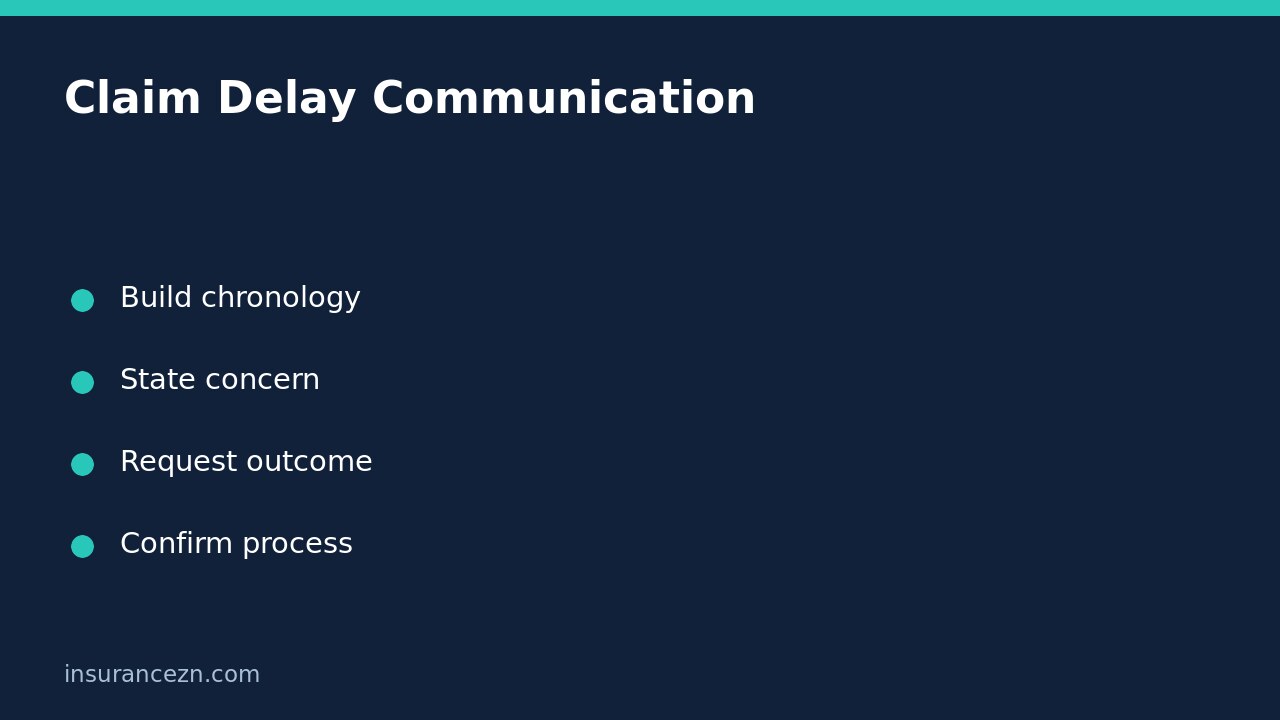
Build a short chronology rather than forwarding every email
Make a one-page timeline using dates you can support. Include when you lodged the claim, when information was requested, when you supplied it, any stated milestones and subsequent follow-ups. Link each important entry to an email or document.
Consider this hypothetical example: a household supplies requested photographs, receives confirmation of receipt, then gets another request for the same photographs. Its useful question is not simply why the claim is slow. It is whether those files have been attached to the correct claim and whether any other information is genuinely missing.
Keep observed facts separate from assumptions. “No written update received since [date]” is more precise than “nobody is working on my claim.” Note telephone conversations as your recollection unless you have an agreed written record.
Choose a progress request or an explicit complaint
A progress request might ask: “Please identify the remaining steps for claim [number], any information needed from me and the expected timing of your next update.” That is useful when you are trying to understand the process rather than challenge it.
If you are dissatisfied, state that clearly. For example: “I am dissatisfied with the handling of claim [number] because the attached chronology shows repeated requests for documents already supplied. Please treat this as a complaint, confirm the complaint reference and explain how you will resolve the document issue and progress the assessment.”
Request a realistic outcome, such as confirming receipt, identifying the responsible contact or explaining the outstanding assessment. Do not demand automatic claim acceptance just because communication has been poor. Handling concerns and policy entitlement are related but different questions.
Confirm registration and preserve the response
Save the submitted message and any acknowledgement. Ask whether the insurer has registered a complaint, which process is being used, the contact details for follow-up and the response timeframe it says applies. A claim number and a complaint reference may be different; keep both.
Legal Aid NSW’s Insurance claims after a disaster distinguishes requests for claim timing from requests for internal review. It also describes external dispute resolution through the Australian Financial Complaints Authority (AFCA). The publication is dated October 2023; do not rely on its historical timing statements as a substitute for checking current requirements applicable to your circumstances.
If a reply addresses only progress and overlooks your expressed dissatisfaction, respond with the complaint date, the unresolved issue and the outcome sought. Avoid opening multiple identical complaints unless the insurer directs you to do so. Preserve new evidence and explain what it changes.
Escalate the unresolved issue, not just the email volume
If the matter remains unresolved, ask for the insurer’s written position and information about further review. Check current AFCA eligibility and time limits directly, or seek insurance legal assistance. Do not assume that repeated follow-ups extend any deadline. Seek prompt advice if there is a settlement deadline, urgent hardship or uncertainty about preserving your rights.
Where the delay concerns an offer that you cannot assess, our article on comparing repair quotes with different scopes can help you identify the substantive information still needed.
Before sending: three checks
- Does the message say what happened, why you are dissatisfied and what response you want?
- Are the key dates supported, with only relevant attachments included?
- Have you requested confirmation of the process rather than assuming how the insurer classified the message?
This is general information for Australian readers, not personal financial advice or legal advice. Your policy, PDS, exclusions, limits and circumstances govern cover. A complaint does not guarantee payment; obtain qualified advice about disputed claims and applicable deadlines.