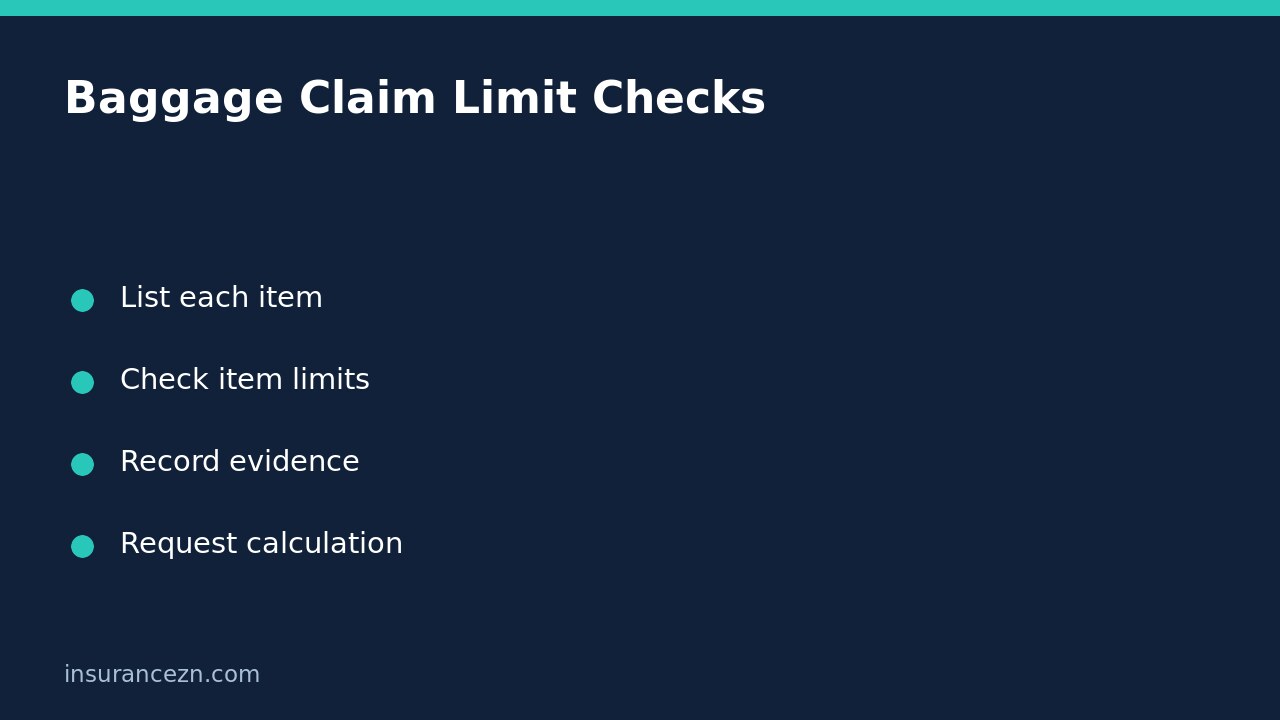

A travel policy’s total baggage limit is not automatically the amount available for one missing camera, phone or laptop. Before disputing a payment or budgeting for a replacement, check whether the insurer applied an individual item limit, a relevant sublimit, an excess or another policy condition. Ask for the calculation rather than comparing the offer only with the largest number in the benefits table.
This is general information for Australian readers, not personal financial advice. Your policy, Product Disclosure Statement (PDS), schedule, endorsements and claim circumstances determine cover. The checks below are practical record-keeping suggestions, not a promise that a claim or replacement purchase will be paid.
Why the headline baggage allowance can mislead
Smartraveller’s travel insurance guidance specifically tells travellers to check individual item limits, the excess and exclusions. It explains that valuable items may need additional cover and that policies differ. A broad baggage allowance therefore cannot answer every question about an expensive individual possession.
Separate three questions: was this loss covered, how does the contract value the item, and what limit applies to the resulting amount? Proof that you owned an expensive device helps establish what was lost. It does not, by itself, replace a contractual item cap or establish that the circumstances of loss were insured.
Build an item-by-item claim worksheet
Use one row for each item and avoid entering a bag and its contents twice. Record the description, model, purchase information, ownership evidence and amount claimed. Then add columns for the insurer’s assessed value, cited limit and proposed payment. Leave unknown figures blank and label them as awaiting explanation.
- Item identity: distinguish a phone from its separate accessories.
- Evidence: keep available receipts, photographs, serial numbers or other ownership records; ask what alternatives the insurer will consider if a receipt is unavailable.
- Policy treatment: ask whether particular items are grouped or subject to a shared sublimit.
- Calculation: record the actual clause and how it affects that row.
Do not assume the insurer must accept every alternative document. Equally, do not invent a purchase date or price to fill a missing receipt. Explain what you can substantiate and ask what further information is needed.
Test the proposed payment against the correct limit
Consider a fictional policy with an overall baggage allowance of $6,000 but an ordinary single-item cap of $800. A traveller’s camera cost $2,000. The overall allowance alone does not establish a $2,000 camera payment: the single-item cap needs to be considered, along with the actual valuation and any other applicable conditions. These invented figures illustrate the distinction; they are not terms from a real product.
If the traveller bought extra cover for that camera, obtain the schedule or endorsement recording it and ask which limit the insurer used. Check that it identifies the correct item and applies to the relevant trip. Having discussed additional cover or saved an unfinished quote is different from having an issued policy endorsement.
Ask how any excess is applied. Do not subtract it repeatedly from each row unless that is how the actual contract operates. Also ask how the insurer treats any other reimbursement or recovery, rather than assuming you can receive the same loss payment twice.
Do not confuse a limit dispute with a coverage dispute
If the insurer says the item was unattended or the circumstances were excluded, increasing the claimed value will not resolve that separate issue. Ask whether the decision is about ownership evidence, the loss circumstances, valuation, the item cap, or several of those matters.
Keep a factual account of where the belongings were, who had possession and when the loss was discovered. Do not reshape the account to match a policy definition. For broader documentation methods, our claim evidence register article shows how to connect records with questions; use that organisation method without importing motor-claim requirements into a travel claim.
Questions to send with a calculation query
A concise written request might say: ‘Please identify the policy clause used for the individual item limit, explain the assessed value, and show how any excess or other adjustment produced the proposed payment. Please also confirm whether the additional-cover endorsement I attached was considered.’
Attach the relevant documents with clear filenames. Preserve the original offer and your correspondence. If the explanation remains disputed, ask for the insurer’s complaint process; requesting clarification does not itself suspend any response or complaint deadline. Our article on progress queries versus formal complaints explains why it helps to state the action you are seeking.
Should I buy a replacement immediately? Ask whether a replacement must be approved and what evidence is needed before relying on reimbursement. An urgent personal need and an insured payment entitlement are not the same thing.
Does the original receipt guarantee the original price back? No. It is evidence of a purchase, while valuation, limits, excesses and cover still depend on the contract and the assessed claim.