
When comparing Australian car insurance with roadside assistance, check who pays for a replacement battery, not just whether battery help is advertised. A service may arrange a jump-start or replacement while leaving the actual battery cost to you. Treat emergency assistance, replacement parts and damage cover as separate lines in your comparison.
This is a narrow buying task: establish what you would receive and pay if your car would not start because of a flat battery. It is different from comparing accident towing or assuming comprehensive insurance pays ordinary mechanical repair bills.
Separate the callout from the replacement part
AAMI’s Roadside Assist overview provides a concrete example. It says the service can help jump-start a flat battery or arrange a replacement if required, subject to availability. It explicitly says the replacement battery’s cost is not covered. These are AAMI-specific terms, not a rule for every roadside provider.
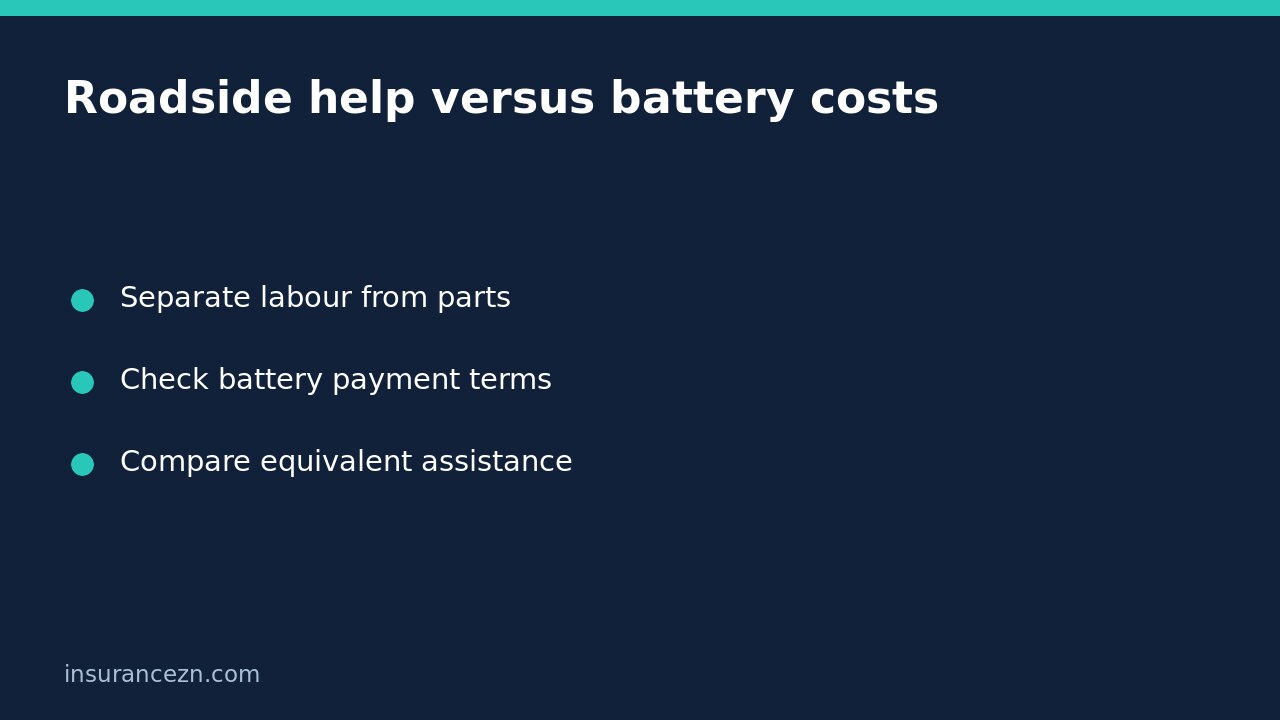
For each product you are considering, ask three separate questions: will someone attend, what labour or assistance is included, and what parts must you buy? A heading such as battery help does not answer all three. Record the relevant wording and any linked terms rather than relying on a tick beside a benefit name.
Build a battery-specific comparison sheet
Use the same vehicle and breakdown scenario for each quote. Your worksheet should contain:
- Purchase cost: the actual premium or membership charge for the assistance, using the same period for both options.
- Availability: the start time, any waiting period, service area and vehicle eligibility conditions.
- Flat-battery response: whether the benefit includes an attempted jump-start, testing, or arranging a replacement.
- Parts payment: who pays for the battery, and whether an installed quote is available before you consent.
- Failure to restart: the applicable towing arrangements and charges outside the included service.
- Exclusions: maintenance-related restrictions and any other conditions affecting the particular breakdown.
AAMI’s overview, for example, describes an initial waiting period and restrictions involving lack of maintenance. Read those as conditions of that service. Do not assume another provider uses identical rules or that buying assistance after the problem appears will fund that existing problem.
Work through a realistic decision without invented prices
Suppose you are comparing a car insurance quote with optional roadside assistance against another quote without it. You already have access to a vehicle manufacturer’s assistance programme. Before paying for the add-on, check whether that existing programme is still active for your vehicle and whether it responds to the same flat-battery scenario.
Next, request each service’s explanation of what happens if a jump-start fails. If both arrange a replacement but charge for the battery, neither should be valued as free replacement-battery insurance. Compare the quoted assistance cost and the actual service differences; leave the battery price marked as unknown until you obtain a suitable installed quote.
If one option advertises a battery discount, ask what price the discount applies to and compare the final payable amount for a compatible battery. A headline percentage is not a complete cost comparison. Do not invent a likely callout frequency or savings figure to justify the purchase.
Keep roadside assistance separate from comprehensive damage cover
AAMI’s comprehensive car cover summary distinguishes accidental damage cover from mechanical and electrical breakdown, while describing Roadside Assist as an optional addition. Its roadside page also distinguishes breakdown assistance from accident claims. That separation is useful when reading competing products, even though their wording may differ.
If the car will not start after an insured incident, explain what happened through the appropriate official channel rather than labelling it an ordinary flat battery to fit a benefit. The cause, product and applicable terms matter. An assistance dispatch is not a decision accepting a comprehensive damage claim, and a claim reference does not automatically authorise a battery purchase.
Questions to settle before buying
Does battery help mean a free battery? Not necessarily; AAMI’s published example expressly separates assistance from the battery’s cost. Can I use two assistance services? Check existing entitlements and collection arrangements before buying duplicate assistance or requesting duplicate dispatches. What if the car is unsafe? Put immediate safety first and use appropriate emergency assistance when required, rather than delaying urgent help for a policy comparison.
Finally, compare the rest of the car policy on its own merits. Battery assistance should not distract from cover limits or valuation. For that separate task, read comparing car renewal quotes without losing agreed value.
This is general information for Australian readers, not personal financial advice. Insurance and roadside benefits depend on the specific policy, Product Disclosure Statement (PDS), roadside service terms, exclusions and eligibility. Provider examples are not endorsements or guarantees of service, replacement availability or claim payment.