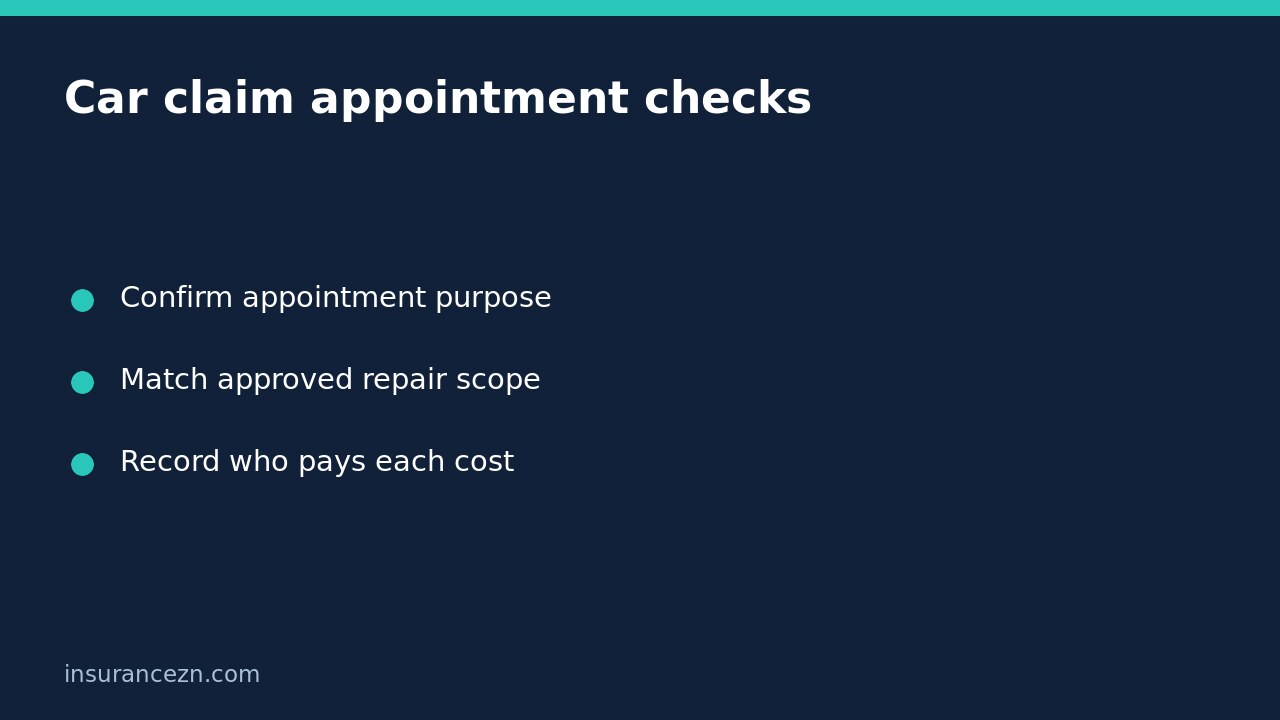

A repair-related appointment in an Australian car insurance claim can be useful progress, but do not assume the booking message explains everything the insurer has approved. Ask whether you are attending an assessment, providing a quote, dropping off an already-authorised repair, or taking another step. Obtain confirmation of the claim decision, authorised work and any costs you must pay before agreeing to additional work.
This matters particularly when an online claim system lets you select an appointment while documents or other questions remain outstanding. Keep the appointment and the approval record as separate entries in your claim file.
Read the booking as an appointment, not a complete decision
AAMI’s claims overview says its online process can let customers book directly into a repairer for eligible claims and policies. It also describes document management and claim tracking. That is a provider-specific description of available services, not a promise that every booking has the same purpose or that all work on a vehicle has been accepted.
The practical question is not simply whether you have a date. It is what that date is for. Read the appointment notice alongside the insurer’s messages, rather than interpreting a calendar entry as an unrestricted authority to repair. If the wording is unclear, ask the insurer to explain it against your existing claim reference.
Check three records before the appointment
- The booking: record the repairer, address, date, vehicle registration and stated appointment purpose. Check whether you must leave the vehicle or can wait for an inspection.
- The insurer decision: ask what has been accepted, what remains under assessment and whether any evidence is still required. Save the written response with its date.
- The work authority: identify the approved quote or scope, who may authorise repairs and how any additional damage will be handled.
A repairer’s availability and an insurer’s claim assessment answer different questions. Likewise, permission to inspect or prepare a quote should not be silently expanded into permission for unrelated servicing or extra repairs. Ask about any diagnostic, dismantling, storage or other charges before agreeing to them, including who would pay if they fall outside the accepted work.
Use a precise confirmation request
For example, a driver receives a text confirming a workshop visit after lodging a collision claim. The text names the workshop but does not identify the work scope. Rather than cancelling or assuming everything is settled, the driver can send this request through the insurer’s official claim channel:
For claim [reference], please confirm whether the appointment at [repairer] on [date] is an assessment or an authorised repair drop-off. What repair scope has been approved, what remains outstanding, and what excess or other charges will I need to pay? Please identify who can authorise additional work if more damage is found.
This example is an administration checklist, not evidence that a particular insurer uses these stages. Follow your insurer’s actual instructions and ask the workshop to explain any separate authority form before signing it.
Keep optional work outside the claim scope visible
If you also want a service, an old scratch fixed or another non-claim task performed, request a separate written quote and payment arrangement. Do not assume the claim number funds everything on the workshop job card. Conversely, if new damage appears connected to the insured incident, ask how the insurer wants it documented and assessed before the scope changes.
Keep the booking confirmation, approved scope, any revised quote and your consent together. Note who gave each instruction and when. An uploaded document or acknowledgement means evidence has been sent or received; ask separately whether the requested change has actually been approved and recorded.
Quick questions before handing over the keys
- Is this an inspection, quotation appointment or repair start?
- Does the paperwork identify the correct vehicle and claim?
- Which work is approved and which work needs a further decision?
- What must I pay, to whom, and at what stage?
- Who should the workshop contact before additional work starts?
Does booking mean a hire car is approved? Do not infer a separate transport benefit from a repair appointment. Ask for its own eligibility and booking confirmation. Should I lodge again if the appointment is unclear? First reconcile the existing claim and messages rather than creating another claim merely to obtain clarification.
If the difficulty becomes a complaint rather than a routine booking question, see why a progress query may not be a formal complaint for the distinction.
This is general information for Australian readers, not personal financial advice. Cover, repair arrangements, excesses and claim outcomes depend on your policy, Product Disclosure Statement (PDS), applicable terms and insurer assessment. An appointment, submitted request or acknowledgement does not by itself establish repair authorisation or payment entitlement.