
If you expected your hospital doctor to use a health fund’s gap arrangement but received a different bill, collect the actual account, written estimate and insurer assessment before asking for a correction. First establish whether that doctor agreed to use the scheme for this particular episode. Participating in a scheme does not mean every patient or service is billed under it.
This is general information for Australian readers, not personal financial advice. Benefits and billing arrangements depend on your policy, fund rules and the services provided. Read the policy documents and any applicable PDS. A request to review an account does not establish an entitlement to a refund or additional insurance payment.
Separate the doctor’s account from other hospital charges
PrivateHealth.gov.au’s out-of-pocket costs guidance explains that doctors’ medical fees are separate from hospital accommodation and other hospital services. It also says doctors can decide whether to use an insurer’s gap arrangement on a case-by-case basis.
Start by identifying the issuer of the disputed account. A surgeon, anaesthetist and assistant surgeon may issue different accounts. A gap arrangement for one doctor does not establish an arrangement for the others. Nor does an agreement hospital or a paid hospital excess settle what a doctor may charge.
Keep the hospital bill in your file for context, but do not compare its total with a doctor’s estimate as though they were the same charge.
Build a matching document set
- The written estimate or financial-consent document, including any gap-scheme wording.
- The final itemised account, patient details, provider details, service dates and MBS item numbers where applicable.
- Any receipt showing what you have already paid.
- The insurer’s assessment or benefit statement, if the account has been assessed.
- Relevant messages about changed procedures, fees or the intended billing arrangement.
Record an account number and a claim reference separately. One identifies the provider’s billing record; the other may identify the insurer’s assessment. If the account has not actually been lodged or assessed, mark that clearly. An uploaded invoice or enquiry acknowledgement is not an assessed claim.
Ask the practice what arrangement was used
Send a short, factual request: “My estimate for this admission referred to a gap arrangement. The attached final account appears different. Please confirm whether the arrangement was used for these services, explain any changed item numbers or fees, and identify whether the account needs correction.”
Attach only the documents needed through a verified channel. Avoid sending unnecessary clinical details to an unverified email address. Do not accuse the practice of an error before it has explained the account: a changed procedure, a separate provider or a different billing basis may be involved.
If the practice says an amended account is necessary, ask how it will be supplied and what should happen to the earlier version. Do not alter a provider’s invoice yourself or submit a second copy as a new claim without reconciling the existing assessment.
Ask the insurer to explain its assessment independently
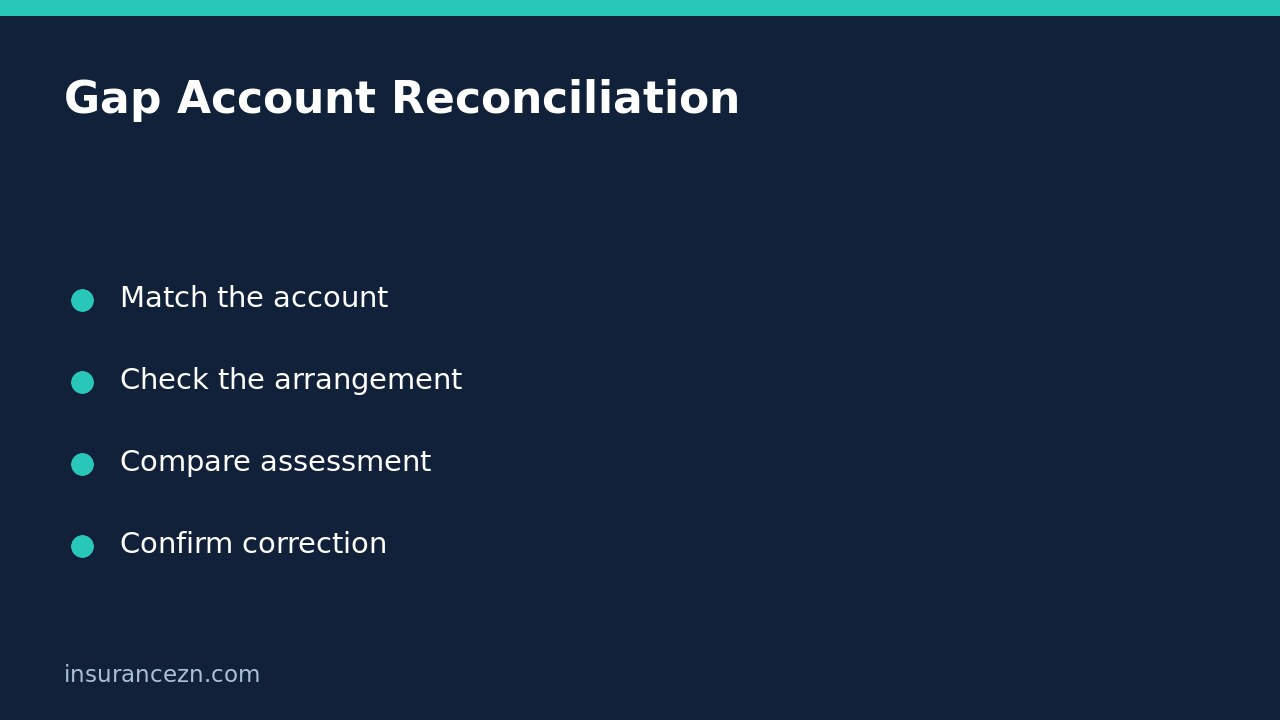
Give the insurer the same service dates, provider details and item numbers. Ask whether the account was received, whether it was processed using the expected scheme and which policy conditions or billing details affected the result. Also ask whether further information must come from you or directly from the practice.
A useful enquiry distinguishes “the doctor agreed to use the scheme” from “the insurer assessed the account under that scheme.” Each party may need to resolve a different part of the record. A general statement that your fund offers gap cover does not answer either question for this admission.
Use a reconciliation note, not a guessed refund
For example, your file might say: the estimate referred to a scheme; the final account uses different item numbers; the insurer has assessed the original account; the practice is checking whether an amendment is needed. That is a clear review request, not proof of overcharging or underpayment.
Keep a simple log showing the date, person contacted, document sent, promised response and next action. If payment is due while the enquiry is open, ask the practice about an agreed hold or payment arrangement. Do not assume that disputing an account automatically suspends collection or cancels a payment obligation.
Confirm the outcome in both records
If a correction is accepted, obtain the amended account and confirmation of the insurer’s revised assessment where relevant. Reconcile payments already made, any remaining balance and any refund actually processed. “We received your request” is not the same as “the account and claim have been corrected.”
If the explanation remains unclear, request the reasons in writing and ask about the relevant complaint pathway. The official guidance identifies the Private Health Insurance Ombudsman as a possible assistance pathway for private-health-insurance-related matters, including certain inpatient fee disputes. The appropriate route depends on the issue; a billing disagreement does not itself establish wrongdoing.
For another document-focused claim workflow, see the home claim report-request checklist. Its evidence-tracking approach is useful, but home-insurance settlement rules do not determine hospital billing rights.
Quick final check
Does the doctor’s scheme participation guarantee no gap? No. Confirm the arrangement for the actual services.
Does a corrected invoice guarantee a higher benefit? No. The insurer must assess the corrected details under the applicable rules.
When is the issue resolved? When the relevant account and assessment are reconciled, and any agreed balance adjustment or refund is confirmed—not merely when someone acknowledges your message.