
If your checked bag arrives damaged after a Qantas-operated flight, keep the baggage tag attached, photograph the damage and report it promptly. Do not assume that an airport report also lodges a compensation claim or a travel insurance claim. These are separate processes with separate references, requirements and decisions.
This checklist is for Australian travellers organising a damaged-baggage handover. The Qantas workflow below is provider-specific; another operating airline may use different channels and requirements.
Identify the operating airline before choosing a channel
Qantas’s baggage guidance says to contact the airline that operated the final flight to the airport where the bag arrived damaged. This includes a flight sold with a QF flight number but operated by another airline. Keep both the booking information and the operating-carrier details so your evidence reaches the appropriate team.
If Qantas operated that final flight and you are still at the airport, its guidance recommends reporting damage at the baggage services counter before leaving if possible. Ask for the damaged property report reference and save it with your boarding pass and baggage receipt.
If you have already left, Qantas directs travellers to its online form using the relevant baggage category. Use the current official page to reach that form. Do not rely on an old bookmark or assume every online enquiry automatically creates the required report.
Preserve the bag’s identity and the damage evidence
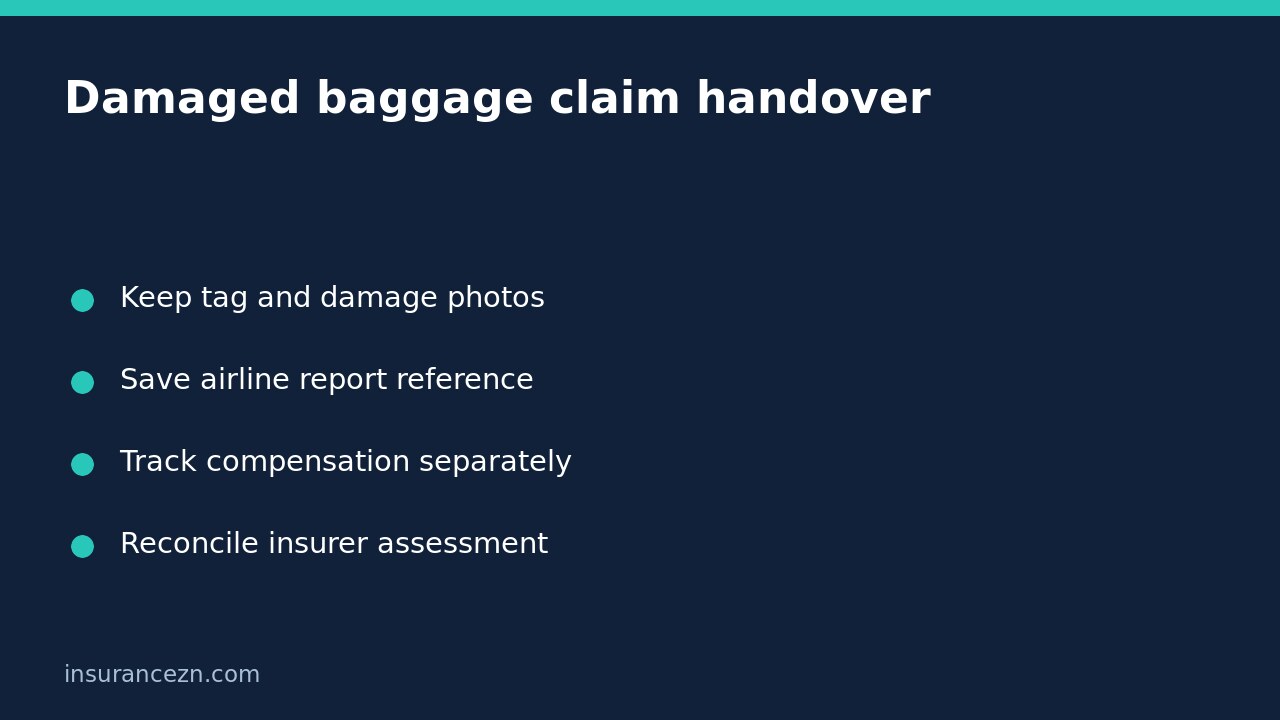
Qantas specifically says not to remove the baggage tag from a damaged item and asks for photographs with the tag still attached. Take a whole-bag photograph, clear close-ups of each damaged area and a readable image of the tag. Keep the originals rather than only compressed messaging-app copies.
- Record when and where you first noticed the damage.
- Describe the observed problem, such as a cracked shell or broken wheel, without guessing how it occurred.
- Save purchase evidence and any earlier condition photographs you already have.
- Keep repair estimates and receipts separate from the initial description.
Do not describe old wear as new flight damage or alter evidence to make a mark look clearer. If you cannot establish an item’s age or purchase price, label that detail uncertain and ask what alternative evidence the assessor will consider. Avoid disposing of or commissioning non-urgent repairs to the bag before checking evidence and authorisation requirements.
Create a separate compensation record
Qantas explains that a delayed or damaged baggage report must be created before submitting a compensation claim. A report helps record the incident; it is not itself a decision to repair, replace or pay.
Create a simple register with columns for process, reference, submission date, documents, requested action and current outcome. Put the damage report in one row and the compensation claim in another. If a confirmation only says an enquiry was received, retain that wording rather than relabelling it claim accepted.
For compensation, follow the official claim instructions and include the report reference, flight details, baggage receipts or tags, and photographs. Qantas states that compensation is assessed and, if eligible, the outcome may involve repair, replacement or a cash payment. Your preferred outcome is not an approved settlement merely because you requested it.
Check deadlines without borrowing the wrong rule
Act promptly. Qantas publishes time limits that differ by issue and itinerary type. Read the applicable row on its current page and ask for clarification if the distinction between damage, partial loss or another category is unclear. A deadline for delayed baggage is not automatically the deadline for your damaged bag.
Record the relevant date, the requirement and the action you completed. Keep submission confirmations. Do not wait for an insurer response on the assumption that it pauses an airline deadline, or assume that reporting at the counter completes every later claim requirement.
Hand over to the travel insurer without confusing outcomes
Read your travel policy’s PDS for baggage cover, exclusions, excesses and notification requirements. Qantas notes that many travel insurers require a claim with the airline first and may request the associated documents. Ask your own insurer what it requires; do not turn that provider statement into a universal rule.
Provide the airline report and compensation references, evidence and any processed airline outcome. Tell the insurer about airline repair arrangements or payments, and ask how those affect its assessment. Track requested documents, received documents and the insurer’s decision separately. Neither an airline payment nor an upload receipt guarantees an additional insurance payment.
For broader evidence organisation, see our claim evidence-register example. Its vehicle-specific documents differ, but the distinction between saved evidence, submission records and processed outcomes is useful here too.
Final handover check
Have you retained the tagged-bag photos, checked the operating airline, saved both report and compensation references, recorded applicable deadlines and obtained the insurer’s next requirements? Smartraveller emphasises reading the PDS because baggage limits and exclusions vary.
This is general information for Australian readers, not personal financial advice. Airline liability conditions and insurance policy/PDS exclusions, limits and eligibility apply. Reporting, submitting evidence and lodging claims do not establish compensation entitlement or insurance acceptance.