
If a freezer stops working and food is lost, keep the appliance repair and the spoiled food inventory as separate parts of your insurance evidence. They are different losses with potentially different conditions. Acceptance of one does not establish cover for the other, and a technician’s repair quote does not establish the cause or approve insurance payment.
This is general information for Australian readers, not personal financial advice. The applicable policy, PDS, schedule, exclusions, limits and excess rules determine cover. This checklist organises evidence; it does not promise that breakdown, food deterioration or a replacement appliance is insured.
Record what happened without guessing the cause
Write down when you last knew the freezer was operating, when the problem was discovered, and what you observed. Separate a confirmed electricity outage from an assumption that the appliance itself failed. If you have an electricity supplier notice, keep it with the incident record. Describe alarms, error displays or unusual sounds accurately without presenting them as a technical diagnosis.
Ask a suitably qualified technician for written findings if inspection is needed. Request the model, identifiable fault, proposed work and any limitations of the diagnosis. A later repair may fix a symptom without proving whether the original loss arose from an insured event. Preserve uncertainty rather than rewriting the account to match a benefit name.
Do not repeatedly switch on damaged equipment or touch unsafe wiring to collect evidence. Keep people safe and obtain appropriate assistance. Insurance administration should not delay urgent safety action.
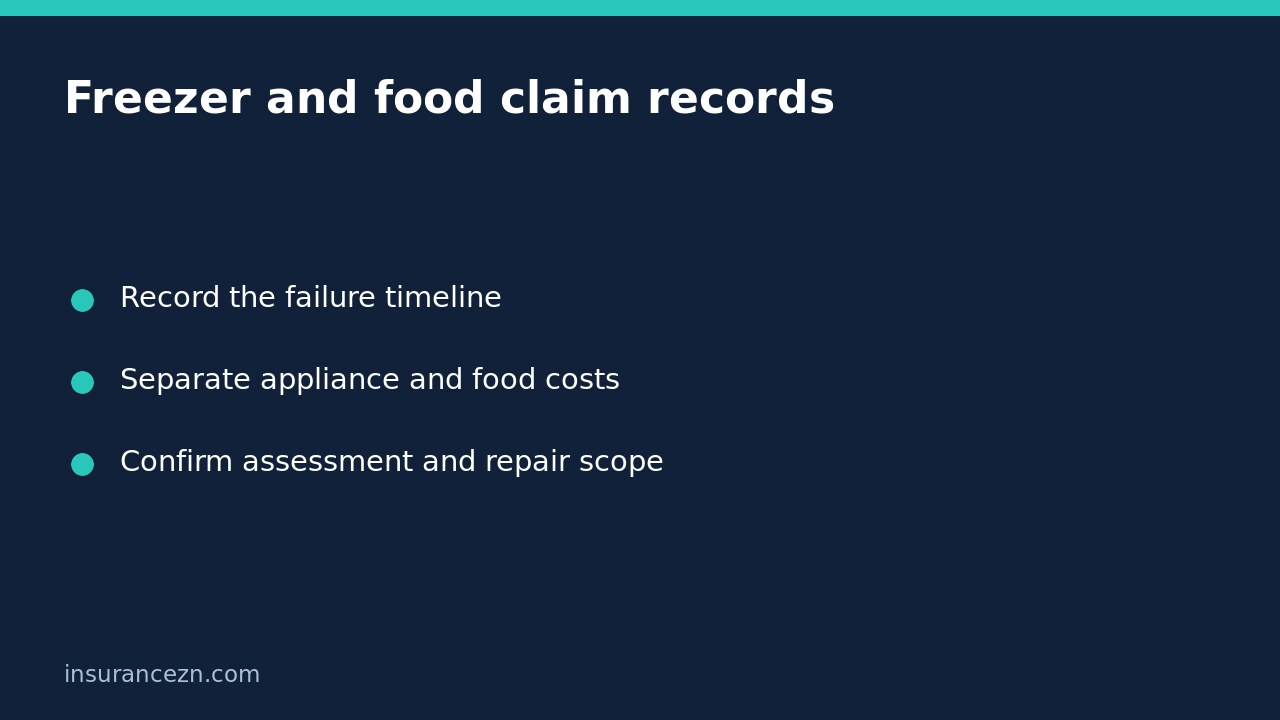
Create two linked records, not one undifferentiated total
For the appliance record, keep the make, model, serial number if accessible, ownership evidence, photographs and technician documents. Separate the inspection fee, parts, labour and any replacement proposal. Mark a quote as a quote; replace neither it nor the original diagnosis silently when the final invoice arrives.
For the food record, list the items, approximate quantities and available purchase evidence. Clearly identify any estimates and explain their basis. Do not present an entire grocery receipt as freezer contents if it includes unrelated purchases. Keep photographs and receipts linked to the relevant entries, and do not claim the same item twice under differently named lists.
The purpose of separation is traceability, not an assumption that two benefits or two claim payments exist. Ask the insurer how it wants both losses recorded under the incident and whether any distinct limits or excess conditions apply.
Check disposal and repair instructions safely
In its home and contents claims instructions, Suncorp asks customers to have incident and damaged-content details available. Its guidance says not to dispose of items before assessment unless they pose a health risk, and to take multiple clear photographs if disposal is necessary. It also describes consent requirements for repairs, with exceptions for specified emergency circumstances. These are Suncorp’s instructions, not universal terms for every insurer.
Ask your insurer what evidence it needs before food or an appliance is discarded, but do not keep unsafe food simply for a claim or taste it to test its condition. Record why disposal was necessary and what evidence could safely be collected. Photographs document a loss; they do not by themselves prove the event is insured.
Before authorising non-urgent appliance work, distinguish the technician’s appointment from the insurer’s accepted repair scope and from your own contract with the repairer. Obtain an explanation of who will pay inspection and repair charges if coverage remains undecided.
Submit a clear pack under the correct reference
Use the existing claim reference when instructed. Include a short cover note identifying the appliance documents, food inventory, relevant photographs and any unresolved cause questions. Suncorp’s instructions provide upload and email pathways for documents; check the current channel for your own insurer rather than assuming every provider uses the same process.
Save the submitted files and acknowledgement. Then ask whether the documents were attached to the correct claim and whether anything else is required. An upload receipt establishes neither review nor coverage acceptance. If parts of the food list remain uncertain, use the incomplete contents-list checklist to track missing details instead of inventing quantities.
Read the outcome as separate decisions
When an assessment arrives, reconcile the appliance decision, food decision, accepted costs, applicable deductions and payment. Ask for clarification if a food payment is being mistaken for authorisation to buy a new freezer. Likewise, an authorised appliance repair should not be read as acceptance of every food item.
Must there be a second claim? Not automatically. Ask how the insurer wants the incident recorded; separate evidence folders are not separate claim lodgements.
Does a repaired freezer prove the claim is settled? No. Work completed, invoices received, benefits assessed and money paid are different milestones. Retain the original evidence and any later corrections until the outstanding decisions are clear.