
A child critical illness benefit may be part of an adult’s life insurance, but the medical name of a condition is only the start of the cover check. Read the insured event definition, any severity criteria, the child’s eligibility and the exclusions in the applicable policy. A diagnosis, an accepted hospital booking and a submitted insurance form are not interchangeable evidence of entitlement to a lump-sum payment.
This is general information for Australian readers, not personal financial advice. Your policy schedule, applicable Product Disclosure Statement (PDS), definitions and exclusions determine the cover; insurer assessment is still required. Do not delay necessary medical care while checking insurance. This article explains how to read the wording, not how to diagnose a child or predict a claim outcome.
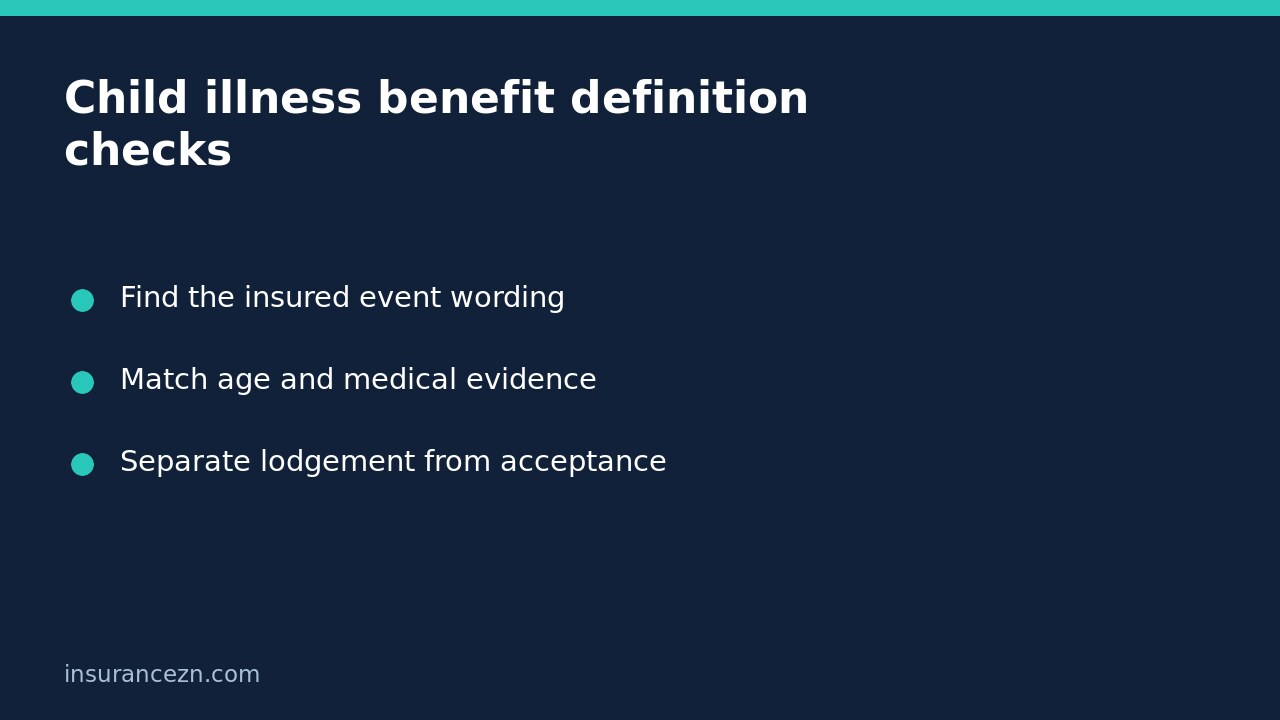
Find the exact benefit and event definition
Start with the adult policy number and confirm whether it actually includes a child benefit. A product overview listing an available feature does not establish that an older policy, a different purchase channel or your particular arrangement includes it. Ask the insurer to identify the document version and clause that apply to your cover.
For a specific provider example, TAL’s life insurance overview describes a Child’s Critical Illness Benefit for listed critical illness events. It expressly says that the severity criteria in the relevant PDS section must be met. It also describes an age-at-next-birthday range, pre-existing-condition exclusions and an initial exclusion period for certain conditions. These are TAL-specific summary features, not common rules for every Australian insurer.
That wording shows why a broad phrase such as ‘serious illness cover for children’ is insufficient. Ask for the exact insured event definition and the evidence needed to assess it. Do not replace clinical information with your own interpretation of a technical severity threshold.
Separate age, relationship and timing checks
Build a short eligibility record before assembling a large evidence pack. Write down the child’s date of birth, the relationship or eligibility category the policy requires, the policy commencement date and any relevant reinstatement date. Ask how the insurer applies an age-at-next-birthday expression to this benefit rather than substituting the child’s current age.
- Which child eligibility definition applies to this policy?
- Which date is used to test the age condition?
- Does the benefit have a condition-specific exclusion period?
- Is the insurer asking about onset, diagnosis or another event date?
- Which pre-existing-condition wording is relevant, if any?
Keep dates from clinical records separate from family recollections. If an exact date is uncertain, identify the uncertainty and ask what supporting record is needed. Do not invent an earlier onset or later diagnosis date to make a condition appear to fit.
Request medical evidence that answers the actual question
Suppose, hypothetically, a discharge letter records the name of an illness but does not address the severity element used by the policy. That letter may establish the diagnosis without answering the full insurance definition. Ask the insurer which further information it needs and discuss the request with the treating clinician. The clinician supplies medical facts; the insurer applies the policy and communicates its assessment.
Ask who may request records, whether consent is required and how to submit sensitive child health information securely. Keep a document list and copies of what was sent. Avoid repeatedly uploading the same records without checking whether they were received and attached to the correct reference.
A related wording lesson appears in why hospital accident cover does not mean every emergency: ordinary descriptions and contractual definitions can differ. Hospital insurance and child critical illness benefits are nevertheless separate products; neither establishes eligibility for the other.
Read the assessment, not just the upload receipt
Track the claim reference, documents received, outstanding questions and decision separately. An automated acknowledgement establishes receipt at most, not that eligibility or severity has been accepted. If more evidence is requested, ask which definition element it addresses so you can respond accurately without guessing.
When a decision arrives, compare it with the applicable clause and evidence. If the insurer says a criterion is not met, request the specific reason and the review pathway. Keep any response deadline visible; sending another document or asking a question does not by itself extend it. A benefit decision is also separate from a hospital’s treatment plan or clinical prognosis.
Brief FAQ for parents checking the wording
Does the condition name on a medical report guarantee payment? No. The full insured event definition and other policy conditions must be assessed.
Is this the same as private hospital cover? No. A lump-sum critical illness benefit and health insurance hospital benefits have different purposes and eligibility rules.
Can I use a current website summary for an older policy? Use it to frame questions, not to replace your contract. Obtain the wording applying to the policy and relevant event dates.
Source: TAL life insurance overview, Child’s Critical Illness Benefit section. Confirm the applicable PDS rather than assuming the provider’s current summary applies to every policy.