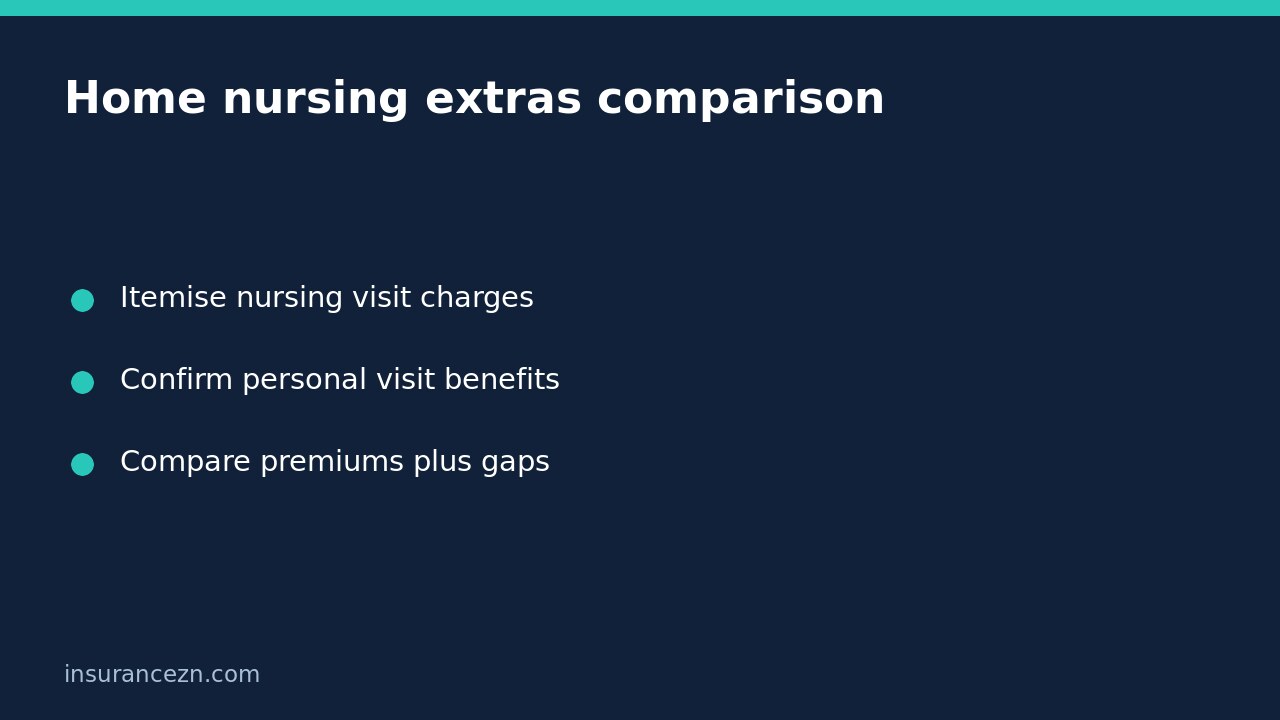

When comparing extras cover for home nursing, start with the visits you actually expect to use and a written provider quote. An advertised nursing limit is not the amount the insurer will necessarily pay. The useful comparison is the premium you would pay plus the nursing charges left after your own estimated benefits.
This is general information for Australian readers, not personal financial advice. Check the relevant policy documents and PDS where applicable. Benefits depend on your exact product, eligibility, service and applicable conditions; this comparison is not a promise of funding or medical advice. Do not delay necessary care while investigating insurance.
Separate the benefit you are comparing
PrivateHealth.gov.au explains that general treatment policies may include home nursing. It also explains that extras benefits are limited, potentially by service, year or lifetime, and some services are not covered at all. A product summary therefore starts the investigation rather than finishing it.
The same government overview describes hospital substitute treatment as a separate possibility. Insurers do not have to offer it, and eligibility depends on the arrangement. For a price comparison, name the precise extras benefit being quoted. Do not compare one fund’s extras allowance against another fund’s hospital-at-home program as if they were interchangeable products.
Ask for a quote that identifies each charge
Ask the nursing provider to describe the proposed service, practitioner, visit length and expected appointment sequence. Request separate prices for the first visit, subsequent visits and anything billed in addition. Ask whether travel, consumables or administration are included in the visit price. These are questions to resolve, not a claim that every provider charges separately.
Keep the same visit assumptions for each policy comparison. If one quote assumes short follow-up visits and the other assumes longer appointments, the totals are not directly comparable. Where the clinical plan is uncertain, compare a smaller and a larger visit schedule rather than pretending the most expensive scenario is certain.
Obtain a personal benefit estimate from each fund
Send the service description and provider details to the insurer through its appropriate enquiry channel. Ask for an estimate for the actual appointments, not simply confirmation that the words home nursing appear on the policy.
- Is this practitioner and this service eligible under the quoted product?
- What would the estimated benefit be for each visit and separately charged item?
- What waiting periods, approval requirements and limits apply?
- Is the allowance shared with other services or membership users?
- Which benefit period applies to the expected service dates?
A recognised provider is not proof that every charge is claimable. Likewise, an unused displayed limit does not establish a payable benefit for these visits. Keep the insurer’s answer, product name and estimate date together, and ask what assumptions could change the result.
Compare the premium plus the remaining visit costs
Use one row for each planned appointment. Record the quoted charge, the estimated benefit under each policy and the remaining personal cost. Add only benefits the insurer has actually estimated for the relevant service. Do not substitute the full annual maximum or count the same shared allowance twice.
Then add the actual payable premium for the same comparison period to each policy’s remaining nursing costs. If you already have extras and are considering an upgrade solely for nursing, identify the additional premium against keeping your current cover. If other cover or discounts would change, include those effects rather than attributing the whole difference to nursing.
For the broader membership comparison, see our guide to comparing the combined cost of separate hospital and extras policies. A nursing benefit should not conceal a more expensive overall arrangement.
Keep the decision usable when the plan changes
A written estimate is useful evidence of the assumptions discussed, not a guarantee that every later claim will be paid. If the provider, visit length, service dates or treatment plan changes, refresh the comparison. Ask whether a proposed policy change has actually been processed and which effective date applies before relying on the new benefits.
Do not cancel existing cover simply because a new product advertises a higher nursing allowance. Confirm the replacement arrangement, waiting-period position and other benefits you would lose or retain. Clinical suitability remains a discussion with your treating professionals, separate from the price worksheet.
Quick comparison checklist
Can you identify the exact visits, the itemised price, each fund’s personal benefit estimate and the actual premium over the same period? Have you checked shared limits and effective dates? If any answer is missing, label it unresolved rather than treating it as a saving. A modest benefit with a lower total cost can be more useful than a large headline allowance you cannot use.