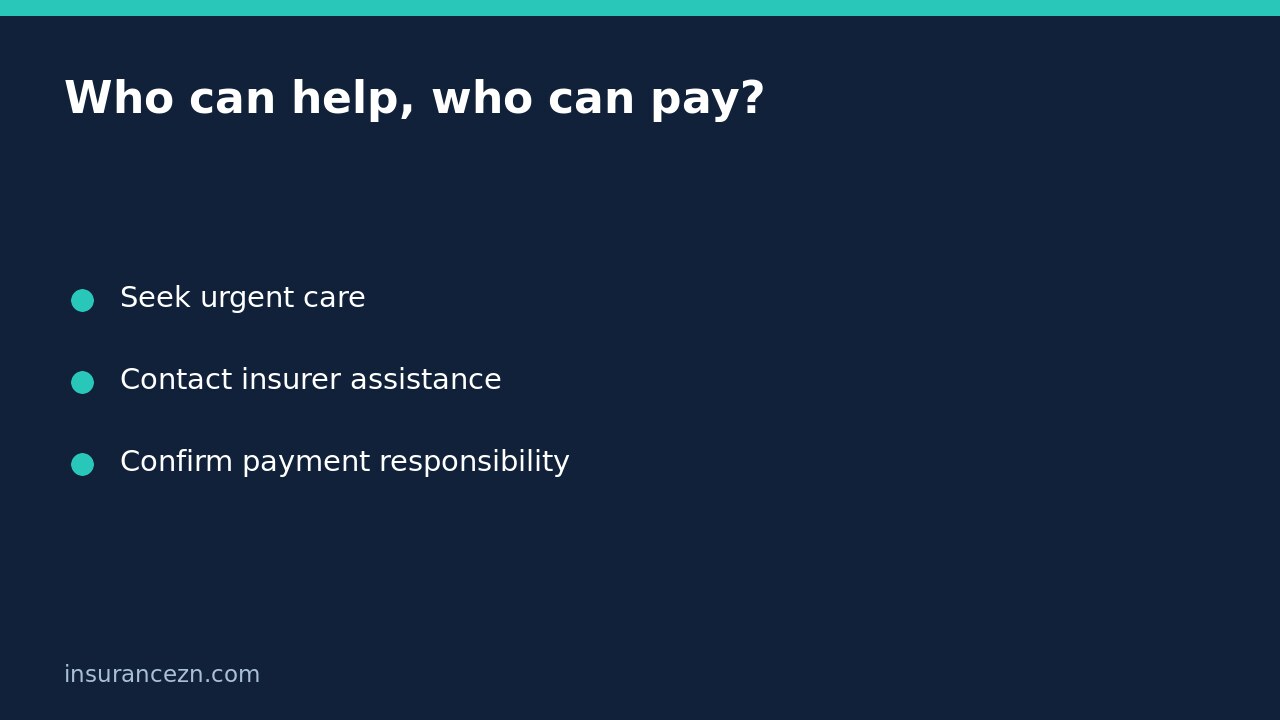

Australian consular help is not a substitute for travel insurance or an emergency source of money for overseas medical bills. Before departure, separate three questions: who can provide practical help, who has agreed to pay a particular expense, and how you could access funds while an insurer assesses a request.
This is general information for Australian readers, not personal financial advice. Cover depends on the applicable policy, PDS, certificate, exclusions and insurer assessment. A funding plan does not create insurance entitlement, and this article does not advise you to delay necessary care.
Start with the government’s actual boundary
Smartraveller’s travel-insurance guidance says that the Australian Government cannot pay travellers’ bills. It explains that, without insurance, you must meet treatment costs yourself and may need to ask family or friends for money. Consular services are not a financial backup plan.
The same guidance warns that medical treatment overseas can require payment upfront or insurance details. That does not mean every hospital follows the same process. It means you should not build your arrangements around an assumption that an Australian passport, embassy contact or eventual insurance claim will automatically satisfy a provider’s payment requirements.
Keep support and payment decisions separate
Make a short contact sheet with distinct roles rather than one heading labelled emergency help. Put local emergency services and clinical care first; the insurer’s emergency-assistance channel belongs in a separate section. Keep ordinary policy enquiries separate from those emergency channels.
A helpful conversation is not necessarily a promise to pay. If an insurer is involved, ask what has actually been agreed: a case reference, a request for documents, an assessment in progress, a specific expense authorisation, or an arrangement with the provider. Record the person’s name, time and written instructions where available. Do not turn an acknowledgement into a claim acceptance in your own notes.
When treatment is urgent, seek care promptly. Financial administration should run alongside clinical care where possible, not become a reason to postpone it.
Make a practical funding-access plan before departure
This is not a recommendation for a particular savings amount or credit product. The aim is to understand access and limitations without pretending the eventual bill is known. Consider these practical checks:
- Know how to reach your bank if a card is lost, blocked or unavailable overseas.
- Check which payment methods you can actually use at your destination.
- Agree how a trusted person could contact you and help coordinate financial enquiries.
- Store the insurer’s contact details and policy documents where you can retrieve them offline.
- Understand that available account funds and insurance reimbursement are different resources.
Do not give a helper unrestricted account access or store banking passwords in a shared emergency sheet. Verify unexpected payment instructions through an independently obtained provider or insurer contact before transferring money. Keep practical access information separate from sensitive identity and account credentials.
Ask what happens if the insurer has not decided yet
Before buying cover, use the insurer’s normal enquiry channel to ask how overseas medical assistance and payment assessment operate under that product. Ask whether the policy requires contact before specified costs, what information is needed, and how payment or reimbursement is handled. Do not call an emergency number merely to test it.
Write down the difference between a general explanation and a decision on an actual event. An insurer can explain its process before travel without approving hypothetical future treatment. Likewise, having sufficient funds to pay a provider does not establish that the insurer will reimburse you later.
Our offline emergency-card checklist helps organise contact details. Use that as an access tool, not evidence that any treatment or expense has been approved.
Preserve records if you pay a medical bill
Keep the itemised invoice, proof of payment, treatment documents and insurer correspondence. Record what the provider charged, what you actually paid and any amount still outstanding. A receipt proves a transaction; it does not establish that the charge meets a policy benefit or that an insurer has accepted liability.
If a payment request is unclear, ask the provider to distinguish deposits, final charges and unpaid balances. Ask the insurer what further evidence it requires. Avoid assuming that a consular enquiry pauses provider deadlines or changes the insurance assessment.
Final pre-departure check
Can you identify the clinical emergency route, the insurer-assistance route and your own financial-access route without confusing them? Have you read the PDS rather than relying on the word comprehensive? Does your trusted contact understand that practical help is not guaranteed financial support? Resolving these questions before travel is more useful than expecting government assistance to replace an unsuitable or absent policy.