
When a loved one passes away, the last thing their family wants is to face bureaucratic hurdles while grieving. However, life insurance claims are frequently denied not because of a lack of funds, but due to procedural errors made by the beneficiary or misunderstandings regarding policy terms. Navigating the claims process requires precision, documentation, and an awareness of common pitfalls that can trigger automatic rejections. This guide outlines five critical errors that lead to denials, offering practical steps to ensure your claim is processed smoothly and your financial safety net remains intact when you need it most.
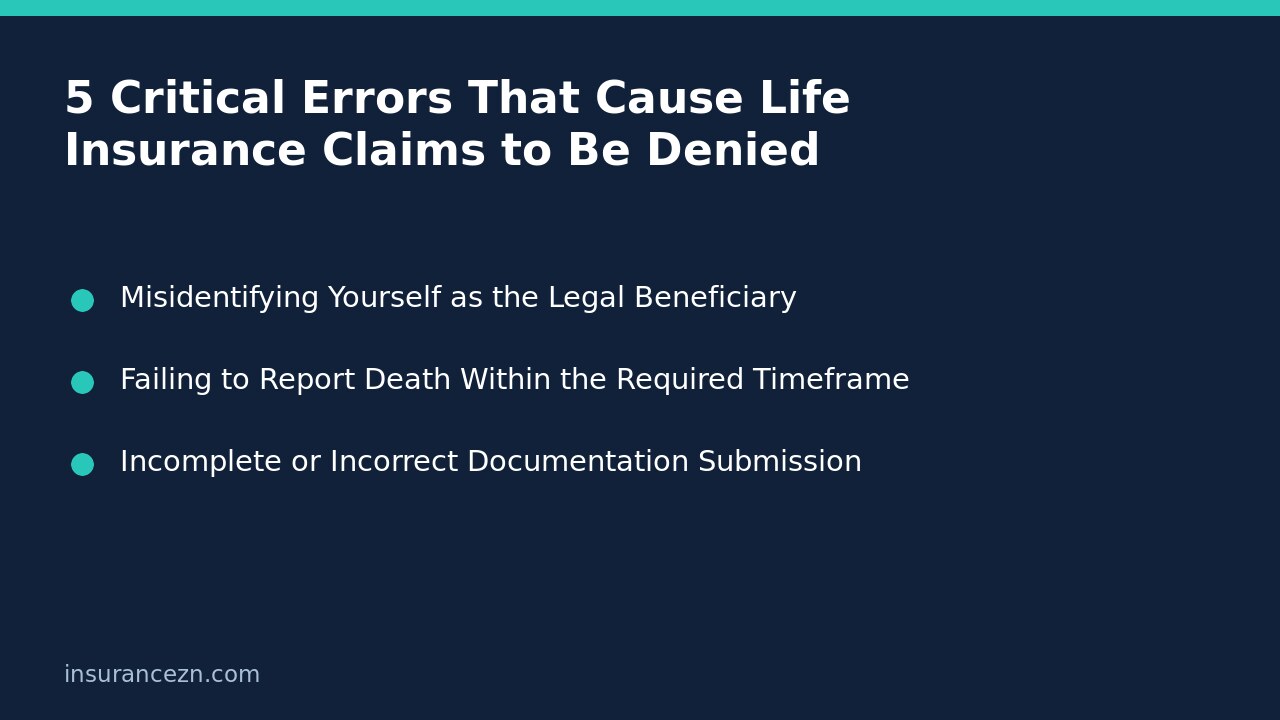
Misidentifying Yourself as the Legal Beneficiary
The most fundamental error occurs when a family member attempts to file a claim without verifying their legal standing under the policy. Simply being named in a will or acting as an executor of an estate does not automatically grant the right to receive life insurance proceeds. Life insurance policies are contracts between the insurer and the designated beneficiary listed on the specific policy document, not the deceased’s broader estate unless specifically written otherwise (such as in a “beneficiary is the estate” clause).
Many families mistakenly assume that if they were mentioned in the decedent’s funeral arrangements or financial planning documents, they have the authority to claim benefits. If you are not the primary or contingent beneficiary listed on the active policy at the time of death, your claim will be denied immediately upon submission. To avoid this, locate the original policy declaration page and cross-reference the name with the current legal record. If the policy has been transferred via a trust or updated through a rider change, ensure you are filing as the current legal owner or designated recipient. In cases where the beneficiary designation is unclear, contact the insurer’s claims department immediately to request a formal verification of beneficiary status before submitting any paperwork.
Failing to Report Death Within the Required Timeframe
While most insurers have no statute of limitations on when a claim can be filed after a death occurs, delays in reporting can still lead to complications or denials if they suggest fraud or lack of cooperation. Some policies include specific clauses regarding the timely notification of death, particularly those involving accidental death benefits or riders that require immediate reporting to prevent “rescue” scenarios where an insured might have attempted to commit suicide shortly after a policy purchase (though this is less common in modern underwriting).
More commonly, delays cause issues with locating the original policy. If a beneficiary waits months or years to file a claim, they may struggle to prove their identity and relationship to the deceased without supporting documents. Insurers often require proof of death within a specific window for certain types of policies, such as group life insurance provided through an employer, where the coverage might terminate if not claimed promptly. Furthermore, prolonged delays can raise red flags about whether the claim is fraudulent or part of a larger investigation into the cause of death. It is best practice to notify the insurer as soon as the death certificate is obtained, typically within 30 days, though this varies by carrier. Always check your specific policy’s “Conditions” section for reporting deadlines.
Incomplete or Incorrect Documentation Submission
Documentation is the backbone of any successful life insurance claim. A frequent error involves submitting incomplete packets that lack essential elements required for verification. The insurer must verify the death, confirm the cause aligns with policy exclusions, and validate the beneficiary’s identity. Missing documents can result in an automatic denial or a significant delay that allows other errors to go unnoticed.
Common missing items include:
* An original certified copy of the death certificate (not a photocopy).
* Proof of the beneficiary’s identity (driver’s license, passport).
* The original policy number and group ID (if applicable).
* A completed claim form signed by the beneficiary.
* Medical records or police reports if the death was accidental or suspicious.
Submitting a faxed or emailed copy of a death certificate when an original is required can lead to rejection. Similarly, signing a claim form with a nickname instead of the legal name matching the policy will cause discrepancies. Always review the checklist provided by the insurer’s claims department before mailing or uploading documents. If you are unsure what is needed, call the claims adjuster and ask for a specific list of requirements tailored to your case.
Disputing the Cause of Death Without Medical Records
One of the most contentious areas in life insurance claims involves the cause of death. Policies often have exclusions for deaths resulting from high-risk activities, such as skydiving, deep-sea diving, or participation in professional sports, if done without proper disclosure or within a contestability period (usually two years from policy issuance). Another critical exclusion is suicide committed within the first 12 to 24 months of the policy.
A common mistake occurs when a family member disputes the cause of death listed on the death certificate without providing medical records or autopsy reports to support their claim. If the insurer has preliminary information suggesting an accidental cause but the beneficiary insists it was natural causes (or vice versa) without evidence, the claim may be denied for failure to substantiate the claim. Conversely, if the policy excludes accidental death and the death certificate lists “accident,” but there is no medical proof of how the accident occurred, the insurer may deny coverage based on the exclusion clause. Always provide all available medical records, hospital reports, and police reports to give the adjuster a complete picture. Do not guess or speculate; let the facts and documentation guide the narrative.
Not Investigating the “Contestability Period” Clauses
The contestability period is a crucial concept in life insurance that many beneficiaries overlook. Most policies include a two-year clause where the insurer has the right to investigate the application details, including health disclosures, lifestyle habits, and driving records. If a claim is filed within this two-year window, the insurer can deny the claim if it finds material misrepresentations on the original application, regardless of whether those misrepresentations were innocent or intentional.
A frequent error is assuming that because the insured died of natural causes, no investigation is needed. However, if the policy was issued less than two years prior to death, the insurer will rigorously examine the file. Families often fail to disclose pre-existing conditions, tobacco use, or hazardous hobbies during the application process. If these were omitted, the claim can be denied even if the family believes the omission was accidental. To avoid this, review the original application for accuracy before filing a claim within the first two years. If you discover an error, contact the insurer immediately to see if a correction is possible before submitting the formal claim.
Real-World Example: The Missing Death Certificate Scenario
Consider the case of Sarah, who filed a claim for her late husband’s life insurance policy. She gathered the bank statements, the signed claim form, and her own identification but forgot to obtain an original certified death certificate from the state vital records office. She used a photocopy she found online instead. The insurer immediately rejected the claim, stating that only an original document issued by a government authority is acceptable for legal verification of death. Sarah had to restart the entire process, delaying payment by six weeks and causing unnecessary stress during her grief. This example highlights how easily a simple administrative oversight can derail a claim. Always cross-reference your submission list against the insurer’s official requirements before sending anything away.
Checklist for a Smooth Claims Process
To ensure your life insurance claim is not denied due to preventable errors, follow this concise checklist:
1. Verify Beneficiary Status: Confirm you are the legal beneficiary on the current policy document.
2. Obtain Original Documents: Secure an original certified death certificate and any relevant medical or police reports.
3. Check Policy Terms: Review the “Conditions” section for reporting deadlines and contestability clauses.
4. Complete Forms Accurately: Ensure all names, policy numbers, and dates match exactly with the policy documents.
5. Submit Promptly: File the claim as soon as possible after obtaining necessary documents to avoid delays or suspicion of fraud.
By understanding these five critical errors and taking proactive steps to address them, you can significantly increase the likelihood of a successful life insurance claim, ensuring that your loved one’s financial legacy is honored without unnecessary complications.