
Finding affordable travel insurance often feels like walking a tightrope. Many travelers assume that low premiums automatically mean reduced coverage, leaving them exposed to significant financial risk if an accident occurs or if their trip is interrupted. However, true value lies not in the lowest price tag, but in securing the essential protections you need while avoiding unnecessary add-ons. This guide will help you navigate the market for budget-friendly travel insurance, demonstrating how to compare policies effectively without sacrificing key benefits like medical emergencies, trip cancellation, and baggage protection.
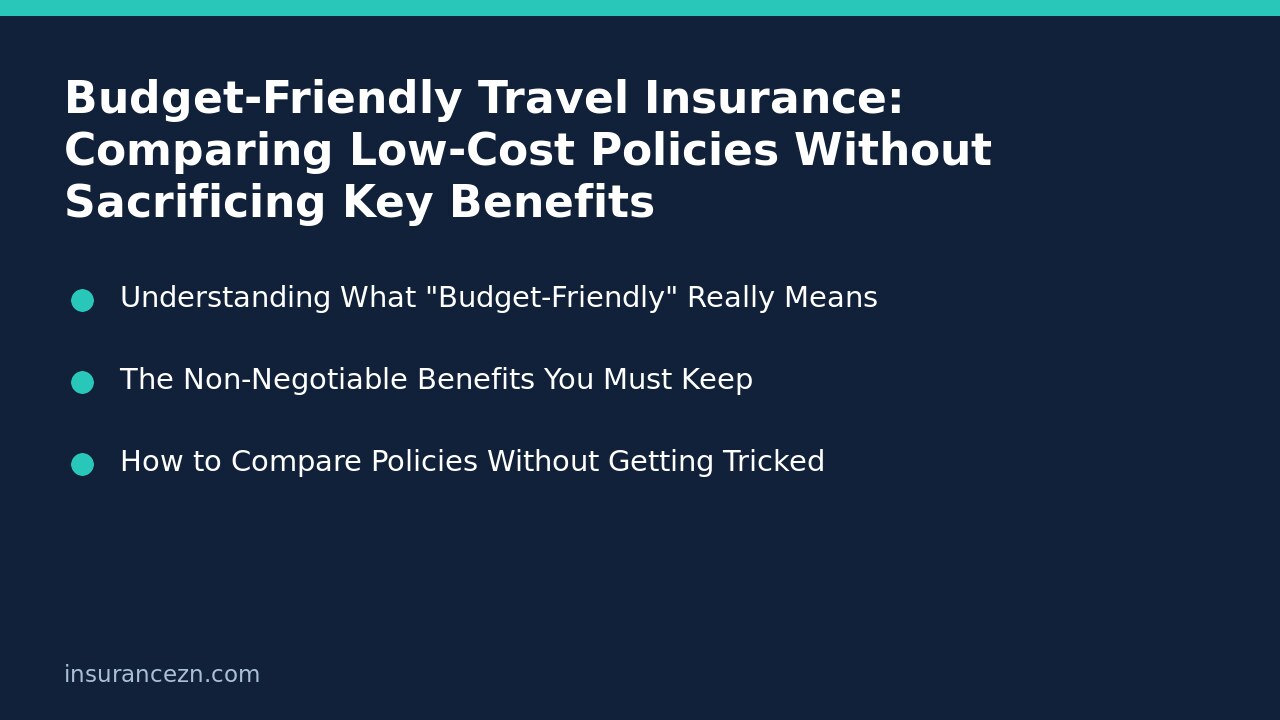
Understanding What “Budget-Friendly” Really Means
The term “budget-friendly” can be misleading. A policy that costs $10 less than another might exclude critical coverage or cap payouts at unreasonably low amounts. To find a genuinely affordable plan, you must distinguish between the cost of the premium and the scope of the coverage.
Genuine budget policies typically achieve lower costs through:
* High Deductibles: Opting for a higher deductible (the amount you pay out-of-pocket before insurance kicks in) significantly lowers your premium. This is a classic risk management strategy; you accept a small, predictable cost now to avoid a large, unpredictable one later.
* Exclusion of Non-Essentials: Dropping coverage for “cancel for any reason” (CFAR), adventure sports, or pre-existing condition waivers if they do not apply to your specific situation can save money.
* Shorter Trip Duration: Many insurers offer proportional pricing based on the number of days covered. Buying a 10-day policy is often cheaper than a 30-day one, even if you plan to travel for a month, provided you structure your coverage correctly.
The Non-Negotiable Benefits You Must Keep
When trimming fat from a travel insurance policy, certain core benefits should never be compromised. Cutting these areas creates dangerous gaps in your financial safety net.
1. Emergency Medical Evacuation and Repatriation
This is arguably the most critical component of any travel policy. A standard health insurance plan or credit card benefit may not cover emergency evacuation from a remote location or repatriation to your home country. Medical costs abroad can easily exceed $100,000. Ensure your budget policy includes at least $50,000 to $100,000 in medical coverage and explicit evacuation benefits.
2. Trip Cancellation for Covered Reasons
Do not confuse this with “Cancel For Any Reason.” Budget policies should cover cancellation due to specific, verifiable events such as:
* Illness or injury of the traveler or an immediate family member.
* Unforeseen natural disasters affecting your destination.
* Jury duty or death in the immediate family.
Always check that the policy defines these terms clearly and requires proof (like a doctor’s note) for claims to be valid.
3. Emergency Medical Expenses
Even if evacuation is expensive, basic medical treatment for accidents, infections, or sudden illnesses must be covered. Look for policies that cover hospital stays, physician services, and prescription drugs. Be wary of plans that limit this coverage to $25,000 or less; in many international healthcare systems, even minor injuries can result in bills that exceed these limits quickly.
How to Compare Policies Without Getting Tricked
Comparing travel insurance requires looking beyond the headline price. Insurers often use “bait and switch” tactics where a low advertised rate changes once you select specific options or enter your age. Here is a practical step-by-step approach to comparing policies accurately:
- Check the Age Limits: Premiums increase significantly as you get older. Some insurers offer flat rates for seniors, while others charge double. Compare the final quote after entering your exact age and birthdate.
- Scrutinize the Exclusions: Read the fine print regarding pre-existing conditions. A policy might be cheap because it excludes any traveler with a history of heart disease or diabetes. If you have managed chronic conditions, ensure the policy offers an add-on to waive exclusions for pre-existing conditions; otherwise, you are buying coverage that will never pay out for your specific health profile.
- Analyze the Deductible Structure: Does the deductible apply per incident or per claim? Some policies charge a $100 deductible for every single medical visit, while others have a single $500 deductible for the entire trip. The latter is usually more cost-effective.
- Verify the Claims Process: Look for reviews regarding claim settlement ratios. A cheap policy with a reputation for denying claims is not a bargain. Check if they offer 24/7 assistance and how they handle direct billing with hospitals.
Real-World Example: The “Jack” Scenario
To illustrate these concepts, consider the case of Jack, a 45-year-old digital nomad planning a three-month trip across Southeast Asia.
* Option A (The Trap): Jack finds a policy for $20 that covers medical up to $10,000 and excludes pre-existing conditions. He thinks he is safe because the price is low. In reality, if he falls ill with dengue fever requiring hospitalization in Thailand, the bill could be $15,000. The $10,000 limit leaves him liable for $5,000, and the exclusion clause might deny coverage entirely depending on his medical history.
* Option B (The Balanced Choice): Jack finds a policy for $45 that covers medical up to $100,000, includes emergency evacuation, and offers a waiver for pre-existing conditions if he pays a small surcharge at purchase. He selects a $250 deductible. The premium is higher upfront, but the coverage limits are robust enough to handle major emergencies without leaving him personally liable for catastrophic costs.
In this scenario, Option B is the true “budget-friendly” choice because it protects Jack’s long-term financial stability, whereas Option A offers false security at a low price.
Common Mistakes That Inflate Costs or Void Coverage
Travelers often make errors that either waste money or invalidate their claims. Avoid these pitfalls when shopping for affordable coverage:
* Buying After Booking: The cheapest policies often require you to purchase them before making your first trip deposit. Buying after booking can be more expensive and may exclude “trip cancellation” benefits entirely, as the insurer argues the risk has already materialized.
* Ignoring Trip Duration Limits: Some policies only cover trips up to 30 or 60 days. If you plan a longer adventure, buying multiple short-term policies might save money compared to one long-term policy, but you must ensure there is no gap in coverage between policies.
* Overlooking “Adventure” Activities: If you plan to hike, scuba dive, or cycle, standard cheap policies often exclude these activities. If an accident occurs during a covered activity not listed in the fine print, you will be denied reimbursement. Always add the specific sport to your policy if needed.
Final Checklist for Selecting Your Policy
Before finalizing your purchase, run through this quick checklist to ensure you are getting genuine value:
* [ ] Does the medical coverage limit meet or exceed $100,000?
* [ ] Is emergency evacuation explicitly included with a minimum of $50,000 coverage?
* [ ] Are pre-existing conditions covered or waivable for an additional fee?
* [ ] Does the policy cover cancellation for specific reasons listed in my contract?
* [ ] Is the deductible reasonable ($100–$250) and does it apply to the whole trip?
* [ ] Does the insurer provide 24/7 global assistance support?
Conclusion
Budget-friendly travel insurance is entirely achievable, but it requires diligence rather than just clicking the cheapest link. By focusing on high medical limits, understanding deductible structures, and keeping non-negotiable benefits like emergency evacuation intact, you can secure a policy that offers peace of mind without breaking the bank. Remember that terms, availability, eligibility, laws, and prices depend on the specific insurer, your personal policy details, and your jurisdiction. Always read the full certificate of insurance before committing to ensure it matches your unique travel plans.