
Rising inflation and shifting risk landscapes have made car insurance one of the most rapidly increasing expenses for drivers today. For many, a premium hike feels inevitable, yet there are legitimate strategies to reduce costs without sacrificing the financial protection your policy provides. The key lies in understanding the difference between lowering coverage limits or deductibles (which reduces payouts) and optimizing your risk profile and policy structure (which lowers rates). This guide focuses on actionable, legally compliant methods to save money while maintaining robust coverage for accidents, theft, vandalism, and liability claims.
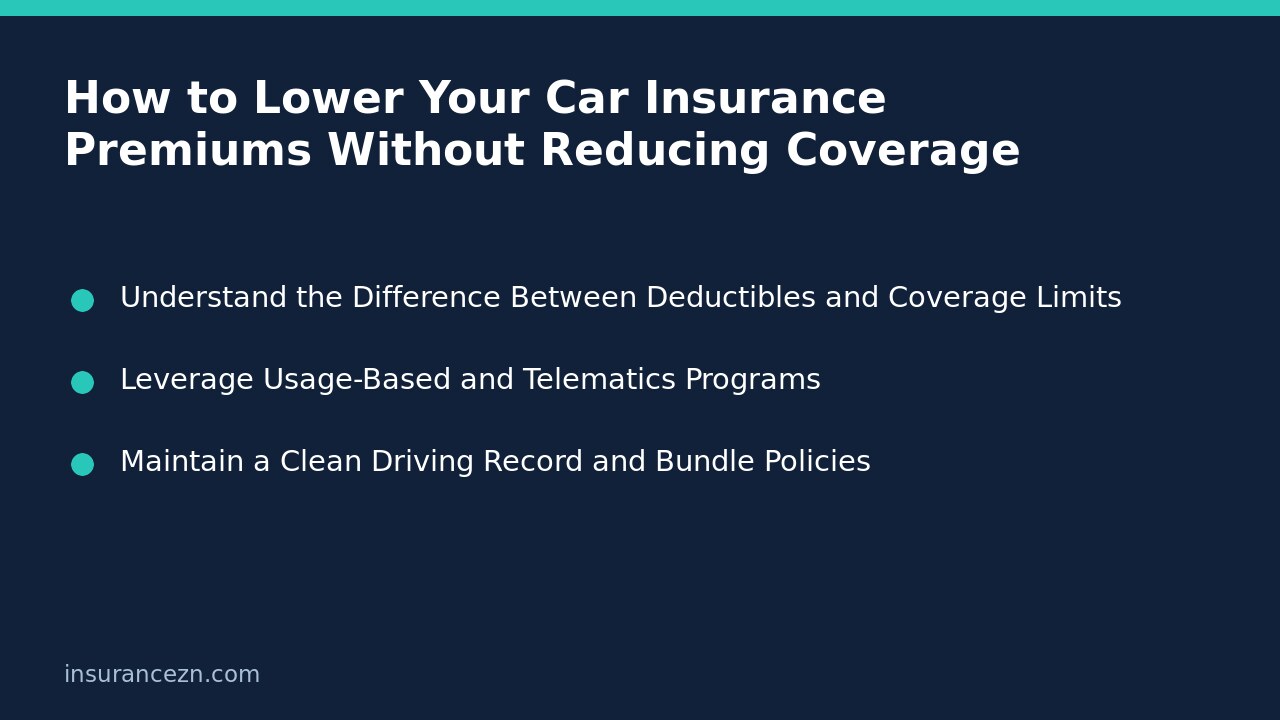
Understand the Difference Between Deductibles and Coverage Limits
A common misconception is that lowering your deductible significantly reduces your premium without affecting your safety net. While increasing your deductible does lower your monthly cost, it directly impacts your out-of-pocket expense in the event of a claim. If you choose a $1,000 deductible instead of the standard $500, you are essentially paying for a higher risk retention.
To truly lower premiums without reducing coverage, focus on adjusting your policy structure rather than your financial exposure. For instance, you can remove unnecessary add-ons like roadside assistance or rental car reimbursement if you have an emergency fund and a reliable tow truck service nearby. These features often cost extra but provide little value to drivers with comprehensive security measures at home. By auditing these optional coverages, you trim fat from the policy without touching the core liability and collision protections that matter most when an accident occurs.
Leverage Usage-Based and Telematics Programs
Insurers are increasingly offering discounts for drivers who prove they are safe behind the wheel through technology. Usage-based insurance (UBI) programs allow insurers to monitor driving habits such as braking speed, cornering force, mileage, and time of day driven. If your data shows calm, defensive driving, you can qualify for a significant discount.
Many major carriers offer telematics apps that pair with your smartphone or vehicle’s OBD-II port. These tools track your trips and provide a score at the end of the month. For example, a driver who avoids night driving and maintains smooth acceleration might see their premium drop by 10% to 20%. It is crucial to check with your current provider first; some insurers automatically enroll new customers in these programs, while others require an opt-in. Additionally, ensure that any device used for tracking complies with local privacy laws regarding data collection in vehicles.
Maintain a Clean Driving Record and Bundle Policies
Your driving history is one of the most significant factors influencing your rate. A single at-fault accident or traffic citation can keep premiums elevated for three to five years. To lower costs without reducing coverage, focus on preventing violations and completing defensive driving courses if eligible. Many states offer discounted rates for drivers who complete approved traffic school, provided they have not had a major violation in the past 12 months.
Furthermore, bundling your auto insurance with home or renters insurance from the same carrier often yields immediate savings. This practice is known as a multi-policy discount. Beyond the direct rate reduction, bundling simplifies management and ensures that if you file a claim for property damage, your insurer already understands your full risk profile. However, always verify that the bundled price is genuinely lower than switching providers; sometimes carriers bundle high-risk drivers at inflated rates to lock them in.
Review Coverage Limits and State Minimums Strategically
While it is tempting to drop coverage limits to save money, this is the definition of reducing protection. Instead, review your current limits against state requirements and your actual asset exposure. Liability limits are often structured as three numbers (e.g., 25/50/25), representing bodily injury per person, bodily injury per accident, and property damage.
If you carry substantial assets, such as a home or savings, keeping the minimum state limit is risky because an accident could bankrupt you. Conversely, if your assets are minimal, you might consider aligning with state minimums to lower costs, but only after consulting a financial advisor about potential bankruptcy risks. The goal here is not to underinsure, but to ensure your limits match your financial reality without overpaying for excess coverage you cannot utilize. Always read the fine print regarding “stacking,” which allows you to combine limits across multiple vehicles; understanding this can reveal savings opportunities that do not compromise your safety net.
Shop Around and Utilize Loyalty Discounts Wisely
Insurance rates are not standardized; they vary wildly between carriers for the same driver in the same zip code. A simple act of shopping around annually can yield substantial savings. Many drivers stay with one insurer simply because it is familiar, unaware that competitors offer better rates for their specific profile.
When switching providers, do not assume loyalty discounts will always apply. Some insurers raise rates for long-term customers who have gone claim-free, while others reward tenure. Use this as leverage: ask your current agent if they can match a competitor’s quote or if there are any upcoming renewal bonuses. If you decide to switch, ensure there is no gap in coverage, as even a few days of uninsured driving can lead to severe legal and financial penalties. Transfer your claims history carefully; some insurers may penalize you for previous claims made with another company, so read the exclusions regarding prior claim history before switching.
Real-World Example: The Anderson Family Strategy
Consider the Anderson family, who recently received a 30% premium increase due to inflation adjustments. They initially considered dropping collision coverage on their older sedan to save money, which would have voided their ability to recover repair costs. Instead, they took a different approach. First, they removed roadside assistance because they live in an area with easy access to local towing services. Second, they enrolled in the insurer’s telematics program and drove conservatively for six months, earning a 15% discount. Third, they completed an online defensive driving course approved by their state DMV, securing another 10% reduction. Finally, they compared quotes from three other carriers and found that one offered a competitive rate with similar coverages. By combining these steps, they lowered their premium by nearly 40% without reducing their liability limits or collision coverage, ensuring they remained fully protected against major accidents.
Conclusion
Lowering your car insurance premiums does not require compromising on the essential protections you need. By auditing optional add-ons, utilizing telematics technology, maintaining a clean record, strategically aligning coverage limits with your assets, and shopping around annually, you can achieve significant savings. Remember that insurance terms, availability, eligibility, laws, and prices depend heavily on the specific insurer, policy details, and jurisdiction. Always verify current rates and rules directly with your provider before making changes to your policy. With careful planning and informed decisions, you can secure a more affordable rate while keeping your family and assets safe on the road.