
In the modern corporate landscape, the stakes for board members and senior executives have never been higher. Shareholders, regulators, employees, and customers can all become plaintiffs in lawsuits alleging mismanagement, negligence, or breach of fiduciary duty. For directors and officers (D&O), personal assets are often on the line if they lack adequate coverage. Directors and Officers liability insurance provides a critical financial safety net, covering legal defense costs, settlements, and judgments arising from claims made against corporate leaders for their actions in managing the company. Without this protection, even a successful CEO could face bankruptcy due to the exorbitant cost of defending a frivolous or malicious lawsuit. This guide explores how D&O insurance works, what it covers, common pitfalls to avoid, and why it is an essential component of any robust corporate risk management strategy.
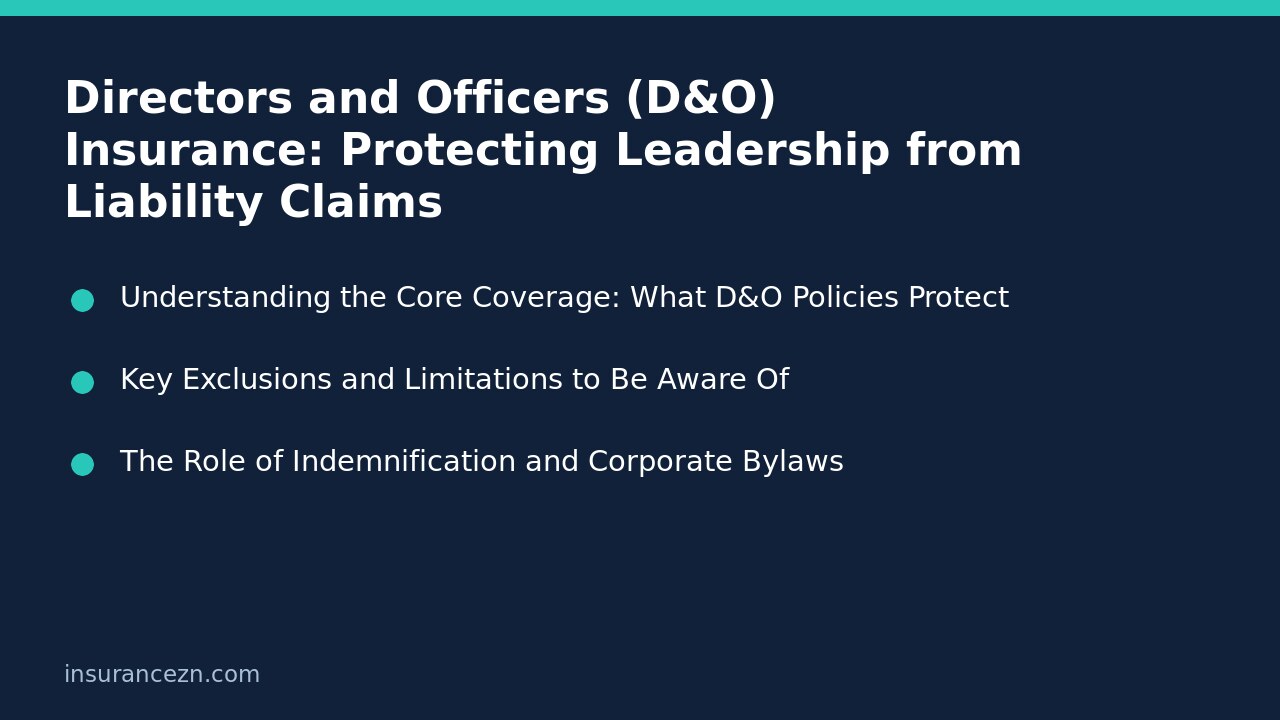
Understanding the Core Coverage: What D&O Policies Protect
At its heart, Directors and Officers liability insurance is designed to protect individuals from personal losses incurred in connection with the defense of lawsuits brought against them for alleged wrongful acts committed while serving in their capacity as a director or officer. The policy typically covers three distinct areas known as the “Side A,” “Side B,” and “Side C” coverage structure, though not all policies include all sides.
Side A Coverage is the most critical component for individual protection. It pays for the legal defense costs, settlements, and judgments when a claim is made against a director or officer personally, and the company chooses not to indemnify them (or is legally barred from doing so). This often happens in cases of bankruptcy or where state laws restrict corporate reimbursement.
Side B Coverage reimburses the corporation for losses it incurs because it has indemnified its directors and officers under its own bylaws or state law. Essentially, if the company pays a director’s legal bill, Side B ensures the company can be made whole again through its insurance policy.
Side C Coverage protects the entity itself when claims are brought directly against the corporate organization rather than just individuals. This is particularly relevant for closely held companies where directors and officers are also shareholders, as their interests are intertwined with those of the corporation.
Key Exclusions and Limitations to Be Aware Of
While D&O insurance is comprehensive, it is not a catch-all solution. Understanding what is excluded is just as important as knowing what is covered. Most standard policies exclude intentional illegal acts, fraud, and criminal behavior. If an executive is accused of embezzlement or insider trading, the insurer will likely deny the claim immediately.
Additionally, employment practices liability claims (such as wrongful termination or discrimination) are often excluded from D&O policies, requiring a separate Employment Practices Liability Insurance (EPLI) policy. Cyber liability and securities litigation may also have specific sub-limits or require endorsements to be fully covered. It is crucial for boards to review the “prior acts” clause; some policies may not cover claims arising from actions taken before the current policy inception date unless specifically endorsed.
The Role of Indemnification and Corporate Bylaws
The relationship between D&O insurance and corporate indemnification is symbiotic but distinct. Indemnification is a legal mechanism where a company agrees to pay for losses suffered by its directors and officers in their official capacity. However, this process can be slow, bureaucratic, and sometimes legally restricted depending on state laws (such as Delaware General Corporation Law).
D&O insurance fills the gap during the time lag between when a claim is filed and when indemnification is granted. In many jurisdictions, companies cannot indemnify directors until after a lawsuit is resolved or a court approves the payment. During this interim period, D&O insurance pays the legal bills, preventing the individual from having to go out of pocket while waiting for corporate approval. Furthermore, if a company dissolves or files for bankruptcy, the ability to indemnify may vanish entirely, making Side A coverage indispensable.
Real-World Scenario: The Impact of a Securities Class Action
To illustrate the necessity of this coverage, consider a hypothetical mid-sized technology firm, “TechNova,” which recently went public. Six months after its IPO, investors allege that the CEO and CFO misled them about revenue figures during the initial public offering (IPO). A securities class action lawsuit is filed against the company and its leadership.
The legal defense alone could cost millions in attorney fees, expert witnesses, and court costs before a single dollar of damages is awarded. If TechNova’s internal reserves are depleted, the board members could be personally liable if the state does not allow immediate indemnification. With a robust D&O policy in place, Side A coverage steps in to pay the legal defense immediately. Even if the company eventually settles for $10 million, the insurance ensures that the personal assets of the CEO and CFO remain intact, allowing them to continue their professional lives without fear of financial ruin. Without this policy, the reputational damage combined with financial liability could force a change in leadership or even the collapse of the business.
Common Mistakes Boards Make When Purchasing D&O Coverage
Many organizations make significant errors when securing D&O insurance that can leave them vulnerable years later. One frequent mistake is treating D&O as a one-time purchase rather than a dynamic risk management tool. Corporate structures change, laws evolve, and the business landscape shifts; failing to review and update the policy annually can lead to dangerous gaps in coverage.
Another common error is underestimating the limits of liability. Boards often select the lowest premium-limit combination that fits their budget, unaware that litigation costs have escalated significantly over the past decade. A $5 million limit that seemed sufficient five years ago may be inadequate today given inflation and the complexity of modern class actions. Additionally, some boards fail to read the “retroactive date” carefully. If a claim relates to an action taken three years ago but the current policy has a retroactive date set to January 1st of this year, the claim will likely be denied despite having purchased the policy recently.
Steps to Secure Appropriate D&O Protection for Your Organization
Securing the right D&O coverage requires a proactive approach. First, conduct a thorough risk assessment to identify specific vulnerabilities, such as high exposure to regulatory scrutiny or recent mergers and acquisitions. Next, engage with multiple insurance carriers to compare quotes, coverage terms, and exclusions. Do not rely solely on the broker’s initial recommendation; read the policy wording yourself or have an independent counsel review it.
When negotiating the contract, pay close attention to the “consent clause.” This determines whether the insurer must agree before the company settles a lawsuit. While some insurers require consent for all settlements, others allow the insured to settle with their own legal counsel’s approval. Negotiating for broader settlement rights can prevent costly delays where an insurer refuses to let a company reach a reasonable resolution. Finally, ensure that the policy includes “run-off” coverage if you are changing carriers or closing the business, ensuring protection continues even after the active policy expires.
Conclusion: An Essential Component of Corporate Governance
Directors and Officers liability insurance is not merely an expense; it is a fundamental pillar of sound corporate governance. It enables leaders to make independent, unbiased decisions without fear of personal ruin, fostering a culture of accountability and integrity. By understanding the nuances of Side A, B, and C coverage, recognizing key exclusions like fraud and employment claims, and avoiding common procurement mistakes, organizations can ensure their leadership team is protected against the unpredictable nature of litigation. In an era where regulatory scrutiny is intense and public opinion is volatile, D&O insurance provides the stability needed for boards to focus on long-term strategy rather than defensive legal maneuvers.