
The initial health claim intake process is often the most critical phase of any insurance adjustment operation. It serves as the foundation for the entire lifecycle of a claim, determining how quickly and accurately it can be resolved. Errors introduced during this early stage—such as missing patient identifiers, incorrect procedure codes, or incomplete provider documentation—can lead to significant delays, denials, and increased administrative costs. For healthcare administrators, billing specialists, and claims processors, mastering this phase is essential for maintaining operational efficiency and ensuring fair reimbursement. This guide provides a comprehensive, step-by-step approach to preventing common pitfalls during the initial intake of health claims, offering practical strategies to streamline workflows and minimize errors before they escalate.
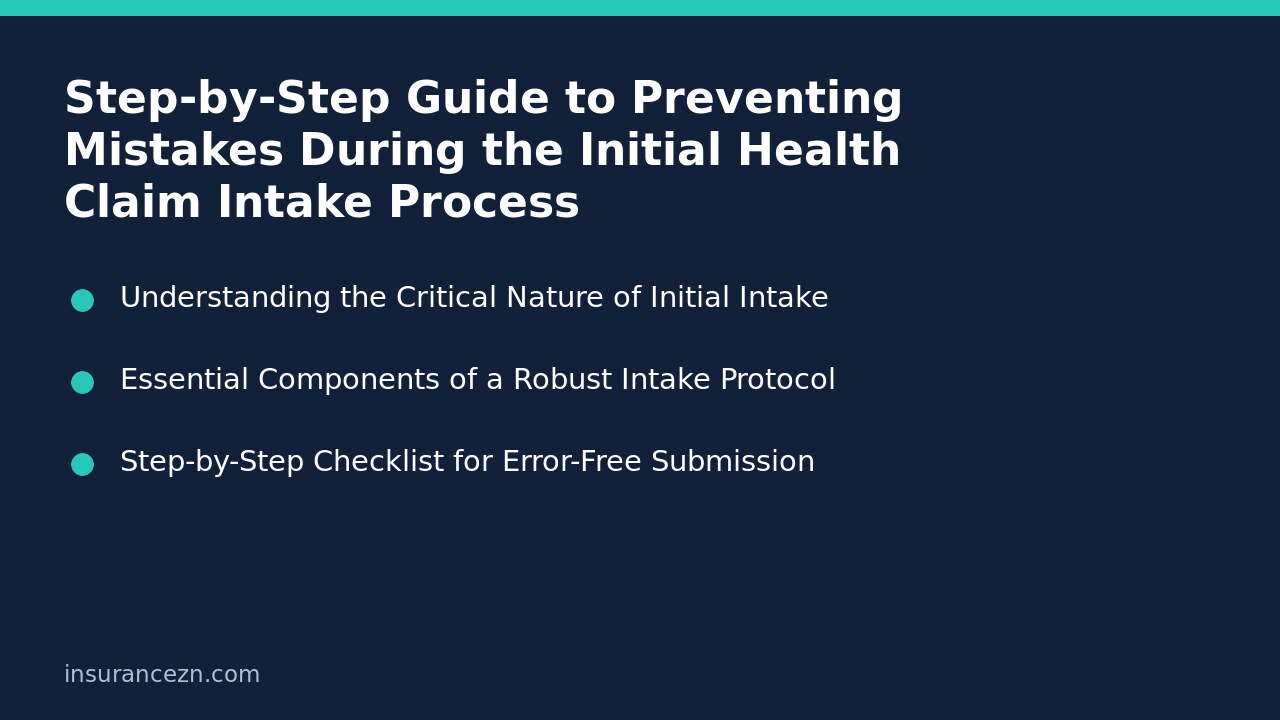
Understanding the Critical Nature of Initial Intake
Many organizations underestimate the impact of the first few minutes of claim processing. The initial intake is not merely data entry; it is a verification exercise where the integrity of the entire claim file is established. When information enters the system incorrectly, automated adjudication engines often reject the claim immediately, forcing manual intervention later in the process. This creates a cycle of rework that consumes valuable resources.
The primary goal of this stage is accuracy and completeness. Insurers and third-party administrators (TPAs) rely on standardized formats to process millions of transactions. If the data submitted does not align with payer-specific requirements or industry standards like HIPAA transactions, the claim will likely be rejected. Furthermore, incomplete clinical documentation can lead to underpayment or denial if the medical necessity of services is later questioned. By focusing on rigorous validation at the point of entry, organizations can significantly reduce the volume of denied claims and improve cash flow.
Essential Components of a Robust Intake Protocol
A successful intake process relies on several key components that must be integrated into your workflow. First, accurate patient demographics are non-negotiable. This includes verifying the member ID, date of birth, and current insurance status against the payer’s eligibility database. A mismatch in even a single digit of an ID number can result in the claim being attributed to the wrong patient or denied outright.
Second, procedure and diagnosis coding must be precise. Utilizing real-time coding validation tools helps ensure that Current Procedural Terminology (CPT) and ICD-10 codes match the services rendered. Third-party data integration is crucial here; pulling information directly from electronic health records (EHR) reduces the risk of human transcription errors. Finally, provider verification ensures that the billing entity is enrolled in the payer network and has not exceeded their credentialing limits. Each of these components acts as a checkpoint, filtering out potential issues before the claim moves to the next stage of processing.
Step-by-Step Checklist for Error-Free Submission
To operationalize best practices, consider implementing the following step-by-step checklist during every intake session:
- Verify Eligibility in Real-Time: Before accepting any services, check the patient’s insurance coverage status. Confirm that the policy is active and that there are no pre-existing condition exclusions relevant to the current claim.
- Validate Demographic Data: Cross-reference the name, address, and date of birth provided by the patient with the information on file in your system. Ensure the spelling matches exactly, including middle initials if required by the payer.
- Confirm Provider Credentials: Check that the rendering provider is credentialed with the specific payer. Look for any flags regarding termination dates or network status changes.
- Review Clinical Documentation: Ensure that the clinical notes support the diagnosis and procedure codes submitted. Medical necessity should be clearly articulated to prevent future audits.
- Apply Correct Modifiers: If applicable, add necessary modifiers to indicate specific circumstances, such as split fees or multiple procedures on the same day. Incorrect modifier usage is a leading cause of denial.
- Generate and Validate the Claim File: Run the claim through an internal adjudication engine or clearinghouse simulator to catch formatting errors before official submission.
- Secure Digital Signatures: Obtain electronic signatures where required by law or contract, ensuring the chain of custody for digital records is maintained.
Common Pitfalls That Derail Claims Processing
Despite best intentions, certain mistakes frequently occur during intake. One of the most common is relying on manual data entry without validation checks. Typing errors in account numbers or dates can silently propagate through the system until a denial occurs months later. Another frequent error involves failing to update policy information when a patient switches plans mid-year. If the system still references an old plan year, the claim may be rejected for “non-covered benefits.”
Additionally, overlooking authorization requirements is a critical failure point. Many high-cost procedures require prior authorization from the payer before services are rendered. Submitting a claim without proof of this authorization guarantees denial. Similarly, neglecting to capture external billing information, such as balance transfer details or secondary insurance data, can result in lost revenue opportunities. These mistakes often stem from complacency or outdated workflows rather than malicious intent, making them preventable with strict adherence to protocols.
Leveraging Technology to Enhance Accuracy
Modern technology plays a pivotal role in mitigating human error during claim intake. Advanced claims management systems equipped with artificial intelligence can automatically scan incoming documents for discrepancies. Optical character recognition (OCR) combined with natural language processing can extract data from PDFs or scanned images and populate fields accurately. Furthermore, integration with clearinghouses allows for pre-submission scrubbing, where rules engines flag potential issues based on payer-specific guidelines.
Cloud-based platforms also facilitate real-time collaboration between front-desk staff, coders, and adjusters. When a discrepancy is identified, the team can resolve it instantly without passing physical files back and forth. Security considerations remain paramount; any digital solution used must comply with HIPAA regulations and employ robust encryption to protect sensitive patient data. Organizations should regularly update their software versions to patch vulnerabilities and ensure compatibility with the latest payer interfaces.
Real-World Example: Transforming a High-Denial Department
Consider a hypothetical regional hospital system that struggled with a 15% denial rate due to inconsistent intake practices. Their front-desk staff often relied on memory or incomplete forms, leading to frequent ID mismatches and missing authorizations. After implementing a standardized digital intake workflow, they integrated real-time eligibility checks and automated coding validation into their EHR. Within six months, their denial rate dropped to 4%, and average claim payment time decreased by nearly two weeks. The staff reported higher job satisfaction as well, as the repetitive nature of error-checking was reduced by automation. This case illustrates that while technology aids the process, it is the disciplined application of a structured protocol that yields the most significant results.
Conclusion: Building a Culture of Precision
Preventing mistakes during the initial health claim intake process requires a combination of disciplined protocols, validated technology, and continuous staff training. By treating the first interaction with a claim as a high-stakes verification event rather than a simple data entry task, organizations can dramatically improve their operational metrics. It is important to remember that terms, availability, eligibility, laws, and prices depend on the specific insurer, policy, and jurisdiction; therefore, always verify current rules before finalizing any submission. Avoiding these early errors not only saves money but also enhances the patient experience by ensuring faster resolution of their healthcare needs.