
Navigating the landscape of health insurance can feel like deciphering a complex foreign language filled with acronyms, percentages, and dense legal jargon. For beginners, the sheer volume of options available through employers, government marketplaces, and private brokers often leads to confusion and analysis paralysis. The good news is that you do not need a degree in actuarial science to find coverage that fits your budget and medical needs. By following a structured comparison process, you can make an informed decision that protects your financial future without sacrificing access to quality care. This guide breaks down the essential steps to comparing plans effectively, ensuring you understand what you are paying for before you sign on the dotted line.
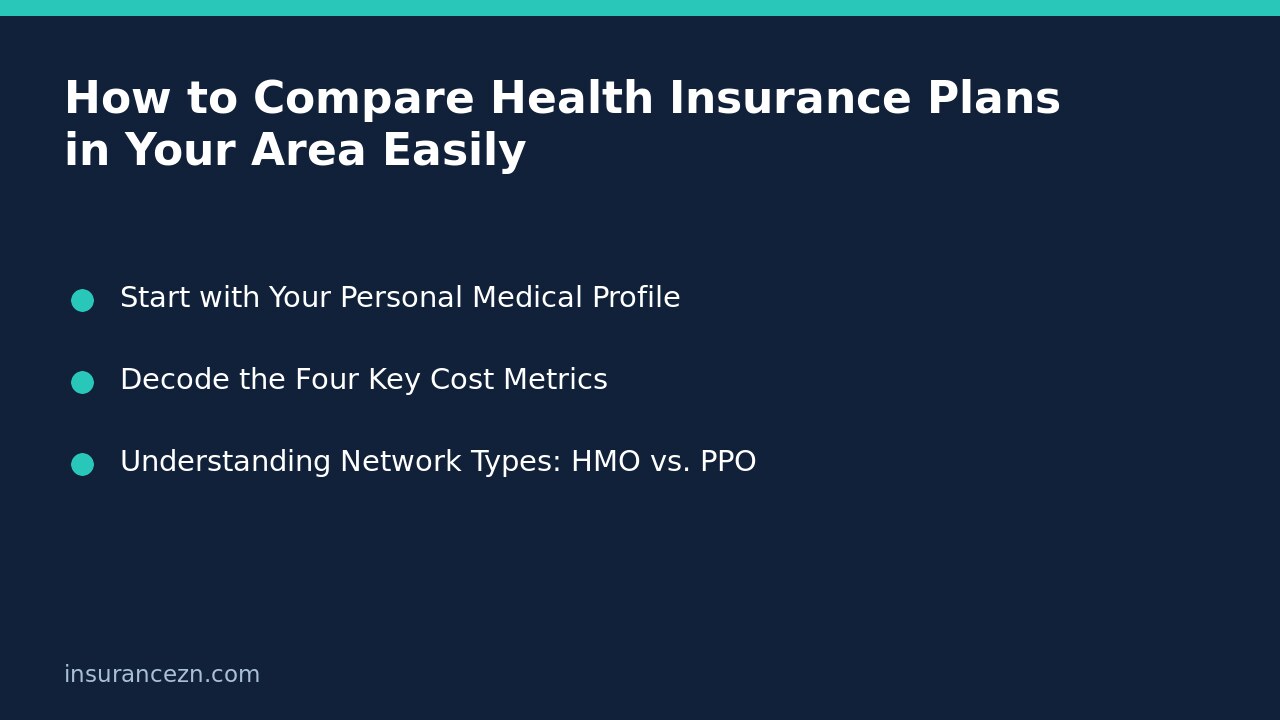
Start with Your Personal Medical Profile
Before looking at any plan brochures or online calculators, you must establish a clear picture of your own healthcare habits and needs. Insurance is not a one-size-fits-all product; a plan perfect for a healthy young professional may be disastrous for someone managing chronic conditions. The first step in comparison is identifying your “in-network” status for your current doctors and specialists.
Check the provider directories of the plans you are considering. If your primary care physician (PCP) or a specialist you rely on frequently does not appear in the list, verify if they have recently joined that network. Leaving a specific doctor behind can result in paying full price out of pocket for every visit. Additionally, note your prescription drug needs. Many plans have different formularies—lists of covered medications—and tiers that dictate how much you pay. A plan with a lower premium might charge you significantly more for your monthly medication than a slightly more expensive plan.
Decode the Four Key Cost Metrics
To compare apples to apples, you must understand the four primary metrics that determine the total cost of a health insurance policy: Premium, Deductible, Copayment, and Coinsurance. These terms often get mixed up, but they serve distinct functions in your monthly budget and out-of-pocket expenses.
- Premium: This is the amount you pay every month just to keep the policy active, regardless of whether you see a doctor. Lower premiums are attractive but often come with higher costs when you actually need care.
- Deductible: This is the amount you must pay for covered healthcare services before your insurance plan starts to pay. For example, if your deductible is $1,500 and you spend $200 at a doctor’s visit in January and $300 in February, you still owe money until you hit that $1,500 threshold.
- Copayment (Copay): A fixed amount you pay for a covered service, such as $20 for a primary care visit or $10 for a generic prescription drug. Copays usually apply after you have met your deductible, though some plans require them regardless.
- Coinsurance: The percentage of costs you pay for a covered service after your deductible has been met. For instance, if your coinsurance is 20%, and a lab test costs $100, you pay $20 and the insurance pays $80.
When comparing plans, calculate the “Total Estimated Cost” rather than just looking at the monthly premium. A plan with a $300 premium but a $5,000 deductible might cost you more in a year where you have minor illnesses than a plan with a $450 premium and a $1,500 deductible.
Understanding Network Types: HMO vs. PPO
The structure of the insurance network dictates how much freedom you have to choose providers and how much paperwork is involved. The two most common types are Health Maintenance Organizations (HMOs) and Preferred Provider Organizations (PPOs).
HMO Plans generally offer lower premiums and out-of-pocket costs but require you to stay within their network for coverage, except in emergencies. You must select a Primary Care Physician who acts as a gatekeeper, referring you to specialists only when necessary. If you accidentally see an out-of-network specialist, the HMO typically will not pay anything. This model is ideal for those who want predictable costs and do not mind sticking to a specific network of doctors.
PPO Plans offer more flexibility. You can visit any doctor or specialist without a referral, and they will cover some portion of the cost even if you go out-of-network, though at a higher rate. However, PPOs usually come with higher premiums and deductibles. If your lifestyle involves traveling frequently or seeing specialists who are not part of a specific regional network, a PPO might be the safer financial choice despite the upfront cost.
Utilize Government Marketplaces and Employer Tools
In many regions, the most efficient way to compare plans is through official government marketplaces (such as Healthcare.gov in the United States) or your employer’s human resources portal. These platforms use standardized comparison tools that display plans side-by-side based on the metrics discussed above. They often include “metal tiers” (Bronze, Silver, Gold, Platinum) which indicate the expected share of costs you will pay versus what the insurer pays.
When using these tools, look for subsidies or tax credits if your income qualifies. These can drastically reduce your monthly premium. If you are comparing employer-sponsored plans, ask your HR department for the Summary Plan Description (SPD). This document outlines exactly what is covered and what is not. Do not rely solely on sales pitches from brokers; always cross-reference their information with the official SPD to ensure accuracy regarding coverage limits and exclusions.
The Real-World Comparison Checklist
To make the process concrete, imagine you are comparing two plans for a family of four where one parent has high blood pressure requiring medication. Here is a practical checklist to run through during your comparison:
- Verify Doctor Participation: Log into the insurer’s website and search for your current cardiologist and pediatrician. Confirm their status as “In-Network.”
- Calculate Annual Premiums: Multiply the monthly premium by 12. Add this to your estimated out-of-pocket costs based on your expected medical usage.
- Review the Formulary: Search the drug list for the specific medication your parent takes. Compare the tier cost (e.g., Tier 1 vs. Tier 4) between the two plans.
- Check the Out-of-Pocket Maximum: This is the most you will ever have to pay in a year for covered services. Once you hit this limit, the insurance pays 100% of covered costs. A lower maximum provides a safety net against catastrophic illness.
- Read the Exclusions: Look for specific exclusions related to pre-existing conditions or specific treatments that might be denied under the new plan.
Common Pitfalls to Avoid
Even with a checklist, beginners often fall into traps that lead to regrettable choices. One common mistake is focusing exclusively on the lowest monthly premium. While this saves cash flow in the short term, it often correlates with very high deductibles and narrow networks, leaving you vulnerable when an emergency occurs. Another pitfall is ignoring the “out-of-pocket maximum.” A plan without a clear cap on annual spending can leave you liable for thousands of dollars in unexpected medical bills.
Additionally, beware of plans that advertise “free” coverage but have hidden fees or require you to pay for services before they are reimbursed. Always read the fine print regarding pre-authorization requirements for surgeries or specialist visits. Failure to get this approval beforehand can result in the claim being denied entirely, regardless of whether the provider was in-network.
Conclusion: Making an Informed Choice
Comparing health insurance plans does not require guesswork if you approach it with a clear understanding of your personal medical profile and the specific cost metrics involved. By prioritizing network adequacy, analyzing the balance between premiums and deductibles, and understanding the structural differences between HMOs and PPOs, you can select a plan that offers both financial stability and access to necessary care. Remember that insurance terms, availability, eligibility, laws, and prices vary significantly by insurer and jurisdiction. What is available today may change tomorrow, so always verify current details directly with the provider or through an official marketplace before making your final selection. Taking the time to compare carefully now can save you significant stress and money in the long run.