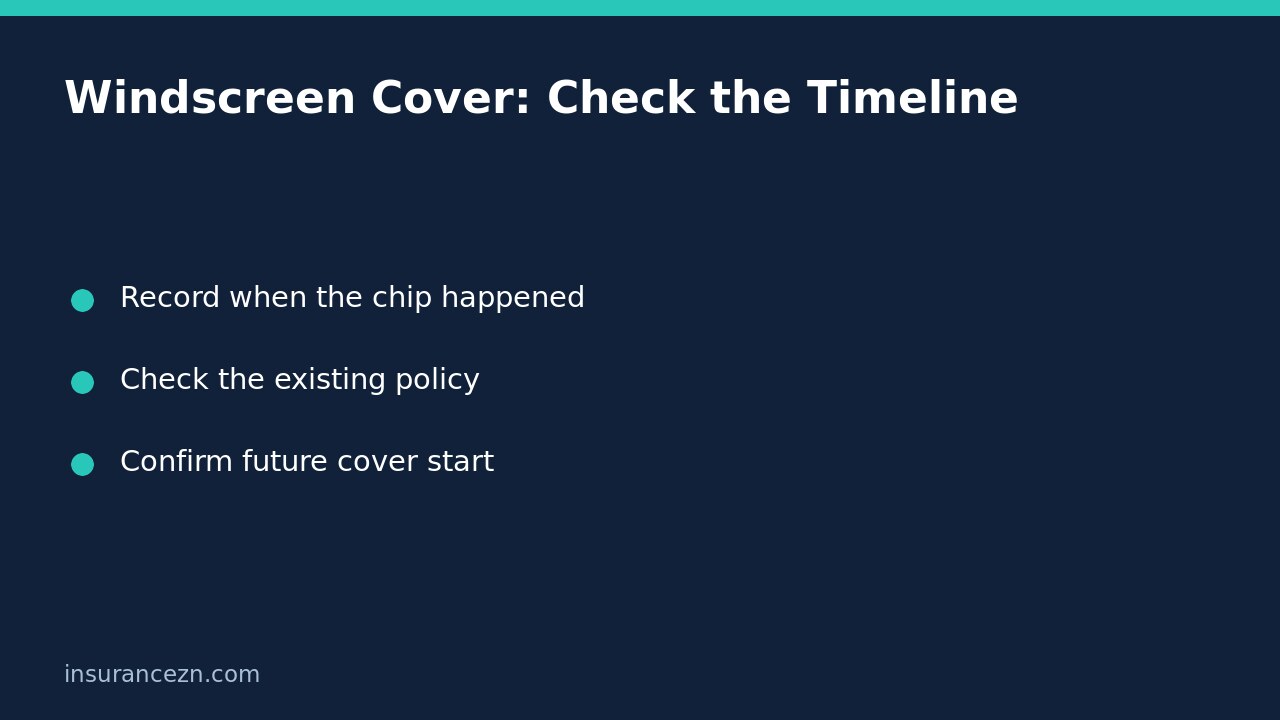

If you notice a chip in your windscreen and then add optional glass cover, do not assume the new option pays for the chip already there. First ask what your policy covered when the damage happened. Separately, confirm whether the insurer will accept an optional-cover change for future incidents, and exactly when it starts.
This is general information for Australian readers, not personal financial advice. Cover depends on your policy wording, Product Disclosure Statement (PDS), schedule, endorsements, exclusions and the circumstances of the damage. A policy update is not a claim decision.
Why the order of events matters
On its car-insurance comparison page, AAMI lists Windscreen and Window Glass Cover as an optional comprehensive-policy cover. It expressly says optional covers cannot be added after an incident to cover loss or damage from that same incident. They must be added before the incident being claimed for. This is AAMI’s published product summary, not a statement that every Australian policy has identical glass benefits.
That creates two different questions. Was this particular damage covered by the insurance already in force? Would an accepted change improve protection against a later incident? Do not combine them into a request to make yesterday’s chip disappear under tomorrow’s option.
Build a short damage timeline
Before contacting the insurer, save a factual record. Distinguish when you first noticed the chip from when you know the impact happened. If you do not know the incident date, say so rather than inventing one. Keep photographs and any existing inspection or repair documents.
- Record the vehicle registration and policy number.
- Write down the known incident date, or explain that only the discovery date is known.
- Photograph the affected glass from a safe position.
- Save the schedule and wording that applied at the relevant time.
- Record the date and time of any later request to change cover.
A photograph documents what you can see; it does not establish the cause, repair method or insurance entitlement. If visibility or safety is affected, seek appropriate professional assistance rather than delaying action while arranging insurance paperwork.
Ask about the existing policy before buying an option
A missing glass option does not, by itself, answer every question about a comprehensive claim. Ask whether your existing accidental-damage cover responds to the circumstances, which excess would apply, and whether repair or replacement needs prior authorisation. The insurer must assess the actual policy and incident; the optional-cover comparison alone cannot decide your claim.
Keep the request precise: ‘I discovered this chip today. I have not yet changed my cover. Please explain whether my current policy covers this damage, the applicable excess and the process before I book work.’ Tell the insurer if work is urgent or has already occurred. Do not present an enquiry number as confirmation of an accepted claim or approved repair.
Confirm what any future amendment actually changes
If you still want optional glass cover, ask for its additional premium, exact effective date and time, benefit limits, excess arrangements and any conditions concerning existing damage. Ask whether an inspection, repair record or other information is required. Do not infer that the change has been processed merely because an online form was submitted.
For example, a driver might report a chip on Monday and request an option on Tuesday. An endorsement starting Tuesday does not make Monday’s damage a Tuesday incident. The driver needs a decision about the existing damage and separate written confirmation of any accepted amendment. Neither establishes that an unrelated later loss will automatically be paid.
Keep three outcomes in separate records
Maintain one note for the existing-damage enquiry or claim, another for any approved repair instructions, and another for the future policy amendment. Compare the updated schedule with the insurer’s written explanation. If the timing or description is wrong, request a correction and confirmation before relying on it.
If you receive an adverse claim decision, our guide to requesting a written car-insurance claim decision explains how to obtain reasons you can check against your documents.
Quick questions before you proceed
- Which wording and schedule applied when the damage occurred?
- Has the insurer assessed existing cover, rather than only quoted an upgrade?
- Is repair authorised, and what costs remain yours?
- Has the optional amendment been accepted with a confirmed start time?
Can I change cover while discussing a claim? Ask the insurer whether it will accept the change and on what terms. Keep the existing claim separate. Does paying the extra premium prove the chip is covered? No. Payment, an amended policy and acceptance of a specific claim are different records.