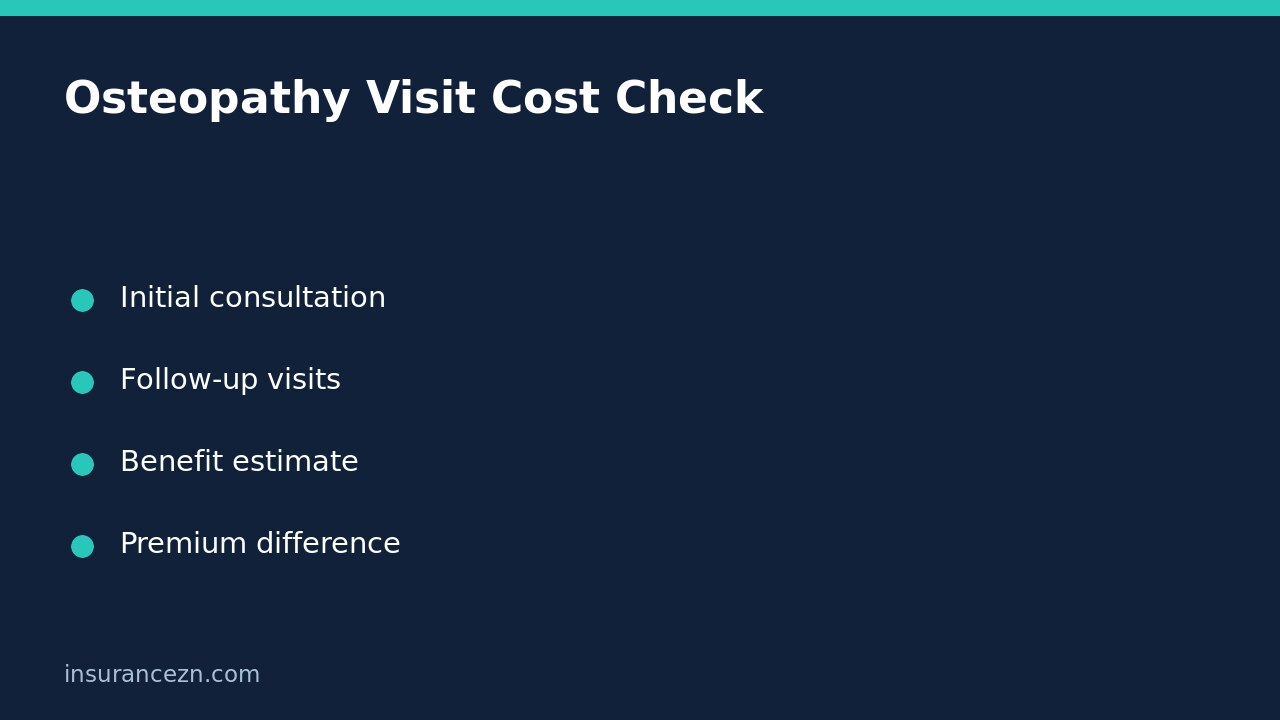

To compare extras cover for osteopathy, start with the fees for your initial appointment and any follow-up visits you actually expect to attend. Ask each insurer for an estimate for those exact services and practitioner. An advertised extras limit is not a promise that your first visit, every later visit or the whole treatment plan will be paid.
This is general information for Australian readers, not personal financial advice. Benefits depend on the policy, applicable Product Disclosure Statement (PDS), fund rules, exclusions, waiting periods and claim assessment. This comparison is not a recommendation to buy cover or undergo treatment.
Separate the first consultation from later appointments
Request a written fee schedule from the clinic. Record the initial consultation charge, follow-up charge, expected appointment length and any separately billed services or products. Ask the clinic for the descriptions or service identifiers it uses on invoices. Do not assume an initial assessment and a longer follow-up are interchangeable for insurance purposes.
Use a planning quantity rather than treating a suggested course as medically necessary. For example, your worksheet might contain one initial appointment and three follow-ups, clearly marked as an estimate. Clinical decisions belong with the treating professional, and the number of appointments may change.
Check the exact practitioner and service
Send each shortlisted insurer the practitioner’s name, practice address, provider details and proposed service descriptions. Ask whether osteopathy is included on the specific product, whether this practitioner is recognised for those services, and whether any other requirements apply. A clinic saying it accepts health funds is not confirmation that your policy pays a benefit.
The government comparison website explains that extras policies have different inclusions and limitations, including per-service, annual and lifetime limits. That overview supports checking the actual policy; it does not establish an osteopathy entitlement or benefit formula for any particular fund.
- What estimated benefit applies to the initial consultation?
- What estimated benefit applies to the described follow-up?
- Does appointment duration change the recognised service or benefit?
- Is there a shared limit with another therapy you expect to use?
- When would the relevant benefits become available after joining or upgrading?
Calculate your appointment costs before comparing premiums
Make a row for each appointment with four columns: clinic fee, insurer’s estimated benefit, remaining personal cost, and the assumptions supporting the estimate. Subtract only a benefit the insurer has estimated for that service. Leave unresolved amounts marked unknown rather than substituting the annual maximum.
Where a policy pays a percentage, ask how any service cap and remaining limit affect the calculation. Where it pays a fixed amount, confirm that the amount applies to the exact consultation. Neither structure is automatically better: the result depends on your actual fees and eligible visits.
Next add the premium payable over the same comparison period. If you are considering a different combined policy, include the total premium change and check that hospital cover is otherwise suitable. Avoid crediting osteopathy with savings from unrelated benefits you do not expect to use. Our itemised dental-quote comparison explains the same evidence-first approach for another extras service.
Account for existing claims and changes in treatment
For an existing membership, request the processed balance of the relevant allowance and ask which claims have already used it. A headline annual limit can be misleading if another therapy shares that allowance. Check whose claims count against a shared pool rather than multiplying a family-level figure by every member.
If you change products, ask separately about waiting-period recognition, the treatment of earlier benefits and the start date of any higher entitlement. A new membership number or renewed benefit year should not be treated as proof that all allowances are restored. Keep the insurer’s answer with the policy version and dated quote.
Questions before booking
Does provider recognition guarantee payment? No. Recognition is one eligibility check; the service, policy, dates and available limits still matter.
Can I treat an estimate as the final claim result? No. Ask how long it is valid and what changes would require a fresh estimate. The processed claim may depend on the actual service and invoice.
What if the initial visit changes the treatment plan? Obtain revised costs and update the comparison before committing to later appointments. Keep the original estimate so you can explain what changed, without assuming more visits create more insurance entitlement.