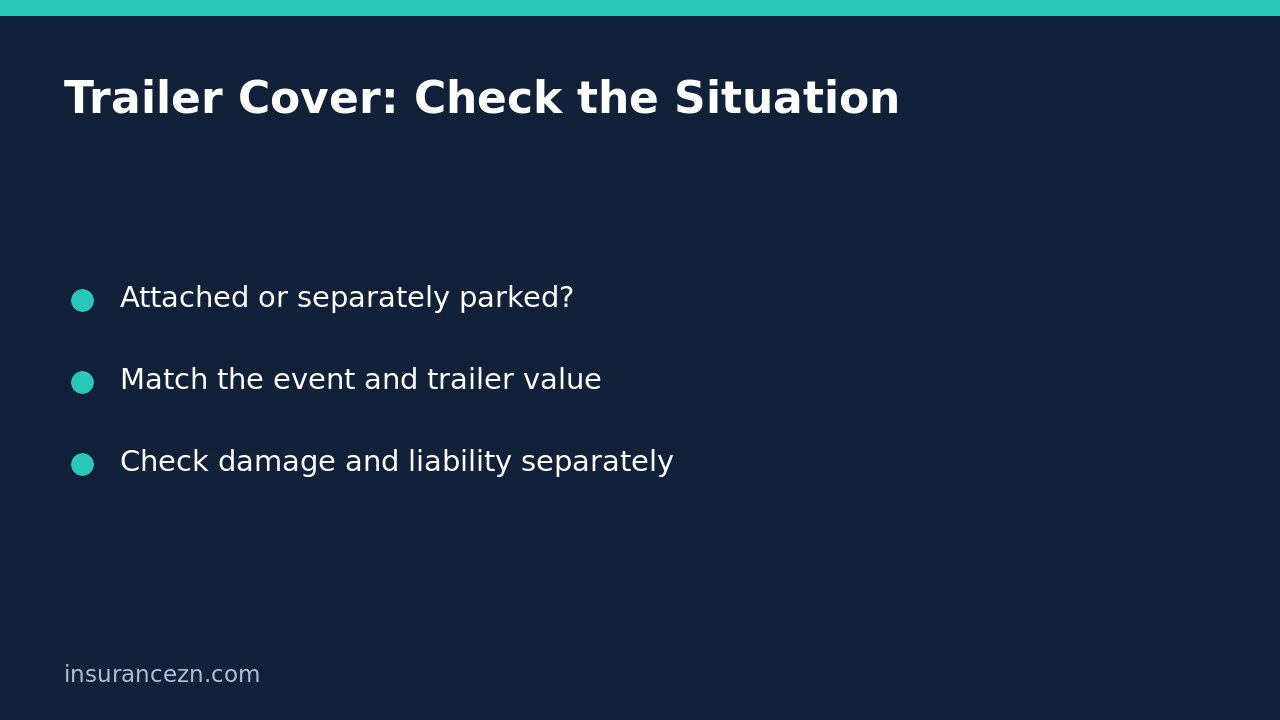

When comparing car insurance for a trailer, ask what happens when the trailer is attached, separates while moving, or is parked independently. A trailer benefit listed on a car policy does not by itself establish cover for every situation involving that trailer. Compare the exact event and attachment conditions before relying on the advertised limit.
This is general information for Australian readers, not personal financial advice. Cover depends on the applicable Product Disclosure Statement (PDS), certificate, policy version, exclusions and claim assessment. An overview of available benefits is not confirmation that your particular trailer or use is accepted.
Read the attachment condition before the dollar limit
As a provider-specific example, Suncorp’s comprehensive car insurance overview describes trailer cover of up to $1,000 for any one incident involving accidental loss or damage when the trailer is attached to the insured car, or runs out of control after separating while the car is moving. This wording identifies circumstances, not simply an ownership allowance.
The overview does not establish general standalone protection for a trailer left separately parked at a property. It also does not settle every question about theft, trailer types, loads or business use. Read the corresponding PDS section and ask the insurer to explain uncertain situations. Another policy may use a different limit, definition or trigger.
Compare three realistic situations with each insurer
- Attached during a journey: describe your trailer, towing vehicle, purpose and the accidental damage you want covered. Ask which section applies and what conditions and excesses affect it.
- Separated while moving: ask how the policy treats a trailer that comes loose and runs out of control. Do not turn this question into a guarantee that all separation events qualify.
- Parked separately: describe where the trailer is stored and the events you want insured, such as theft or storm damage. Ask whether the motor policy responds or whether separate cover would be needed.
Write the answers beside the precise product and policy version quoted. Mark an unresolved situation as unconfirmed rather than copying a tick from an insurer’s feature table. If a trailer is borrowed or used for work, disclose that fact and ask whether it changes eligibility. Ownership, permitted use and an insured event are separate checks.
Separate trailer damage from its load and other people’s property
Make three rows on your comparison sheet: damage to the trailer itself, loss of the items being carried, and liability for damage to someone else’s property. A trailer-damage allowance does not automatically fund the cargo or establish the liability position. Similarly, a large motor liability figure is not the amount available to replace your own trailer.
For a weekend garden trip, for example, distinguish the trailer frame from hired equipment carried inside it and a third party’s fence. Ask about each item and event under the applicable wording. Do not assume that acceptance of one part of a claim approves the others. The insurer needs the actual facts, including any relevant use and ownership details.
Compare the limit against a realistic trailer replacement cost
Record the trailer’s identifying details, condition, accessories and a supportable current replacement or repair estimate. Then ask how the policy values a covered loss, whether a per-incident cap applies, and how an excess would affect the outcome. Do not treat an advertised maximum as a guaranteed cash payment or add separate feature limits together without checking the wording.
A modest additional trailer benefit may be useful without being enough for your whole trailer exposure. Consider the uncovered situations as well as the maximum amount. If comparing separate trailer insurance, use the same trailer, activities and storage arrangements, and compare the combined premium rather than only the car policy price.
For that wider price check, our guide to comparing the full policy-year cost of car insurance explains a different part of the decision: payment frequency and total cost. It does not establish trailer eligibility.
Confirm the accepted arrangement before relying on it
Before buying, ask for the relevant wording and any necessary trailer or use details to be recorded. Retain the quote, certificate, PDS and written clarification. A submitted request to change cover is not proof that an amendment has been accepted or commenced. Check the processed documents and effective date.
Does attached-trailer cover mean a parked trailer is insured? Not necessarily; check the separate situation. Does the trailer allowance cover everything inside it? Do not assume so. Is the largest advertised limit the best comparison? No: first establish the accepted trailer, use and event, then compare valuation rules, excesses, limits and total premiums.