
When comparing Australian extras cover for remedial massage, start with the appointment you intend to book. A large advertised annual allowance does not tell you whether your practitioner is recognised, whether the particular session qualifies or how much the fund would pay. Obtain an estimate for the actual service before paying more for a policy.
This is general information for Australian readers, not personal financial advice. Benefits depend on the policy, Product Disclosure Statement (PDS) or applicable fund rules, membership details and service supplied. This article is not clinical advice; decisions about appropriate treatment belong with your treating practitioner.
Identify the service rather than relying on a booking label
PrivateHealth.gov.au describes remedial massage in its general-treatment definitions. That description is not a promise that every massage appointment qualifies for private insurance benefits. A clinic may offer different services, session lengths and practitioners under the same business name. Do not assume a relaxation treatment, package or promotional booking is assessed in the same way as the remedial session you asked about.
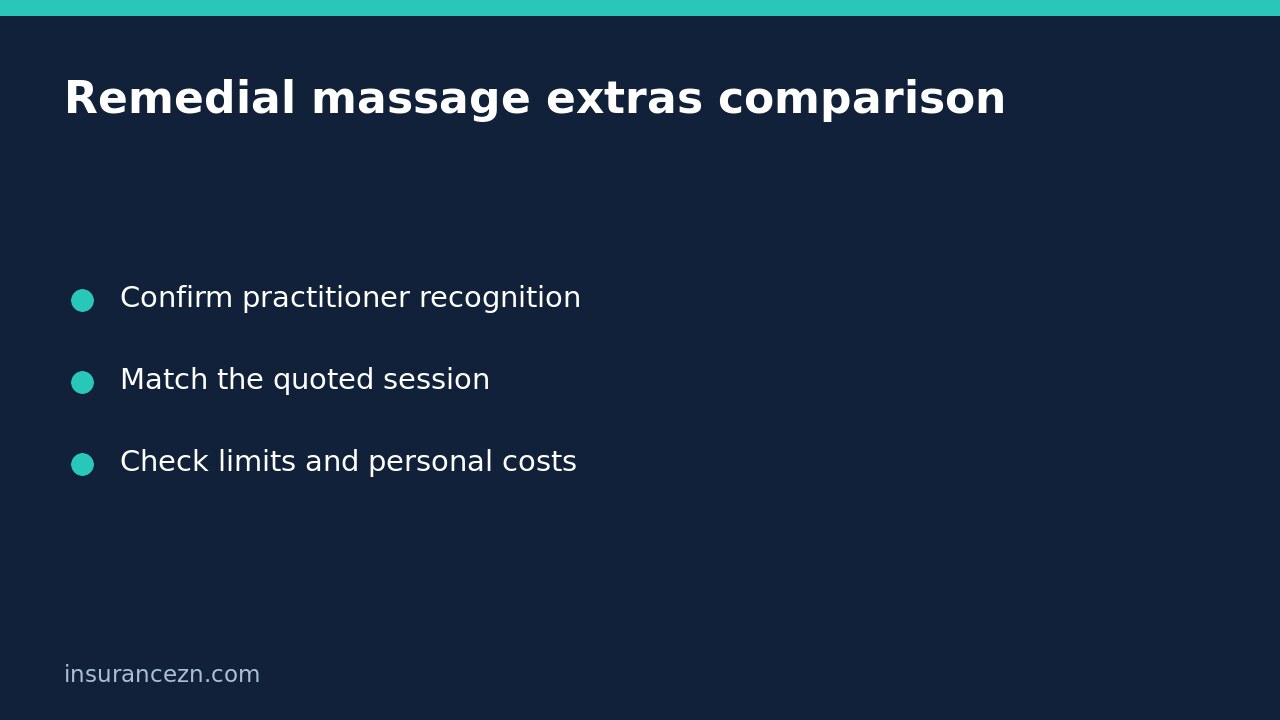
Ask the clinic for the service description, treating practitioner’s name, relevant provider details, session duration and total charge. Request any claiming code the clinic actually uses. If separate assessment or other charges apply, have them shown separately. Do not invent a code or change an invoice description to make a treatment appear eligible.
Check recognition for this practitioner and policy
Send the appointment details to each shortlisted insurer. Ask whether the named practitioner and exact service qualify under the specific extras product you could buy. A clinic saying it accepts health funds is not the same as your insurer confirming benefits for your membership. Similarly, recognition of one clinician at a practice does not establish recognition of everyone working there.
Keep the response date and enquiry reference. If the practitioner, location or service changes, ask whether the earlier estimate remains applicable. These are verification questions, not a claim that every fund imposes identical provider conditions. An instant claiming terminal is a payment channel, not proof that a proposed service will receive a particular rebate.
Ask for the session benefit and the limits together
The government’s overview explains that extras services are commonly covered only to a limited extent, with limits that can apply per service, per year or over a lifetime. Read the Private Health Information Statement and obtain the fund’s product-specific explanation. For remedial massage, your comparison should answer:
- What estimated benefit applies to this quoted appointment?
- Is that estimate conditional on any waiting period being completed?
- What remaining allowance would be available after earlier claims?
- Does another therapy draw from the same allowance, if the product uses a shared limit?
- Which service date and benefit period would the fund use?
Do not add advertised limits together unless the fund confirms they are independently available. Nor should you assume a fresh annual balance overrides other conditions. If information is missing, mark the benefit unconfirmed rather than budgeting the maximum as cash you will receive.
Compare a realistic appointment sequence with the premium difference
Prepare a short worksheet with one row for each appointment you realistically expect to attend. Record the clinic’s charge, the insurer’s estimated rebate, your expected contribution and the remaining allowance. Apply any confirmed shared limit across the whole sequence instead of assuming every appointment receives the initial benefit indefinitely.
Use actual payable premiums over the same comparison period, with matching membership and payment assumptions. Compare the extra premium with the additional estimated benefits for services you genuinely expect to use. An unused allowance is not a saving, and booking unnecessary treatment to consume it does not make the policy better value.
If dietitian appointments are also planned, our guide to comparing dietitian extras against the actual quote provides a related checking process. Keep the services in separate rows, while asking whether the proposed product links their limits.
What should you keep before booking?
Save the quote, practitioner details, relevant fund rules and written estimate. Confirm any treatment changes before assuming the original estimate still applies. After attendance, compare the itemised invoice with the processed claim assessment: submitting a claim or receiving an estimate is not the same as a final benefit decision.
Does hospital cover establish a remedial massage benefit? Do not infer outpatient extras benefits from a hospital product. Confirm the actual extras component and included service.
Should you switch immediately for a higher allowance? First establish the real premium difference, eligibility and any transfer or waiting-period consequences. Do not cancel existing cover on the strength of an advertising headline.
Sources for the checking framework
PrivateHealth.gov.au: General Treatments supplies the remedial-massage definition. Its private health insurance coverage overview explains extras limits and the need for policy-specific confirmation. Neither page establishes your personal rebate.